
Odometer Module Digital Trace Risks: What Really Shows Up
Last Updated: October 23, 2026
Quick Summary
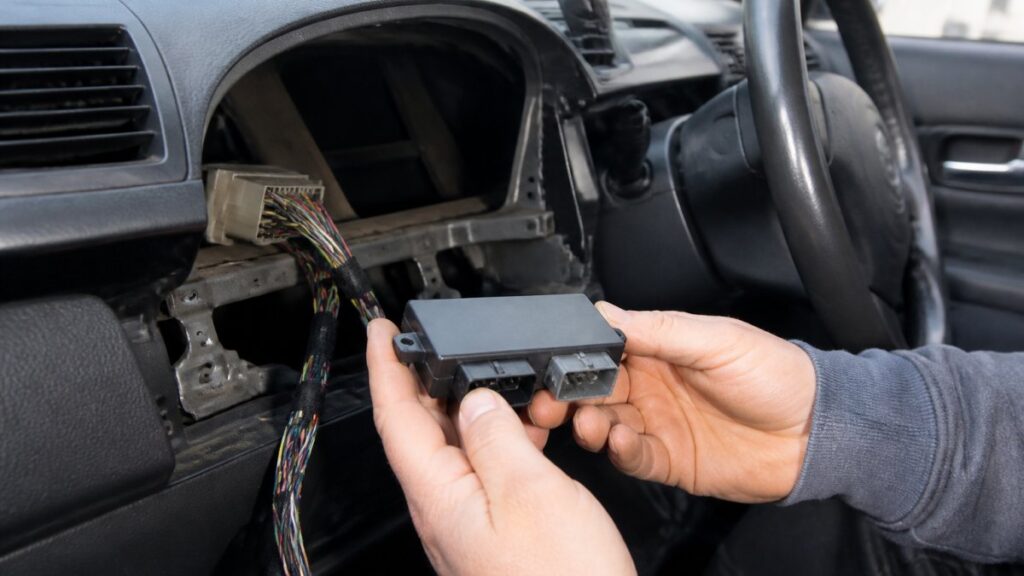
Odometer module digital trace risks are the chances that a mileage change made through a vehicle’s electronic control modules leaves recoverable evidence elsewhere in the car’s systems. Mileage is stored in the instrument cluster, engine control module, transmission control unit and sometimes the body control module, and mismatches between them are the first thing a diagnostic scan exposes.
- Digital odometers are harder to detect tampering on than mechanical ones because there are no moving parts to inspect.
- A low-mileage car with worn seat bolsters, a shiny steering wheel and stone-chipped pedals tells two different stories.
- MOT tests record mileage, giving you an independent timeline to compare against the displayed figure.
- Never treat a clean diagnostic scan as proof of honest mileage, since it shows only current module values.
- Photograph the cluster and diagnostic screen before and after any module work as a dated evidence pair.
Table of Contents
- What Odometer Module Digital Trace Risks Actually Mean
- Why Odometer Tampering Leaves a Digital Footprint
- Signs of Odometer Tampering: Physical and Electronic Clues
- How to Check a Car’s Mileage: A Step-by-Step Verification Workflow
- Vehicle Mileage History Check: What Records Prove and What They Miss
- The Limits of Electronic Evidence in Odometer Fraud Detection
- Module Replacement, Mileage Reconciliation and Your Legal Position
- Frequently Asked Questions
What Odometer Module Digital Trace Risks Actually Mean
Odometer module digital trace risks are the chances that a mileage change made through a vehicle’s electronic control modules leaves recoverable evidence elsewhere in the car’s systems. The NHTSA guidance on odometer fraud makes a point most buyers miss: digital odometers are harder to detect tampering on than mechanical ones, because there are no moving parts to inspect. At Mileage Blocker, we work with these modules daily, and the practical lesson is simple. Every module that stores a distance value is a potential witness.
Where Mileage Data Is Stored Across Control Modules
Mileage rarely lives in one place. The instrument cluster holds the displayed figure, but the engine control module, transmission control unit and sometimes the body control module log their own distance values. A 2023 SAE Mobilus paper on secure odometer design on tamper-proof hardware proposed hardened modules precisely because those redundant stores are so hard to keep consistent. Mismatches between them are the first thing a diagnostic scan exposes.
The cluster is what you see. The other modules are what an inspection reads. Assume any mileage edit touches more than one.
Why Odometer Tampering Leaves a Digital Footprint
Tampering leaves a footprint because modern cars are forensic environments. A 2022 IEEE Xplore paper on automotive digital forensics and data collection treats identifying and tracing vehicle incidents as a core investigative challenge, and mileage sits inside that same evidence chain. Writes to module memory, timestamped fault logs and inconsistent stored values all persist after the dashboard has been changed.
Most guides stop at “check the dash.” That is the weakest check available. If you want to understand the detection systems and discrepancy patterns involved, our detection archive is worth browsing before you inspect a car.
Signs of Odometer Tampering: Physical and Electronic Clues
Physical and electronic clues usually appear together. A low-mileage car with a worn driver’s seat bolster, a shiny steering wheel and stone-chipped pedals is telling you two different stories. On the electronic side, the giveaways are subtler: a cluster that looks newer than the rest of the interior, misaligned panels around the dashboard, or a service history with gaps that do not match the displayed figure.
- Wear on the driver’s seat, gear knob and pedals that contradicts the mileage
- Dashboard condition inconsistent with the rest of the cabin
- Service records showing higher mileage at an earlier date
- A diagnostic scan reporting a different stored mileage to the cluster
How to Check a Car’s Mileage: A Step-by-Step Verification Workflow
Checking a car’s mileage properly means verifying the displayed figure against records, module data and physical condition, in that order. No single check is conclusive. The workflow below is the one we would follow on any used car before money changes hands. For a deeper walkthrough of spotting digital odometer traces, see our step-by-step guide to detecting digital odometer traces.
Step 1: Gather the Paper Trail Before You Touch the Car
Start with documents, not the dashboard. Collect the V5C, every MOT certificate you can obtain, service invoices and any repair records. MOT tests record mileage, which gives you an independent timeline. Look for a paper trail that rises smoothly and matches the car’s age and use.
Step 2: Cross-Reference the Car Diagnostic Scan Mileage
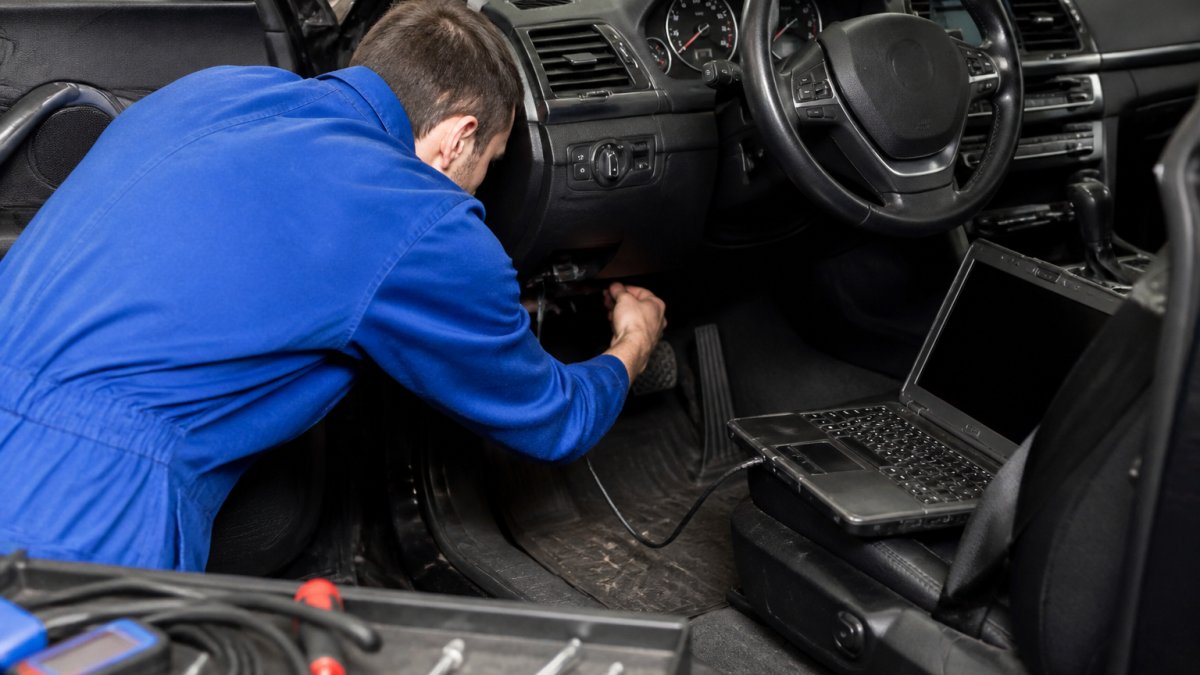
Next, read the stored mileage from the modules, not just the cluster. A car diagnostic scan mileage report should be compared module by module. Where you need to read module data directly, the diagnostic tools we stock are built for exactly that job. Discrepancies between modules are the strongest electronic signal you will get.
Never treat a clean diagnostic scan as proof of honest mileage. A scan shows what the modules currently report, not what they reported last year.
Vehicle Mileage History Check: What Records Prove and What They Miss
A vehicle mileage history check proves continuity, not honesty. Records confirm that mileage rose plausibly between test dates and that no gap hides a rollback. What they miss is everything between checks: a car can be driven hard, clocked and returned to a plausible figure inside a single MOT interval. Records also miss vehicles that sat unused, where a flat mileage line is legitimate rather than suspicious.
| Check | What it proves | What it misses |
|---|---|---|
| MOT history | Mileage at test dates | Anything between tests |
| Service invoices | Recorded mileage at servicing | Unrecorded or DIY work |
| Diagnostic scan | Current stored module values | Past values and overwrites |
| Physical inspection | Wear versus displayed figure | Recently replaced trim |
The Limits of Electronic Evidence in Odometer Fraud Detection
Electronic evidence has real limits, and honest inspectors say so. Module data can be overwritten, replaced modules carry donor values, and not every manufacturer exposes the same fields to a scan. If you are unsure where legitimate adjustment ends and tampering begins, our explainer on calibration versus mileage management draws the line clearly.
The practical limits fall into four groups, and each one changes how much weight a scan result deserves.
Overwrites and resets. A value written cleanly over an old one may leave no readable trace if the module does not log write events. Diagnostic-tool access matters here too: some tools can reset adaptations or clear logs as part of routine work, which can erase the very entries an inspector would look for.
Module replacement and donor values. A replacement cluster or control module may arrive carrying the donor vehicle’s distance, or a blank value that must be programmed. Until it is programmed to the verified true reading, the car has a genuine discrepancy that looks identical to tampering on a scan.
Architecture and coverage differences. Not every manufacturer stores mileage in the same modules, and not every scan tool can read every field. A scan that reports one clean figure may simply have failed to reach the module that holds the discrepancy. Make and model awareness is therefore essential: the same tool that reads three distance fields on one vehicle may read one on another.
Interpretation, not just collection. A discrepancy is a question, not an answer. It may indicate tampering, a legitimate replacement, a software update, or a failed module. Resolving it requires records, physical inspection and, where the stakes are high, an independent specialist assessment. Treat any single scan as one data point in a chain.
Where records and module data conflict, document both, preserve the evidence and seek jurisdiction-specific advice before drawing conclusions. Photograph the cluster and the diagnostic screen before and after any module work, a dated photo pair is the cheapest evidence you will ever create.
Module Replacement, Mileage Reconciliation and Your Legal Position
Replacing a cluster or module is legitimate work, but it creates a reconciliation problem: the new unit must be programmed to the true, verified reading. Get that wrong and you have created a mileage discrepancy through carelessness rather than fraud. Where a cluster or module has been replaced or repaired, restoring a verified true reading rather than an assumed one is crucial. Our nationwide mileage correction service restores your vehicle’s mileage to its true, verified reading after a cluster or module is replaced or repaired.
On the legal side, we are not lawyers and will not pretend otherwise. What we can say is that the boundary that matters is intent: recording a false mileage to misrepresent a vehicle is a different act from maintaining an accurate record during testing or repair. Keep traceable records of every change, and you protect yourself either way.
Photograph the cluster and the diagnostic screen before and after any module work. A dated photo pair is the cheapest evidence you will ever create.
Frequently Asked Questions
Can mileage changes leave traces in a car’s electronic modules?
Yes. Modern vehicles store mileage in several places beyond the instrument cluster, including the engine control module, transmission module and body control module. When a reading is altered, these modules can end up holding conflicting values. A 2022 IEEE Xplore paper on automotive digital forensics treats tracing these inconsistencies as a core investigative challenge. The trace is rarely a single obvious record, which is why comparing stored values across modules during a car diagnostic scan mileage check matters more than reading the dashboard alone.
How do you know if a digital odometer has been tampered with?
Look for mismatches rather than a single giveaway. Compare the displayed mileage against MOT records, service invoices and the vehicle mileage history check. Then compare that figure with the wear you can see: pedal rubbers, driver’s seat bolsters, steering wheel shine and stone chips on the front bumper. NHTSA notes that digital odometer tampering is harder to detect than mechanical tampering because there are no visible moving parts, so a diagnostic scan that reads stored mileage from multiple modules is often the decisive step.
Can a diagnostic scan reveal odometer tampering?
It can reveal discrepancies, which is not the same thing. A scan reads stored mileage values from the modules that report them, and if the cluster says 62,000 miles while the transmission module logged 118,000, that gap needs explaining. A 2023 SAE Mobilus paper proposes tamper-proof hardware modules precisely because software-level readings can be altered. Treat scan output as strong supporting evidence, not proof, and keep a dated printout or screenshot of every reading you take.
What should I do if a car’s mileage readings do not match?
Stop and document. Photograph the dashboard, save the diagnostic scan output with the date and time, and ask the seller to explain the gap in writing. Cross-check the DVSA MOT history online, then request the service records. If the explanation does not hold, walk away or commission an independent inspection before any money changes hands. Under the Consumer Protection from Unfair Trading Practices Regulations 2008, a trader giving false mileage information is committing a banned commercial practice, so a mismatch is a serious matter, not a clerical slip.
Why might a digital odometer reading differ from a vehicle history record?
Legitimate causes exist. A replacement instrument cluster or a failed module may have been fitted and coded without the mileage being carried across correctly, and some imported vehicles have had clusters converted between miles and kilometres. Mileage recorded at an MOT test can also lag behind actual use if the car was off the road. The key is whether the seller can produce paperwork for the event. An unexplained jump of tens of thousands of miles with no invoice is a rollback pattern, not a rounding error.
Is there a legal risk to the owner if mileage has been altered?
The risk sits mainly with whoever alters or misrepresents the reading. Selling a car with a false mileage description breaches the Consumer Protection from Unfair Trading Practices Regulations 2008, and the Road Traffic Act 1988 covers fraudulent mileage claims made to obtain a test certificate. If you own a vehicle and discover a discrepancy, keep every record you hold and disclose it in writing when you sell. Buying in good faith is not an offence, but passing on a known false reading can be.
Mileage discrepancies rarely announce themselves, and the electronic trail is only as useful as the person reading it. If you run dyno sessions, diagnostics or track days and need mileage managed cleanly during testing, Mileage Blocker builds UK-made, plug-and-play modules with a 12-month warranty and 24/7 support. Get started with Mileage Blocker and keep your testing mileage separate from your recorded mileage, with fitting guides included.

Leave a Reply