
Alternatives to Disconnecting Odometer Sensors for Testing
Last Updated: October 23, 2026
Quick Summary
Alternatives to disconnecting odometer sensors for testing include reading live speed data through a scan tool, comparing the cluster against GPS speed, and fitting a plug-and-play mileage blocker module that intercepts the signal at the connector. These methods avoid fault codes, disabled ABS and stability control, and mileage inconsistencies between modules.
- Disconnecting a wheel speed sensor can disable ABS and traction control for the rest of the drive.
- A scan tool plugged into the OBD port lets you watch vehicle speed and wheel rotation live with no physical intervention.
- On many post-2015 cars the OBD port sits behind a central gateway, so a basic engine-only scanner cannot see ABS data.
- Log the odometer reading and photograph the cluster before and after every test session.
- Odometer tampering with intent to deceive a buyer is a criminal offence, so document any mileage suppression.
Table of Contents
- Why Disconnecting an Odometer Sensor Is a Bad Idea
- Odometer Sensor Disconnection Risks: What Can Go Wrong
- Vehicle Diagnostic Testing Tools That Avoid Sensor Disconnection
- Mileage Recording During Vehicle Testing: Best Practices
- Dyno Testing Mileage Management: Keeping Records Clean
- Comparing Odometer Sensor Testing Alternatives
- Legal and Ethical Boundaries of Odometer Sensor Testing
- Frequently Asked Questions
Why Disconnecting an Odometer Sensor Is a Bad Idea
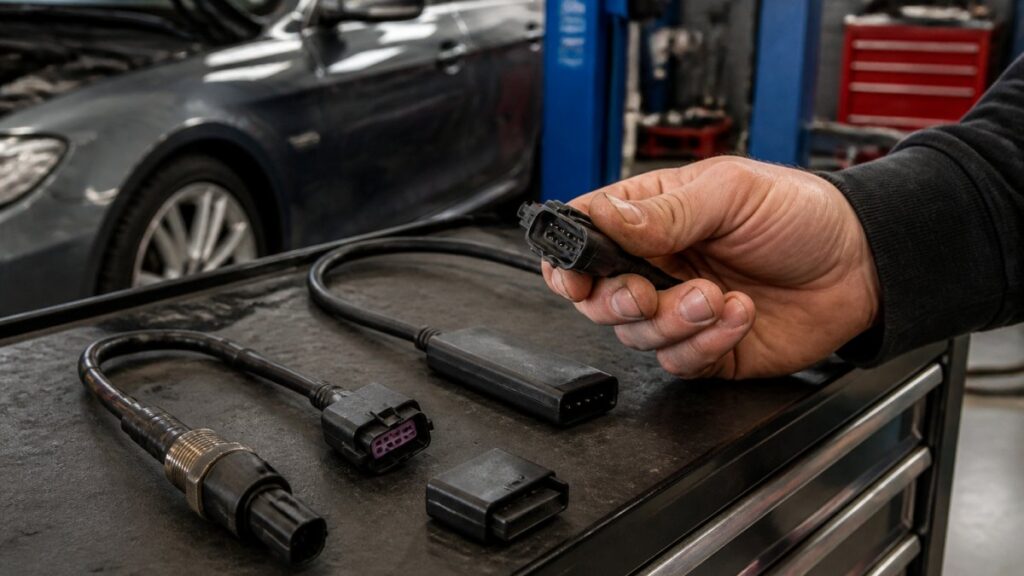
Unplugging an odometer sensor to stop mileage accumulating during a test looks like a quick fix. In practice, it is one of the most disruptive things you can do to a modern vehicle’s electronics. Mileage Blocker provides alternatives to disconnecting odometer sensors for testing precisely because the old workshop shortcut causes more problems than it solves.
The core issue is that the odometer no longer sits on its own circuit. On most vehicles built in the last two decades, distance travelled is calculated from wheel speed sensor data shared across the ABS system, the engine control unit and the instrument cluster.
That triggers a chain reaction: warning lights, stored diagnostic trouble codes, and disabled safety functions. What follows is a guide to the legitimate ways to test a vehicle without breaking its electronics, and why the sensor-disconnection habit belongs in the past.
Disconnecting a wheel speed sensor on a vehicle with electronic stability control can disable ABS and traction control for the rest of the drive. If the car is on a road test or a dyno run when this happens, you have removed the safety net at the worst possible moment.
Odometer Sensor Disconnection Risks: What Can Go Wrong
The first thing that goes wrong is a faulty sensor code. The ABS module logs the missing speed signal as an open circuit, and that code stays in memory until someone clears it with a scan tool.
Second, you lose functions the driver depends on. Speed-sensitive steering, adaptive dampers, hill assist and cruise control all read vehicle speed from the same network. Disconnecting the source leaves them guessing.
Safety Systems That Depend on Wheel Speed
The consequences are not cosmetic. Electronic stability control, traction control and anti-lock braking all consume individual wheel speed signals, and a missing signal changes how each behaves:
- ABS. The module cannot compare wheel speeds, so it typically disables anti-lock function and illuminates the ABS warning lamp. Braking reverts to conventional hydraulic operation, which means wheels can lock under hard braking.
- Traction control and stability control. Both rely on detecting a speed difference between driven and non-driven wheels. With one signal absent, the system either shuts down or, worse, misinterprets the missing channel as a spinning wheel and applies braking or cuts torque unexpectedly.
- Drivability. Some vehicles enter a reduced-power or limp mode when a wheel speed signal is implausible, and automatic transmissions that use road speed for shift scheduling can hold gears or shift harshly.
- Warning lamps and inspection. An illuminated ABS or stability lamp is an automatic fail point at MOT testing, so a car returned from a test with a disconnected sensor may not be road-legal until the fault is cleared and the lamp extinguished.
The Mileage Integrity Problem
Third, there is the odometer tampering question. On a digital odometer, the stored data lives in more than one module. Interrupting the signal does not simply pause the count; it can create inconsistencies between modules that a dealer diagnostic session will flag.
The odometer sensor disconnection risks therefore stack up quickly: fault codes, disabled safety systems, a car that may fail its MOT, and a mileage record that no longer adds up.
Vehicle Diagnostic Testing Tools That Avoid Sensor Disconnection
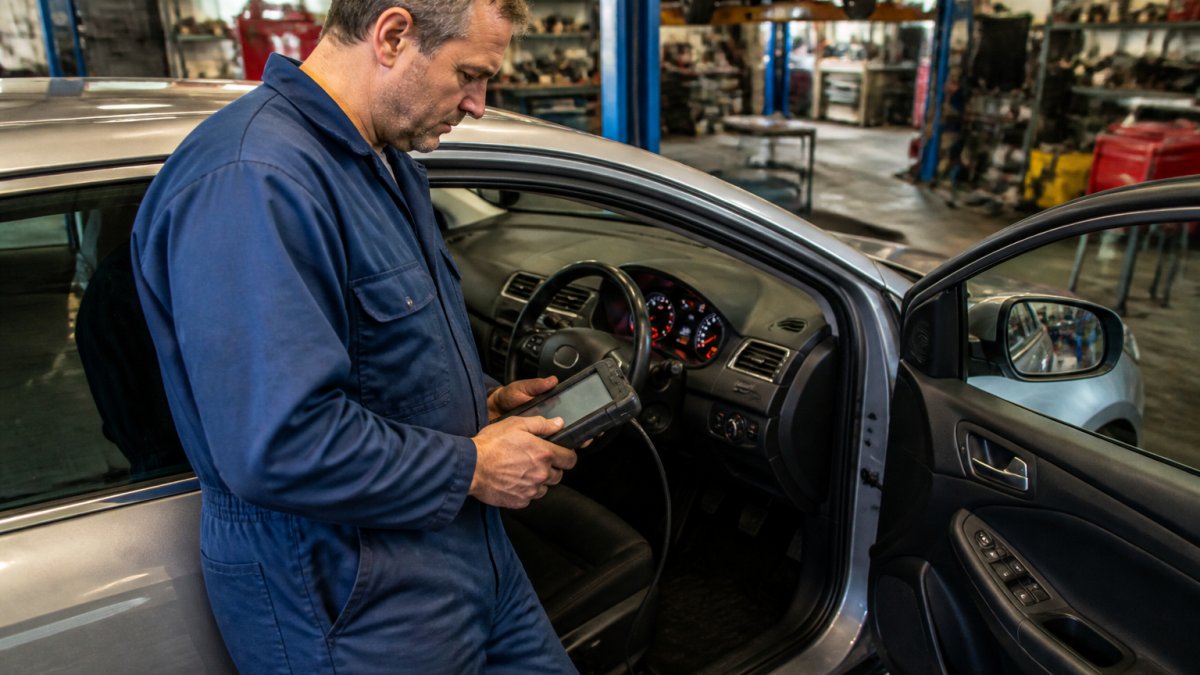
The safe route is to read and log the data the car already broadcasts, rather than cutting the wire that feeds it. A scan tool plugged into the OBD port lets you watch vehicle speed, wheel rotation and sensor output live, with no physical intervention at all.
Match the Tool to the Vehicle Architecture
Before you plug anything in, establish how the vehicle derives road speed. Three patterns dominate:
- Four-wheel ABS with individual wheel speed sensors. The ABS module publishes a vehicle speed value to the CAN bus, and the instrument cluster and ECU subscribe to it. Read the ABS module live data first; if it reports plausible speed on all four corners, the sensors are healthy and the cluster is the suspect.
- Three-channel ABS with a single rear speed source. Older light commercials and some vans combine rear wheel signals or use a gearbox-mounted vehicle speed sensor. Here the gearbox sensor feeds the cluster directly, and the ABS module may not carry a road-speed PID at all.
- CAN-gateway vehicles. On many post-2015 cars the OBD port sits behind a central gateway, so a basic engine-only scanner cannot see ABS or cluster data. You need a tool that requests modules through the gateway, or you will wrongly conclude the sensor is dead when you simply cannot reach it.
A common pattern in workshops is to confirm the sensor first, the wiring second and the cluster last. Unplugging a sensor to “test” it inverts that order and introduces the fault you are trying to find.
Scan Tools and Diagnostic Software
A capable diagnostic scanner reads vehicle speed from the ABS module and the ECU simultaneously, which is exactly what you need to confirm a speed sensor is reporting correctly. Tools such as the FOXWELL NT604, OBDSTAR X300M and XTOOL D7 appear in workshop discussions of odometer and diagnostic work, though published specifications vary widely and you should verify compatibility with your own vehicles before relying on any of them.
Bench Testing a Sensor Without Disturbing the Car
Where a wheel speed sensor is genuinely suspect, the least invasive confirmation is electrical rather than mechanical. An ABS wheel speed sensor is typically a two-wire inductive or active type. With the connector still attached and the ignition on, back-probe the signal wire at the ABS module plug and compare the reading against the manufacturer’s specified range; then repeat with the wheel rotated by hand.
Manufacturer-Approved Procedures
Service information often specifies a calibration or self-test routine after any ABS work, and some vehicles require a steering angle sensor reset before stability control will re-arm. Follow the manufacturer’s procedure rather than clearing codes and hoping. Where the goal is to keep mileage accumulation off the odometer reading during stationary dyno testing, a plug-and-play module is the cleaner answer. Our UK-made mileage blocker modules intercept the signal at the connector rather than leaving a sensor unplugged, so the dashboard display and safety systems keep working normally.
Log the odometer reading before and after every session, and photograph the cluster. A dated record is the simplest proof that mileage was managed deliberately and documented, which matters at resale and at inspection.
Mileage Recording During Vehicle Testing: Best Practices
Good mileage recording during vehicle testing comes down to a written log. Note the odometer reading at the start and end of each session, the type of test performed, and who authorised it. Keep the record with the vehicle’s service history.
A simple workflow keeps it clean:
- Record start mileage and time before the vehicle moves
- Note the test type: dyno, road test, track day or diagnostic
- Capture a photo of the instrument cluster at start and finish
- Store the log alongside invoices and fitting certificates
This discipline separates professional operations from casual ones. It also answers the question every buyer eventually asks: why does the mileage history have a gap?
Dyno Testing Mileage Management: Keeping Records Clean
Dyno testing mileage management is where the argument for alternatives to disconnecting odometer sensors for testing becomes most practical.
A mileage blocker module isolates that stationary running so the distance measurement stays off the record, while the ECU still sees what it needs to run the engine under load. The result is a clean mileage history and full diagnostic access.
For a private owner with a track-day car, it protects the value of a low-mileage example.
Comparing Odometer Sensor Testing Alternatives
The table below summarises the main routes and what each one costs you in practice.
| Method | How It Works | Main Risk | Best For |
|---|---|---|---|
| Disconnect speed sensor | Unplug connector to stop signal | Fault codes, ABS disabled | Not recommended |
| Scan tool data logging | Read live speed data via OBD | None to vehicle systems | Fault diagnosis, road tests |
| GPS speed comparison | Compare cluster to GPS reading | None to vehicle systems | Speed accuracy checks |
| Mileage blocker module | Intercepts signal at connector | None when correctly fitted | Dyno, track, storage |
Each option has a place. A scan tool tells you what the car is doing; a blocker module lets you control what gets recorded.
Legal and Ethical Boundaries of Odometer Sensor Testing
Recording and managing mileage during testing is legitimate. Misrepresenting a vehicle’s true mileage when selling it is not, and the distinction matters. Odometer tampering with intent to deceive a buyer is a criminal offence, and a documented testing log is your defence against any suggestion otherwise.
The ethical line is disclosure. If mileage was suppressed during dyno runs or storage, say so in the vehicle’s records. A collector who can show a full, honest history protects resale value far better than one who hides a gap.
The safest testing method is the one that leaves no trace of interference. Read the data, log it, and control mileage at the connector rather than by pulling sensors.
Frequently Asked Questions
Can you test a vehicle without disconnecting its odometer sensor?
Yes. Modern diagnostic scan tools can read live data from the vehicle’s ECU, including speed signals and sensor outputs, without any physical disconnection. Mileage blocker modules also sit inline and manage the signal electronically. Both approaches avoid the risks of unplugging sensors, such as triggering warning lights, storing fault codes, or disrupting ABS and traction control systems.
What are the alternatives to disconnecting an odometer sensor?
The main alternatives are diagnostic scan tools that read sensor data through the OBD port, mileage blocker modules that intercept and manage the speed signal electronically, and GPS-based speed logging for independent verification. Each method keeps the vehicle’s wiring and sensor connections intact, reducing the chance of electrical faults or stored error codes during testing.
Does disconnecting an odometer sensor affect other vehicle systems?
It can. The vehicle speed sensor often feeds data to the ABS, traction control, and stability systems. Disconnecting it may trigger warning lights, store diagnostic trouble codes, and cause those systems to default to a fail-safe mode. On some vehicles, the ECU may also log the interruption, which could be visible during a later inspection or service.
Is it legal to alter or suppress an odometer reading during vehicle testing?
UK law prohibits odometer tampering with intent to mislead about a vehicle’s true mileage. Using a mileage blocker or similar device for legitimate diagnostic or dyno testing is a different scenario from altering a reading for sale or financial gain. Always document the reason for any mileage management, keep records of before-and-after readings, and ensure the device is removed or reset before the vehicle returns to normal road use.
How should mileage be documented before and after a test?
Record the odometer reading, date, and purpose of the test before the vehicle goes on the dyno or into the workshop. After testing, note the final reading and any mileage management method used. Keep these records with the vehicle’s service history. This creates a clear audit trail that protects both the operator and the vehicle owner if questions arise later about mileage accuracy or testing procedures.
Testing a performance car should never mean gambling with its electronics, its safety systems or its resale value. At Mileage Blocker, we build UK-made, plug-and-play modules that let you run dyno sessions, diagnostics and track days without fault codes or a contaminated mileage record. Every module comes with a full fitting guide, a 12-month warranty and 24/7 expert support. Get started with Mileage Blocker and keep your testing clean, documented and trace-free.

Leave a Reply