
Best Alternative to MileageStopper for Professionals
Table of Contents
- Why Professionals Need Reliable Alternatives to MileageStopper
- What Makes a Mileage Blocker Suitable for Professional Use
- Mileage Blocker for Dyno Testing and Diagnostics
- Smelecom vs MileageStopper Modules: A Professional Comparison
- Mileage Blocker Installation and Removal for Workshop Environments
- Mileage Blocker Warranty and Technical Support: What Professionals Expect
- Making the Right Choice for Your Professional Operation
- Frequently Asked Questions
Last Updated: October 18, 2026
Why Professionals Need Reliable Alternatives to MileageStopper
When you’re running dyno testing, diagnostics, or track day operations, the mileage blocker you choose directly affects your workflow. MileageStopper has dominated the market for years, but it isn’t the right fit for every professional operation. An alternative to MileageStopper can deliver better reliability, superior support, and more transparent operation without compromising diagnostic integrity.
The challenge isn’t finding a mileage blocker, but one built for professional use: a module that integrates with workshop diagnostics, survives repeated installation cycles, and comes backed by support that answers at critical moments.
Professional-grade mileage blockers differ from consumer versions in one critical way: they’re designed for repeated, controlled testing environments rather than road use. Look for devices that explicitly document compatibility with your diagnostic equipment and offer workshop-specific installation guides.
What Makes a Mileage Blocker Suitable for Professional Use
A professional mileage blocker must operate cleanly within your vehicle’s CAN bus architecture without triggering fault codes or leaving traces in the ECU, integrating with your diagnostic workflow rather than complicating it.
Compatibility matters more than marketing claims. A professional-grade alternative to MileageStopper should document exactly which vehicles it supports with clear per-platform specifications; vague “works with most vehicles” language signals the engineering work hasn’t been done.
Technical support availability is non-negotiable. Mid-session on a dyno or diagnostic test, you can’t wait three business days for an email.
Installation design reveals how well a manufacturer understands workshop environments.
Mileage Blocker for Dyno Testing and Diagnostics
Stationary dynamometer testing requires precise mileage control. A dyno-designed mileage blocker freezes the odometer while the engine runs at full load, capturing performance data without accumulating false mileage.
The module must intercept mileage signals from the wheel speed sensors or CAN bus before they reach the instrument cluster and ECU. This prevents accumulation during your test cycle, and removing the module returns the odometer to its pre-test reading with no residual data.
Diagnostics workflows depend on clean, unaltered vehicle systems. A poorly designed mileage blocker leaves traces, fault codes, or inconsistencies a scanner will flag, creating noise in your diagnostic data.
For dyno testing, the mileage blocker must work at the signal level before data reaches the ECU. This prevents false mileage accumulation and keeps your diagnostic data clean. Devices that operate at the ECU level after the fact leave traces and compromise diagnostics.
Smelecom vs MileageStopper Modules: A Professional Comparison
Most comparisons of mileage blocker modules are published by a seller, making them useful for feature lists but unreliable for procurement.
| Requirement | What to ask MileageStopper | What to ask Smelecom | What to ask any alternative |
|---|---|---|---|
| Vehicle coverage | Request the full supported model list with model years and drivetrain variants | Request platform-specific compatibility notes and any excluded trim levels | Ask for a written compatibility confirmation for your exact VIN or platform code |
| Installation method | Confirm connector type (OBD-II, CAN bus, or inline) and whether ECU access is required | Confirm whether installation is plug-and-play or requires panel removal | Ask for a model-specific fitting guide before you buy |
| Diagnostic behaviour | Ask whether the device logs fault codes or leaves freeze-frame data | Ask how the module handles CAN bus arbitration and whether it masks signal loss | Ask for a demonstration on a vehicle with an active diagnostic session |
| Repeated install cycles | Ask for a rated connector cycle count and replacement connector availability | Ask whether the harness is serviceable or sealed | Ask how many install/remove cycles the connector is rated for |
| Support model | Confirm hours, channels, and whether workshop use is covered | Confirm response-time commitments and escalation path | Ask for a named technical contact and a sample response-time SLA |
| Warranty scope | Confirm whether commercial or workshop use is excluded | Confirm warranty term and what is excluded | Ask for the warranty document, not just the headline term |
| Documentation | Request a sample fitting guide for one of your vehicles | Request a sample guide and troubleshooting flowchart | Ask whether guides are model-specific or generic |
How to read the table. MileageStopper is positioned around broad compatibility and consumer accessibility, suiting buyers who need one device for occasional use across many vehicles.
A practical decision framework by professional role. Requirements differ materially across professional users; treating them as one buyer is the most common procurement error.
- Workshop and service technicians. Priority is clean removal and no residual diagnostic traces, because the vehicle returns to a customer. Ask for a demonstration that a standard OBD-II scan shows no stored or pending codes after removal, and confirm the device does not alter freeze-frame data.
- Dyno operators. Priority is signal stability under sustained load and repeatable odometer behaviour across back-to-back runs. Ask how the module behaves when the vehicle’s wheel speed sensors report inconsistent values, and whether it holds the odometer reading or merely interrupts accumulation.
- Fleet managers. Priority is auditability and disclosure. Ask whether the device produces any log the fleet can retain, and confirm how mileage-affecting equipment is recorded in the vehicle’s service history so that resale and compliance records remain accurate.
- Diagnostic technicians. Priority is non-interference with manufacturer diagnostic software and aftermarket scan tools. Ask for a list of diagnostic platforms the device has been tested against, and request a test on the specific tool you use.
- Motorsport and track-day operators. Priority is durability across repeated installation cycles and tolerance of vibration and heat. Ask for connector cycle ratings and whether the harness is serviceable in the field.
What a neutral comparison cannot tell you. No seller-authored table can confirm how a device behaves on your vehicles, with your tools, under your workflow.
Before comparing brands, write down your three non-negotiable requirements (for example: no stored fault codes after removal, model-specific fitting guide, and a named technical contact). Then ask every supplier the same questions in writing. The answers, not the feature table, should drive the decision.
Mileage Blocker Installation and Removal for Workshop Environments
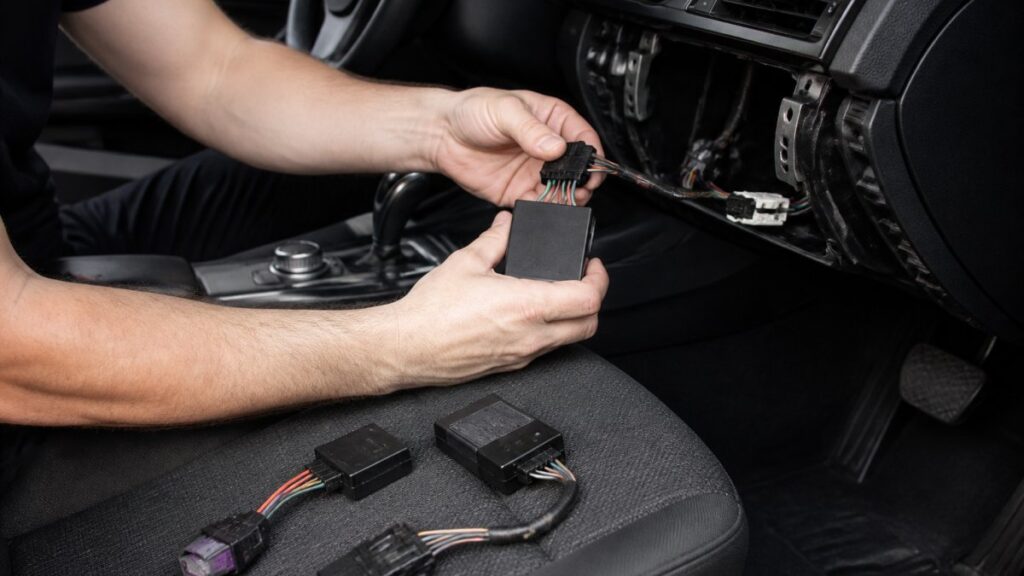
Installation speed directly impacts workshop throughput. A professional mileage blocker should fit your existing workflow without special tools, ECU access, or expertise beyond standard automotive knowledge.

Removal is equally important. Unlike permanent modifications, a professional mileage blocker should disconnect cleanly without traces or ECU reprogramming, since each installation cycle on the same vehicle should be identical.
Documentation quality separates professional tools from consumer devices. Model-specific fitting guides with clear diagrams of connector locations, signal paths, and installation sequences prevent costly errors.
Compatibility with your diagnostic equipment is non-negotiable.
Mileage Blocker Warranty and Technical Support: What Professionals Expect
Warranty length is the least useful number in a procurement decision. A 12-month term excluding commercial use is worth less than a 6-month term covering workshop environments. Evaluate warranty and support within a total cost of ownership calculation that includes downtime, replacement lead time, and the administrative cost of a failed claim.
Build a total cost of ownership model. The purchase price is only one line. A practical model for a professional operation includes:
- Purchase and fitting cost. Device price plus the labour time to install and remove it. A plug-and-play module that takes 15-30 minutes is cheaper in labour than one requiring ECU access, even at a higher sticker price.
- Warranty scope. Confirm in writing whether the warranty covers commercial, workshop, dyno, or motorsport use. Many consumer warranties exclude exactly the applications professionals need.
- Replacement lead time. Ask how quickly a replacement module can be dispatched and whether advance replacement is available. Downtime cost per day is often larger than the device price.
- Support response commitment. Ask for a response-time target, not just a channel list. Email support with a 24-48 hour target is materially different from a live channel with a same-hour target during business hours.
- Update and firmware policy. Ask whether firmware updates are included, how they are delivered, and whether an update can be rolled back if it causes a compatibility issue.
- End-of-life and repairability. Ask whether the harness and connectors are serviceable, and whether out-of-warranty repair is offered rather than replacement-only.
Support expectations by professional role. A dyno operator mid-session needs a live channel and a technician who can troubleshoot in real time. A workshop technician fitting a module for the first time needs a model-specific guide and troubleshooting flowchart. A fleet manager needs documented warranty terms and an audit trail.
Questions to put in writing before you buy.
- Does the warranty cover commercial and workshop use, and can you send the warranty document?
- What is the response-time target for technical support, and during which hours?
- Is advance replacement available, and what is the typical dispatch time?
- Are firmware updates included, and can they be rolled back?
- Is the harness or connector serviceable out of warranty?
- Can you provide a model-specific fitting guide and troubleshooting flowchart for my vehicle?
A cheap module with no meaningful support infrastructure carries a hidden cost that exceeds any upfront saving. If a device fails during a booked dyno session or a customer’s diagnostic appointment, the lost labour and reputational damage are rarely covered by a budget warranty. Verify support availability and warranty scope in writing before committing.
Documentation as a support multiplier. Comprehensive guides, troubleshooting flowcharts, and video walkthroughs reduce support tickets and shorten resolution time. Ask for a sample guide for one of your actual vehicles; a generic guide covering dozens of models signals model-specific engineering hasn’t been done. Also request the list of scan tools and diagnostic platforms the device has been tested against and confirm it includes yours.
Evaluate warranty and support as part of total cost of ownership, not as a headline term. The four items that matter most are warranty scope for commercial use, a written response-time target, replacement lead time, and model-specific documentation. Request each in writing before purchase.
Making the Right Choice for Your Professional Operation
The decision comes down to matching the device to your workflow. High-volume dyno testing demands reliability and speed. A diagnostic workshop needs clean signal interception and minimal traces.
MileageStopper works for some professionals with straightforward, high-volume needs and tolerance for generic support. But it’s not optimised for modern vehicle electronics or time-critical workshop environments.
The choice is straightforward: generic alternatives that try to serve everyone, or a professional-grade solution engineered for your actual needs. According to automotive diagnostic standards from the Society of Automotive Engineers, clean signal interception without ECU traces is critical for reliable diagnostics.
Your workshop’s reputation depends on reliability and precision. A mileage blocker failure mid-session doesn’t just cost time, it damages client trust.
Frequently Asked Questions
What is the best alternative to MileageStopper for professional dyno testing?
The best alternative depends on your specific needs: vehicle compatibility, required precision, and support availability. UK-made modules designed for professional workshops offer plug-and-play installation, comprehensive technical support, and compatibility across multiple vehicle models. Look for options with a 12-month warranty, 24/7 support access, and proven reliability in stationary testing environments. Verify that the module integrates seamlessly with your existing diagnostic equipment without triggering fault codes or leaving traces in vehicle control units.
How does mileage blocker installation differ between professional and consumer use?
Professional installation prioritises reversibility, audit trails, and minimal vehicle disruption. Workshop environments require modules that can be installed and removed cleanly without affecting warranty or leaving diagnostic evidence. Professional-grade alternatives offer detailed fitting guides, technical support during installation, and compatibility documentation for specific vehicle models. Dyno operators particularly need modules that operate reliably in controlled, stationary conditions without interfering with performance testing data or engine management systems.
What warranty and support should professionals expect from a mileage blocker provider?
Professional operators should demand a minimum 12-month warranty covering module failure and defects, plus 24/7 technical support for troubleshooting during critical testing windows. Quality providers offer phone support outside standard business hours, detailed installation guidance, and replacement protocols if issues arise mid-test. Verify that support extends to vehicle-specific compatibility questions and diagnostic integration. Post-warranty repair options and extended support plans should also be available for high-volume workshop operations.
Are mileage blocker alternatives legal for professional dyno testing and diagnostics?
Mileage blockers used for stationary dyno testing, engine diagnostics, and controlled workshop environments operate in a different legal context than road use. The key distinction is purpose: diagnostic testing on private facilities differs from mileage misrepresentation on public roads. However, professionals must maintain transparent records of testing sessions and ensure disclosure to vehicle owners if testing affects odometer readings. Always verify compliance with local regulations and maintain full documentation of testing activities. Using a mileage blocker for legitimate diagnostic purposes, with proper disclosure and record-keeping, protects your professional standing and legal position.
For professionals managing vehicle diagnostics, dyno testing, or track day operations, Mileage Blocker delivers the reliability and technical support your workflow demands. Our UK-made modules provide clean signal interception, seamless diagnostic integration, and 24/7 expert support. Get started with Mileage Blocker and eliminate the uncertainty that comes with generic alternatives.
Leave a Reply