
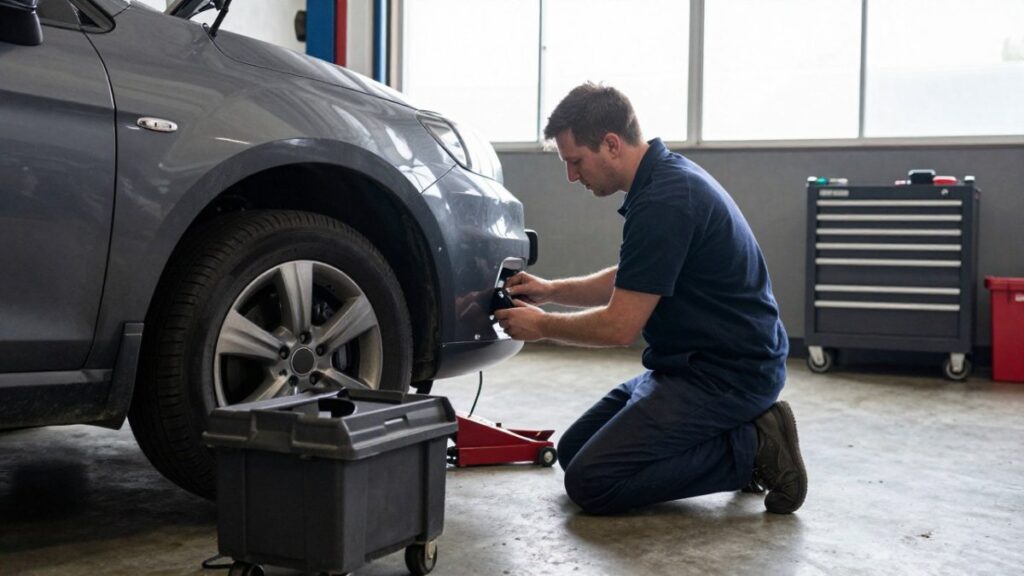
Is Mileage-Free Dyno Testing Safe and Legal to Do?
Quick Summary
Mileage-free diagnostics means running a dyno or ECU test in a controlled setting without the odometer reading changing. It is legal when every session is logged with odometer readings before and after, but altering or concealing mileage for a sale, inspection or insurer is not.
- Log every session with date, purpose and odometer readings before and after the test.
- Altering or concealing mileage for a buyer, inspector or insurer is the legal line to avoid.
- Run a safety checklist before each dyno session, covering tyres, restraints, fluids and extinguisher.
- Record fault codes and freeze-frame data before clearing anything, so the cause can be diagnosed.
- Re-scan after a short normal drive to confirm whether a fault code actually returns.
Table of Contents
- Why Mileage-Free Diagnostics Is A Narrow, Sensitive Topic
- Legal and Ethical Boundaries Before You Touch the Odometer
- Dyno Testing Safety Checklist Before Any Session
- Vehicle Mileage Documentation Before and After Testing
- Mileage Blocker Installation Guide and Compatibility Checks
- Diagnostic Fault Codes After Dyno Testing and How to Read Them
- Choosing Your Next Step for Safe Diagnostic Testing
- Frequently Asked Questions
That’s the right question to ask first, and it’s worth being clear about what this guide can and cannot cover.
Mileage-free diagnostics is a narrow and sensitive topic. Dyno testing, ECU tuning and track sessions are legitimate activities, but altering or blocking an odometer reading can cross legal lines once a vehicle is sold, insured or inspected. This guide explains the boundaries, a safe testing routine and how to read the diagnostic results that come after a session. It does not show anyone how to hide mileage from a buyer or an inspector.
Mileage-free diagnostics means running a test without the odometer reading changing on a vehicle that is being tested in a controlled setting. The idea is simple. The execution is where mistakes happen.
Why Mileage-Free Diagnostics Is A Narrow, Sensitive Topic
Most of the people who search this phrase fall into a few groups. Tuners want stable test conditions. Dyno operators want accurate runs. Owners want to keep recreational miles separate from testing miles. Each group has a valid reason, but the same technique can be misused, so the topic needs care.
A common mistake is treating mileage as a single number. Mileage is recorded in several places, and the odometer is only one of them. Your job is to know which records a test touches and to keep a clear paper trail for each one.
- Keep test logs with date, time and session purpose
- Note the odometer reading before and after every session
- Keep receipts and dyno sheets with the vehicle file
Legal and Ethical Boundaries Before You Touch the Odometer
Before any work starts, it helps to be precise about what the law actually targets. In the UK, the concern is not testing a vehicle as such. It is changing or concealing the mileage recorded on a vehicle so that a buyer, insurer, finance provider or inspector receives a false picture of its use. UK law treats misleading a buyer about a vehicle’s history or mileage as a serious matter, and the exact outcome depends on the facts, so the relevant rules should be checked with a qualified adviser rather than treated as a checklist.
The practical line is between controlled, documented testing and road use or resale deception. Running a car on a dynamometer in a workshop, with the session logged and the reading recorded before and after, is an ordinary diagnostic activity. Driving the same car on the public road and then presenting a reading that omits those miles to a buyer is a different matter. The first leaves an honest trail. The second is designed to remove one.
There are also lawful ways to keep test miles separate. Some tuners log the reading and accept the miles, noting test sessions in a separate record so the service history explains the difference. Others keep a dedicated test vehicle or a second car so the main vehicle’s history is never disputed. Where a manufacturer offers a workshop or service mode for calibration, using that approved route is the safest option because it does not require anyone to edit a stored value.
Watch out: a mileage record that does not match the service history, MOT entries or manufacturer records can cause problems with a sale, a check or an insurance claim. If you are unsure whether a planned step is lawful, speak to a solicitor before proceeding, and keep every record that shows what you actually did.
For the official position on buying and selling used cars, see GOV.UK guidance on buying and selling used cars.
Dyno Testing Safety Checklist Before Any Session
Safety comes first on a dyno. A technician in a workshop reviewing a printed checklist beside a vehicle on a dyno rig is the standard routine for good operators, and it should be yours too.

Work through this list before every run:
- Secure the vehicle and check tyre pressures
- Confirm the dyno rollers and restraints are in good order
- Check fluids, coolant and battery condition
- Confirm fire extinguisher and first-aid kit are in reach
- Record the starting odometer reading and session purpose
Most dyno incidents happen during the warm-up and cool-down stages, not at peak power. Take those stages seriously.
Vehicle Mileage Documentation Before and After Testing
Good documentation protects you. It shows what you did, when you did it and why. Clear records also help when a buyer asks about the car’s history.
Use a simple template for each session:
Session date: ____
Vehicle make, model and registration: ____
Odometer before test: ____
Test purpose (for example, ECU mapping check): ____
Odometer after test: ____
Operator name: ____
Store these records with the vehicle file. When you check the vehicle’s mileage later, the logs should explain every change.
Mileage Blocker Installation Guide and Compatibility Checks
Mileage Blocker makes UK-made plug-and-play modules with a 12-month warranty. Installation follows the provided fitting guide, so an installer can work from a clear set of instructions.
Compatibility matters. Confirm that the module suits your exact make, model and year before you order. If you are unsure, contact Mileage Blocker with your vehicle details.
Whatever you decide, the lawful test is the same. Any device that alters a recorded reading is subject to the legal boundaries above, so check those before any installation.
Diagnostic Fault Codes After Dyno Testing and How to Read Them
A fault code after a dyno session is information, not a verdict. The engine control unit stores a diagnostic trouble code when a monitored value falls outside its expected range for longer than a set period. Dyno work is demanding by design, with sustained load, rapid throttle changes and high intake temperatures, so codes that appear during or shortly after a run often point to a real stress on a component rather than a random fault. The task is to decide which kind you are looking at.
Start by reading the code exactly as stored, along with its status. A pending code means the fault was seen once and has not yet been confirmed. A confirmed or stored code has persisted across driving cycles. Freeze-frame data records the engine conditions at the moment the code was set, including engine speed, load, coolant temperature, fuel trim and throttle position. Compare those values with the dyno sheet for that run. If the freeze-frame shows the fault was set at peak load or at a temperature spike, the test conditions are the likely trigger. If it was set at idle or during a steady cruise on the road, the cause is more likely unrelated to the session.
Read codes with a proper OBD-II tool. A standalone OBD-II reader can display codes, descriptions and freeze-frame data, and workshops often choose a dedicated handheld device for this. Whichever tool you use, record each code, its status and the freeze-frame values before clearing anything.
A practical routine after testing:
- Scan the vehicle for stored and pending codes
- Write down each code, its status and the freeze-frame data
- Compare the freeze-frame conditions with the dyno sheet for that run
- Clear codes only once you understand their cause
- Re-scan after a short, normal drive to confirm whether the fault returns
- Book a professional diagnosis if the same code keeps coming back
Watch out: clearing codes before recording them erases the freeze-frame data you need to diagnose the cause, and it also resets readiness monitors, which can make a later inspection or emissions check fail even when the fault is fixed. Because cleared readiness monitors can complicate an emissions check even after a repair, confirm what testing is appropriate with Mobile Emissions Pro before relying on a mobile emissions test.
Keep the code log alongside your session and mileage records. A clear file showing what was logged, what was seen and what was done is the strongest protection for the owner, the tuner and any later buyer.
The article sets out a routine for reading fault codes after a dyno session, so the key steps are easy to scan.
| Step | What to do | When |
|---|---|---|
| 1 | Scan for stored and pending codes | Right after the session |
| 2 | Record each code, its status and freeze-frame data | Before clearing anything |
| 3 | Compare freeze-frame values with the dyno sheet | Same day as the run |
| 4 | Clear codes only once their cause is understood | After diagnosis |
| 5 | Re-scan after a short, normal drive | After clearing |
| 6 | Book a professional diagnosis if the code returns | If it keeps recurring |
Choosing Your Next Step for Safe Diagnostic Testing
Start with the legal boundary and the safety checklist. Then choose the simplest setup that meets your testing need. A tuning shop running a handful of sessions a month may find that documented logs and a reliable scanner are enough, while a larger operation may justify a more formal process.
If you want to see what diagnostic hardware is available, browse the Diagnostic Tools category to compare scanners that suit your workshop. Anyone who plans to use a Mileage Blocker module should first read Alternatives to Disconnecting Odometer Sensors for Testing and Safe Mileage Management for Dyno Tuning: 2026 Guide, then review the wider guidance on How to Avoid Fault Codes During Dyno Testing.
Check Mileage Blocker’s website for current pricing and availability, since pricing depends on quantity and delivery. Keep every record, check the law and choose the approach that you can explain to a buyer, an inspector or your insurer.
Frequently Asked Questions
Can a car be tested on a dyno without adding mileage to the odometer?
Dyno testing is performed on a rolling or static rig, so the car does not cover road distance, but the odometer can still advance if the engine is run for extended periods with the vehicle’s mileage system active. Whether the reading changes depends on the vehicle and how the test is set up. Operators should confirm the expected odometer behaviour before the session, record the reading beforehand, and keep a note of any change afterwards so the records stay accurate and honest.
Is it safe to use a mileage blocker during diagnostics?
A mileage blocker should only be used where it is lawful and the purpose is legitimate, such as stationary engine diagnostics, dyno work or a track day. Using it to misrepresent a vehicle’s mileage for sale is a serious matter under UK law. Keep a written record of the device fitted, the purpose and the dates, and remove it when the testing is complete.
Can dyno testing trigger fault codes?
Dyno testing can produce fault codes because the engine runs under load conditions that a normal road journey may not reproduce, and sensors may report values outside their expected range. Fault codes stored during a session are not necessarily faults with the vehicle. Read the codes with an OBD-II scanner before and after the test, note any new entries and compare them against the test log.
How can I document mileage before and after dyno testing?
Photograph the odometer with a timestamp before the session starts, then again once the vehicle is parked and the test is finished. Record the figures in a logbook alongside the date, the test purpose, the operator’s name and any device fitted. Keeping this audit trail protects both the customer and the workshop if the vehicle’s history is questioned later.

Leave a Reply