Is There a Real Alternative to Dynotest for Diagnostics?
Last Updated: November 5, 2026
Quick Summary
A real alternative to dynotest depends on the job. Dynotest measures engine power and torque, while an OBD-II scanner reads fault codes, live sensor data and readiness monitors through the diagnostic port. For diagnostics, a scanner is the practical dynotest alternative for diagnostic testing.
- An OBD-II scanner plugs into the standard diagnostic port and reads stored and pending fault codes.
- A scanner cannot measure engine power or torque directly, which a rolling road does.
- Record every fault code and its freeze frame data before clearing anything.
- Clearing codes resets readiness monitors and erases the evidence needed to find the cause.
- Check protocol and manufacturer-specific code support before buying a scanner.
Table of Contents
- What Dynotest Is Used For and Where It Falls Short
- OBD-II Scanner for Car Diagnostics: What It Can and Cannot Tell You
- Reading an Engine Fault Code Reader Output Step by Step
- Rolling Road Testing Versus Vehicle Diagnostics Without a Dyno
- Comparing Dynotest Alternatives on Compatibility, Cost and Accuracy
- Safety, Legal and Warranty Considerations When Testing
- Choosing Your Diagnostic Setup and Next Steps
- Frequently Asked Questions
What Dynotest Is Used For and Where It Falls Short
Dynotest is a dynamometer-based testing approach used to measure engine output and check performance under controlled load. When the goal is to assess a vehicle before purchase rather than measure engine output, vehicle diagnostic testing can help distinguish a fault-code check from a broader evaluation of its condition.
Mileage Blocker focuses on a related but separate concern: managing odometer readings during dyno testing, diagnostics, track days and off-road use. So it helps to be clear about which problem you are solving before you choose a method.
Where dyno-based testing falls short is in access and cost. A rolling road is not something most owners can book on a whim, and it tells you about power and torque rather than the electronic health of the vehicle.
OBD-II Scanner for Car Diagnostics: What It Can and Cannot Tell You
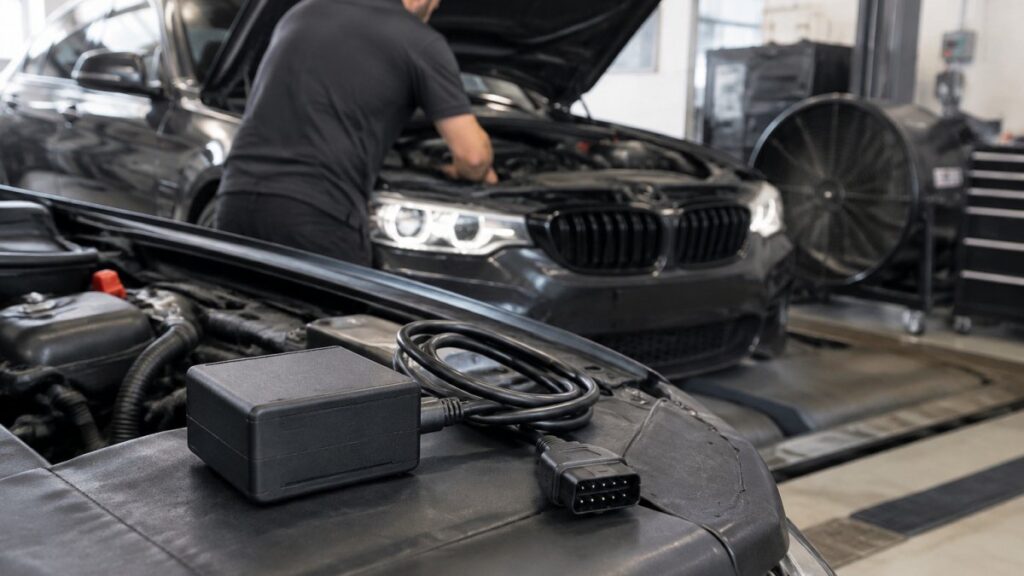
An OBD-II scanner plugs into the standard diagnostic port found on nearly all modern cars and reads stored and pending fault codes from the engine management system. It is the most common practical alternative for general diagnostics because it is inexpensive and portable.
What it can do well:
- Read and clear diagnostic trouble codes (DTCs)
- Show live sensor data such as coolant temperature, fuel trim and engine speed
- Confirm whether a warning light reflects a stored fault
What it cannot do:
- Measure engine power or torque directly
- Explain why a code was set without further investigation
- Detect every mechanical problem, since many faults never trigger a code
Scanners vary considerably in capability. A basic code reader will not offer the same live data or bidirectional control as a professional unit, so check the supported protocols before buying.
Reading an Engine Fault Code Reader Output Step by Step
A fault code is a starting point, not a diagnosis. Use this sequence to get useful information from a reader:
- Connect and power up. Plug the scanner into the diagnostic port and turn the ignition on without starting the engine.
- Record every code. Write down each code exactly, including any pending or permanent codes, before clearing anything.
- Look up the code definition. Codes beginning with P0 are generic across manufacturers, while P1 codes are often manufacturer-specific.
- Check freeze frame data. This shows the conditions when the fault was recorded, such as engine temperature and speed.
- Review live data. Watch relevant sensors while the engine runs to see whether readings match what you expect.
- Clear codes only after diagnosis. Clearing a code erases the evidence and resets readiness monitors.
A common mistake is clearing codes and assuming the problem is solved. If the fault returns, you have lost the freeze frame data you needed to find the cause.
Rolling Road Testing Versus Vehicle Diagnostics Without a Dyno
A rolling road measures power and torque at the wheels with the car driven on rollers.
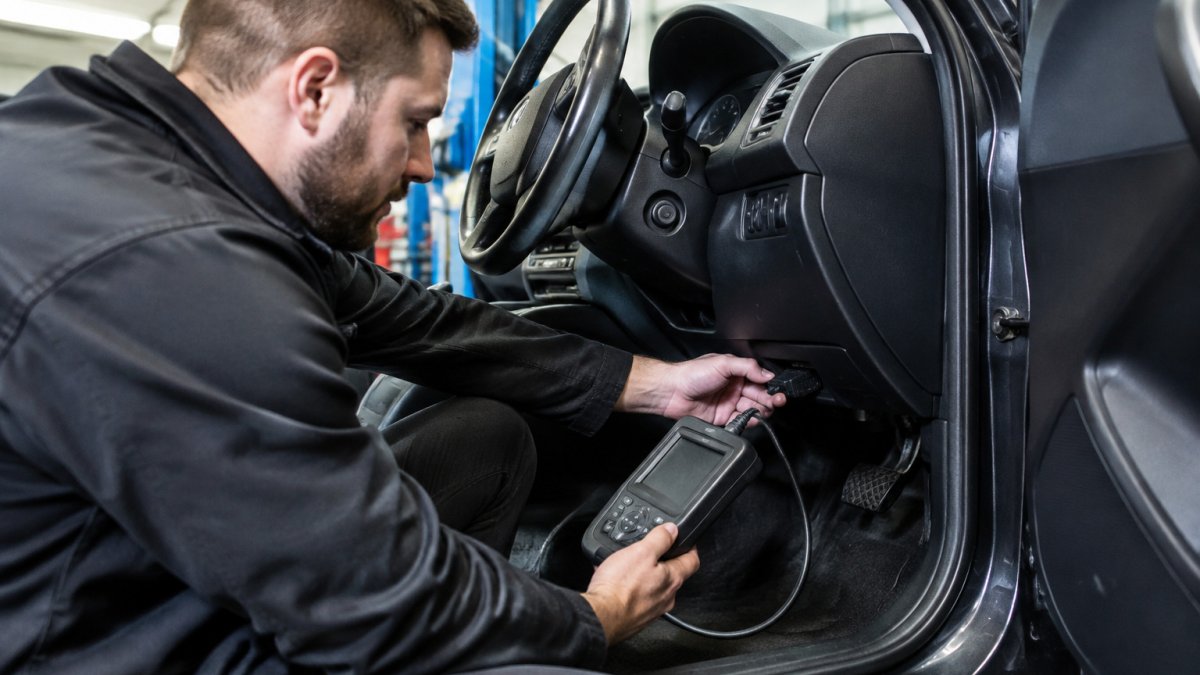
Diagnostics without a dyno, by contrast, rely on scanners, multimeters, visual inspection and road testing.
The two approaches complement each other. A typical workflow runs diagnostics first to confirm the vehicle is healthy, then uses a rolling road to measure the results of any tuning or repair.
Comparing Dynotest Alternatives on Compatibility, Cost and Accuracy
Most results for this query blur two different jobs: measuring engine output on a rolling road, and reading a vehicle’s electronic health through the diagnostic port. A like-for-like comparison has to separate them first, then judge each option on vehicle coverage, total outlay and the accuracy that actually matters for the task.
What each option is genuinely for
- Dynotest-style rolling road session. Measures power and torque at the wheels under controlled load. The right tool after tuning or engine work, when you need a before-and-after figure. It does not read fault codes, live sensor data or readiness monitors.
- Handheld OBD-II scanner. Plugs into the standard 16-pin diagnostic port and reads stored, pending and permanent codes plus live data. The practical default for warning lights, emissions checks and intermittent faults.
- Professional multi-system diagnostic tool. Reads modules beyond engine management (ABS, airbag, transmission, body control) and offers bidirectional actuator tests and service resets. The step up when a code reader is not enough.
Compatibility: what to check before buying
Vehicle coverage is where cheap tools quietly fail. Before purchase, confirm:
- Protocol support. Most cars first registered in the UK from around 2001 onward use EOBD/OBD-II, but older and some specialist vehicles may not. Check that the tool lists the protocols your vehicle uses, not just ‘OBD-II compatible’.
- Manufacturer-specific codes. Generic P0 codes are shared across makes; P1 and manufacturer codes need marque-specific software. A tool that only reads generic codes will miss a large share of real faults on modern cars.
- Module coverage. Engine-only tools will not touch ABS, airbag or transmission faults. If you need those, check the tool’s module list rather than its headline features.
- Adapters and connectors. Some vehicles need a manufacturer-specific adapter or a 16-pin to older-style cable. Factor the adapter cost into the purchase.
- Update path. Software updates add new vehicle coverage and fix bugs. A tool with no update route ages quickly as new models appear.
A practical compatibility matrix, using the categories above rather than unverified model claims:
| Option | Vehicle coverage | Protocols / modules | Adapters needed | Best diagnostic task |
|---|---|---|---|---|
| Rolling road session | Depends on the operator’s equipment | None (mechanical measurement) | None | Power and torque measurement |
| Basic code reader | EOBD/OBD-II vehicles, engine only | Generic codes, live data on some units | Usually none | Warning light and emissions checks |
| Mid-range scanner | Broader marque coverage, engine plus some modules | Manufacturer codes, limited bidirectional | Sometimes | Fault finding beyond the engine |
| Professional multi-system tool | Wide marque and module coverage | Full module access, bidirectional, resets | Often | Complex electrical and module faults |
| Mileage-control module | Vehicle-specific fitment | None (odometer signal management) | Fitment-specific | Odometer management during testing |
Total cost of ownership
Upfront price is the least reliable guide. Build the real cost from these components:
- Purchase price. Ranges from budget code readers to professional multi-system tools; confirm the current price with the supplier rather than relying on a listing.
- Software updates and subscriptions. Some tools include a period of free updates (commonly one to three years), after which renewal is chargeable. A tool with no renewal path can become obsolete within a few model cycles.
- Adapters and accessories. Manufacturer-specific cables, extension leads and protective cases add to the total.
A cheaper scanner with no update path can cost more over several years than a mid-range unit with a clear support commitment, because it will need replacing sooner.
Accuracy: how to judge it honestly
Accuracy claims should be checked against independent testing rather than marketing copy. Look for reviewers who state their methodology: which vehicles were tested, which known faults were present, and whether results were compared against a dealer-level tool.
Watch out: a tool that reads a code correctly but cannot show freeze-frame data or live sensor values gives you a symptom, not a diagnosis, and that limitation rarely appears in the headline specification.
Safety, Legal and Warranty Considerations When Testing
None of the top results for this query address the legal and warranty side properly, yet it is the area where a wrong choice carries the most risk. The key distinction is between legitimate diagnostics and anything that falsifies a vehicle’s recorded history or signals.
Legitimate diagnostics versus prohibited tampering
Reading fault codes, viewing live data and clearing codes after a repair are normal maintenance activities. What is not acceptable is altering a vehicle’s recorded mileage or signals in a way that misrepresents its condition, particularly before a sale, an MOT or an inspection. Misrepresenting a vehicle’s mileage or history to a buyer can amount to fraud, and a vehicle with a false odometer reading may also fail to meet the roadworthiness standard expected at MOT.
Warranty implications
Modifying a car’s electronics or odometer behaviour may affect manufacturer warranty terms, and dealers can decline a claim where they can show a modification caused or contributed to the fault. Before fitting any aftermarket device:
- Read the warranty documents and check the exclusions for electronic modifications.
- Keep the original parts and any fitting instructions so the vehicle can be returned to standard.
- Ask the dealer in writing whether the specific device affects cover.
MOT and roadworthiness
Diagnostic work interacts with the MOT in two ways. First, clearing fault codes resets emissions readiness monitors, and a vehicle may need a drive cycle before it is ready for an emissions test. Second, an illuminated engine management light is an MOT failure point, so clearing a code without fixing the cause simply postpones the problem. Check readiness monitors before presenting a vehicle for test.
Electrical and personal safety
- High-voltage systems. Hybrid and electric vehicles carry lethal voltages (Electric and hybrid vehicles). Do not work on high-voltage components unless trained and authorised; follow the manufacturer’s isolation procedure.
- Airbags and restraints. Never probe airbag circuits with a multimeter. Disconnect the battery and wait the manufacturer’s specified period before working near restraint components.
- Battery and charging. Disconnect the battery where the procedure requires it, and avoid creating sparks near the battery.
Data and record keeping
Keep a written log of codes read, freeze-frame data and the repairs carried out. This record supports warranty claims, helps the next technician and demonstrates that any mileage device was used for a lawful purpose.
Before you buy, confirm that the module suits your vehicle and that you have a lawful reason to use it. You can compare fit, fitting help, warranty, returns and lawful use before making a decision.
Choosing Your Diagnostic Setup and Next Steps
The right setup depends on what you need to find out. For a warning light or fault code, an OBD-II scanner will handle most jobs at a reasonable cost. For measuring performance changes, a rolling road is the proper tool.
If you run dyno sessions regularly, decide whether dedicated mileage control fits your workflow. Mileage Blocker supplies UK-made plug-and-play modules for dyno testing, diagnostics, track days and off-road use.
Frequently Asked Questions
What is Dynotest used for in vehicle testing?
Dynotest is generally used to measure engine output on a dynamometer, showing power and torque figures under controlled load. Workshops use this kind of testing to check tuning results and compare performance before and after changes. It measures output rather than reading stored fault codes, so it is usually paired with a separate diagnostic scanner when a fault needs tracing. Pricing for any specific service depends on the workshop and the session, so ask for a quote before booking.
Can an OBD-II scanner diagnose faults without a dyno?
Yes. An OBD-II scanner reads stored diagnostic trouble codes and live sensor data from the engine control unit without any dynamometer. This makes it the usual first step when a warning light appears or a fault is suspected. A scanner identifies which system has reported a problem, but it does not measure power output, so it cannot confirm performance figures on its own. Many faults can be narrowed down this way before any further testing is needed.
Is a diagnostic scanner as accurate as a dyno test?
They measure different things, so neither replaces the other. A diagnostic scanner is accurate at reporting what the vehicle’s systems have logged, including fault codes and live sensor readings. A dyno test measures actual power and torque at the wheels or crank under load. For fault finding a scanner is the better tool, while for verifying output a dyno is the better tool. Accuracy depends on the quality of the tool and the sensors it reads.
Do you need a dyno to diagnose engine performance problems?
Not always. Many performance problems show up as fault codes or abnormal live data, which a scanner can read without a dyno. Some issues, such as a loss of power only under load, are easier to confirm on a rolling road or dyno where the engine can be tested under controlled conditions. Start with a scanner to gather data, then decide whether load testing is needed to confirm the cause.

Leave a Reply