
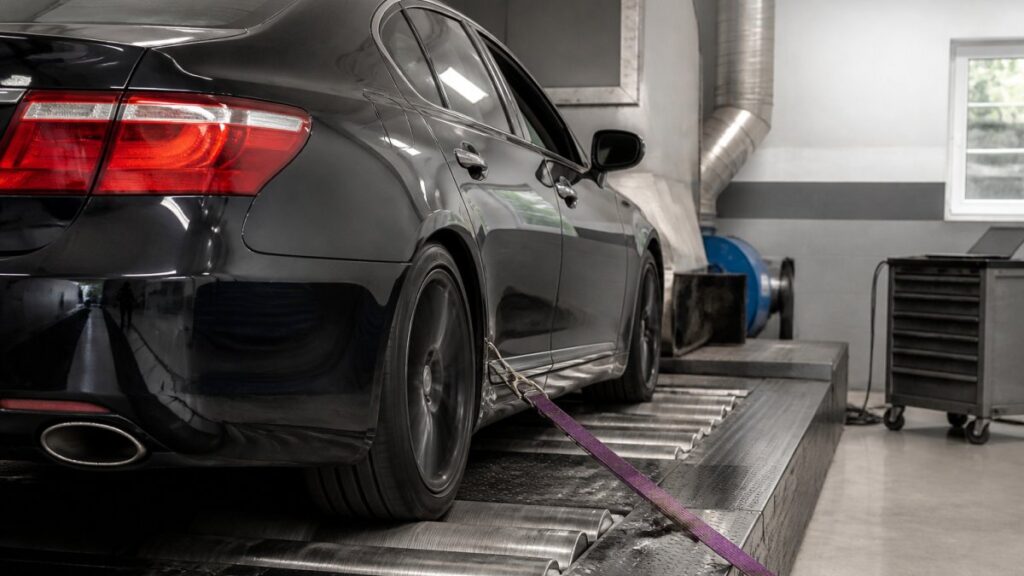
How to Avoid Fault Codes During Dyno Testing
Last Updated: October 30, 2026
Quick Summary
Avoid fault codes during dyno testing by scanning the car cold, recording every stored and pending code, and checking fluids, tyres, battery and cooling fan before the car reaches the rollers. Disable traction control and stability systems, enable dyno mode where required, and re-scan immediately after each pull to compare against your baseline.
- A test-induced code is logged by the dyno environment, not a real mechanical failure.
- Record the code number and freeze-frame data before clearing anything, or you destroy the evidence.
- A flashing amber light usually means a misfire severe enough to damage the catalytic converter, so stop the pull.
- Clearing codes resets emissions readiness monitors, which can affect an MOT emissions check.
- A code that returns after clearing is a genuine fault, not noise.
Table of Contents
- Why Fault Codes Appear During Dyno Testing
- The Dyno Testing Checklist for a Code-Free Session
- Running a Diagnostic Scan Before and After Dyno Testing
- Dyno Setup and Test Conditions That Trigger Codes
- What to Do When the Check Engine Light Comes On During a Dyno Test
- Handling Fault Codes After Dyno Tuning
- Book Your Next Dyno Session with Mileage Management in Place
- Frequently Asked Questions
Why Fault Codes Appear During Dyno Testing
Fault codes appear during dyno testing because a chassis dyno puts a car through conditions its engine management system never sees on the road.
A dyno run holds the vehicle stationary while the driven wheels spin the rollers. The ECU sees high engine load, no road speed at the front wheels, and often no airflow over the radiator. That mismatch trips plausibility checks.
Test-Induced Codes vs Genuine Faults
A test-induced code is a fault logged because of the dyno environment, not a real mechanical failure. A genuine fault is a real problem the test has exposed.
The difference matters. Clear a genuine fault and you risk engine damage. Clear a test-induced code and you simply finish the session.
Common test-induced triggers include:
- Driven wheels spinning while non-driven wheels stay still
- Traction control and stability systems sensing a mismatch
- Low airflow over the radiator and intercooler
The Dyno Testing Checklist for a Code-Free Session
A clean dyno testing checklist starts before the car reaches the rollers. Work through these steps in order to remove most reasons a code appears.
- Scan the car cold. Record every stored and pending code before you touch anything.
- Check fluid levels. Oil, coolant and fuel. A low tank can cause fuel starvation under load.
- Inspect the basics. Air filter, spark plugs and ignition system. Fresh plugs are cheap insurance.
- Check tyre pressures and condition. Uneven tyres cause wheel speed mismatch.
- Confirm the battery is healthy. Low voltage upsets ECU communication.
- Note the fuel level. A full tank reduces the risk of fuel surge.
- Test the cooling fan. Confirm it cuts in before you load the engine.
- Ask the owner about recent work. A recent remap or sensor swap changes the picture.
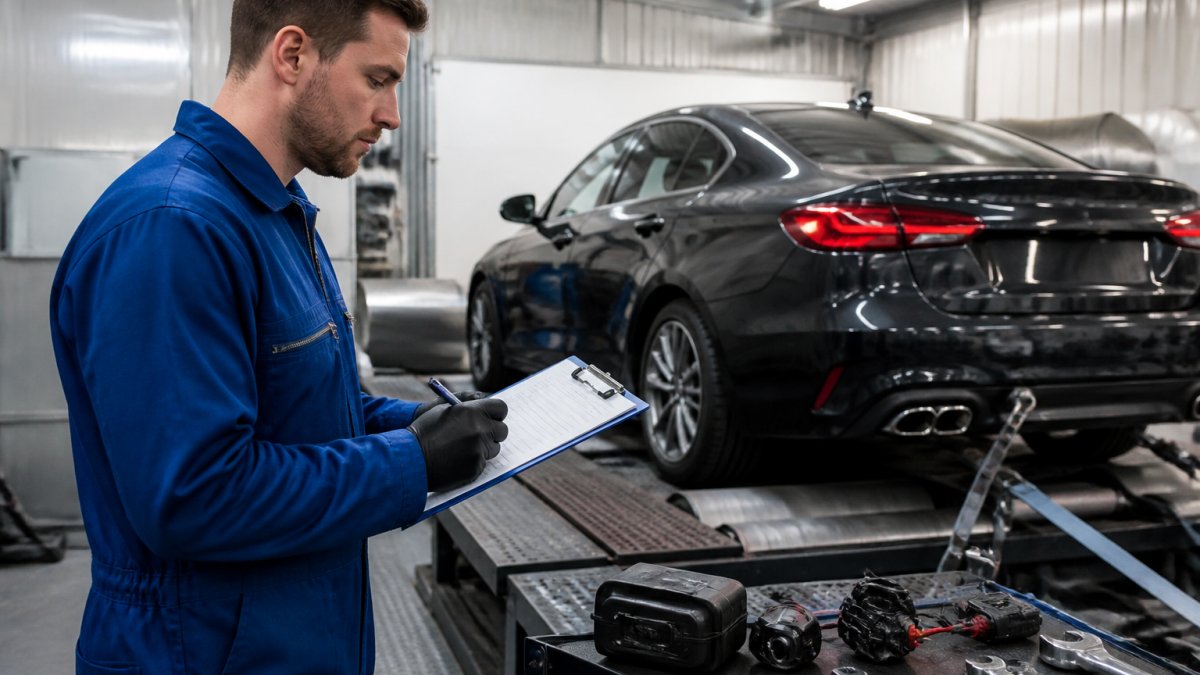
Work through these steps in order before the car reaches the rollers to remove most reasons a code appears.
| Step | What to do | Note |
|---|---|---|
| 1 | Scan the car cold | Record every stored and pending code |
| 2 | Check fluid levels | Low fuel tank can cause fuel starvation under load |
| 3 | Inspect the basics | Air filter, spark plugs and ignition system |
| 4 | Check tyre pressures and condition | Uneven tyres cause wheel speed mismatch |
| 5 | Confirm the battery is healthy | Low voltage upsets ECU communication |
| 6 | Note the fuel level | A full tank reduces fuel surge risk |
| 7 | Test the cooling fan | Confirm it cuts in before loading the engine |
| 8 | Ask the owner about recent work | A recent remap or sensor swap changes the picture |
Running a Diagnostic Scan Before and After Dyno Testing
Run a diagnostic scan before and after dyno testing, and save both reports. The pre-test scan gives you a baseline. The post-test scan tells you what the session changed. Without the pair, you cannot tell a new code from an old one.
The value is in the sequence: scan and record, monitor live data during the pull, re-scan immediately after, then compare and decide.
Stored, Pending and Permanent Codes Explained
Most scan tools report codes in three states, and the distinction drives every decision you make on the dyno:
- Pending codes are faults the ECU has seen once but not yet confirmed across the required drive cycles. They are the earliest warning you get and the most useful on a dyno, because a pending code often appears during a pull before it matures into a stored code.
- Stored (confirmed) codes have met the ECU’s confirmation criteria and usually illuminate the warning light. These matter for the post-test comparison.
- Permanent codes are emissions-related codes the ECU will not let a scan tool clear until the relevant monitor has run and passed, so they must be diagnosed rather than wiped.
A code pending before the session and stored after it is a strong signal of a genuine fault the test has exposed. A code that appears only during the pull and is pending afterwards is more likely test-induced, but confirm it against freeze-frame data first.
Using Freeze-Frame Data
Freeze frame is the snapshot the ECU captures at the moment a fault is logged: engine speed, load, coolant temperature, intake air temperature, fuel trims, throttle position and vehicle speed. It is the single most useful evidence for separating a test artefact from a real fault.
Read it like this:
- If the freeze frame shows a load and RPM point the car would never see on the road, the code is probably test-induced.
- If it shows a plausible road condition, part throttle, normal temperature, steady speed, treat the code as a genuine fault even if it only appeared on the dyno.
- If freeze frame is missing or blank, do not assume the code is harmless. Note it and investigate.
Record the freeze frame alongside the code number before clearing anything. A legible photograph of the scan tool screen is enough.
The Scan-Record-Monitor-Recheck Sequence
- Scan cold, before the car is strapped down. Record every stored, pending and permanent code, plus freeze frame for each.
- Save or photograph the report. Keep it with the job sheet so the post-test comparison is against a fixed baseline.
- Monitor live data during the pull. Watch coolant temperature, oil temperature, lambda or air-fuel ratio, knock retard and fuel trims, a drift in any is an early warning before a code appears.
- Re-scan immediately after the pull, before the car cools. Some pending codes clear themselves after successful cycles, so scan while the evidence is fresh.
- Compare against the baseline. Anything new is either a test artefact or a real issue the session revealed; decide using the freeze frame and live data you recorded.
- Re-scan after clearing test-induced codes. A code that returns is a genuine fault.
Use a scan tool that reads live data as well as codes, so monitoring happens within the same workflow.
Sensor and Wiring Checks Before Loading the Engine
Check sensors and wiring before you load the engine, because a loose connector behaves perfectly at idle and fails under vibration and heat.
- Knock sensor: check the connector is seated and the wiring is not chafed. A knock sensor that drops signal under load can cause the ECU to log a circuit code and pull timing.
- Mass airflow and manifold sensors: look for oil contamination and split hoses. Contaminated elements under-read airflow and push fuel trims out of range.
- Crank and cam sensors: confirm clean signal, no metal debris on the tip, and no oil weeping into the connector.
A common mistake is skipping this step because the car “drove in fine”. A car can drive perfectly and still have a connector that only lets go under sustained load.
Dyno Setup and Test Conditions That Trigger Codes
Dyno setup causes more codes than most operators admit. How you strap the car, cool it and configure the dyno software all change what the ECU sees.
Watch these operating conditions:
- Insufficient cooling airflow. Heat soak pushes coolant and oil temperature up, and the ECU pulls timing or logs a fault.
- Traction control left on. The system sees driven wheels spinning and non-driven wheels still, then cuts power and logs a code.
- Wrong dyno mode settings. Many modern ECUs need a dyno or service mode enabled first.
Set the dyno up properly and half your code risk disappears before the first pull.
What to Do When the Check Engine Light Comes On During a Dyno Test
Stop the pull, not the session. A check engine light during a dyno test is information, not a disaster. Lift off, let the car idle, and read the code before you do anything else.
The decision is stop-versus-continue, driven by three things in order: what the warning light is telling you, what the code severity is, and what the live data was doing when the light came on.
Read the Warning Light First
- Amber or yellow steady light: the ECU has logged a fault but is not demanding an immediate stop. Finish the current pull only if the live data is normal; otherwise lift off and investigate.
- Flashing amber light: treat as a stop signal. A flashing light usually indicates a misfire severe enough to damage the catalytic converter. Stop the pull immediately and do not restart under load until the cause is found.
- Red warning light or a message on the driver display: stop immediately. Red means the manufacturer is telling you to stop, and a dyno is not the place to argue.
Apply the Stop-Versus-Continue Decision Tree
- Code is a known test-induced type (traction control, stability control, wheel-speed mismatch, ABS): note it, record the freeze frame, clear it, fix the setup condition, and rerun.
- Code relates to fuelling, knock or temperature: stop the session and investigate before the next pull, these are the codes most likely to precede engine damage.
- Code is a permanent or emissions-related code: do not clear it blindly. Permanent codes cannot be cleared until the monitor runs and passes, so diagnose it properly.
Thresholds Worth Watching on Live Data
Exact limits are vehicle-specific, so use the manufacturer’s data where you have it and treat the following as general guidance rather than universal rules:
- Coolant temperature: if it climbs past the normal operating band and keeps rising under load, stop. Heat soak on a dyno is common because airflow over the radiator is often less than on the road.
- Oil temperature: a sustained rise beyond the normal range thins the oil and reduces protection. Stop before it becomes a problem.
- Knock retard: if the ECU is pulling timing consistently under load, stop and investigate fuelling, fuel quality or intake air temperature before the next pull.
Clearing a code without reading it first destroys the evidence you need. Always record the code number and freeze-frame data before you clear anything. A code cleared in a hurry is a fault you will meet again.
What to Record Before You Clear Anything
- The code number and its status (pending, stored or permanent)
- The freeze-frame snapshot, photographed or saved
- The live-data values at the moment the light came on
That record is what lets you tell a test artefact from a genuine fault, and it protects you if the owner questions the session afterwards.
Handling Fault Codes After Dyno Tuning
Fault codes after dyno tuning need a proper post-test scan, not a quick clear. Distinguishing between these transient glitches and genuine mechanical faults requires a clear understanding of how ECU tuning hardware interacts with the underlying software to modify engine parameters.
Work through it like this:
- List every code present after the run
- Cross-check each one against the pre-test report
- Investigate anything new before the car leaves
A code that comes back after clearing is a genuine fault. That rule alone separates real problems from noise.
Protecting Emissions and Readiness Monitors
Clearing codes resets emissions readiness monitors. On a road car, that means the vehicle may fail an MOT emissions check until the monitors complete their drive cycles again.
Plan for this. If the car is due for testing soon, agree with the owner before the session whether codes will be cleared. Some operators leave test-induced codes stored and explain them, rather than wiping readiness.
Book Your Next Dyno Session with Mileage Management in Place
Mileage management and fault-code control go together.
Mileage Blocker makes UK-made, plug-and-play mileage blocker modules, backed by a 12-month warranty and 24/7 support.
If you want the full process for setting mileage management up before a session, read Safe Mileage Management for Dyno Tuning: 2026 Guide. Small shops weighing the cost against the benefit will find Is Mileage Control Worth It for Small Tuning Shops? useful before committing.
Visit the Mileage Blocker website for current details and to find out more.
Frequently Asked Questions
Why does a car show fault codes during dyno testing?
Dyno runs push the engine into load and speed ranges it rarely sees on the road, which can trip codes for misfires, lean running, knock or sensor plausibility. A code that appears on the rollers is not automatically a real failure. Compare live sensor readings against expected values and check whether the code clears and stays clear after a normal road drive before condemning any component.
Should fault codes be cleared before a dyno session?
No. Never start a session with a known fault code stored, because a pre-existing code can mask a new one triggered during the run. Diagnose and fix the underlying cause first, then clear only once the repair is confirmed. Clearing codes also resets readiness monitors, so the car may need a full drive cycle before emissions testing.
How can I tell whether a fault code is related to the dyno test?
Check the freeze frame data: if the code was set at wide-open throttle with high coolant or intake temperatures, it is likely test-induced. A genuine fault usually reappears under normal driving within a few journeys. Record every code before and after the session, then road test the car and rescan to see which codes return.
Can dyno testing damage a car or its engine?
A dyno session is only as safe as the preparation behind it. Overheating, lean air-fuel ratios and inadequate cooling airflow are the main risks, so monitor oil and coolant temperature, check fuelling under load and stop the run if knock or high temperatures appear. A healthy engine with fresh plugs, clean filters and correct fluid levels handles dyno testing without damage.

Leave a Reply