
How to Prevent Mileage Accumulation on Track Days
Table of Contents
- Why Track Days Add Mileage and What It Really Costs You
- Step 1: Plan Your Track-Day Transport Options
- Step 2: Carry Out Pre-Event Inspection and Vehicle Preparation
- Step 3: Track-Day Car Maintenance Checks That Protect the Engine
- Step 4: Brakes, Tyres and Cooling System Checks Before You Go Out
- Step 5: Understand How a Mileage Blocker Works Before You Fit One
- Step 6: Track-Day Vehicle Diagnostics and Odometer Recording During Track Use
- Step 7: Cooling-Down Laps, Post-Session Checks and Your Mileage Log
- Frequently Asked Questions
Last Updated: October 19, 2026
Why Track Days Add Mileage and What It Really Costs You
Every lap you drive on a circuit adds track day mileage to your odometer. That is the simple truth behind track day mileage, and it is why so many owners worry about the numbers climbing. This guide from Mileage Blocker explains how to keep those numbers under control without missing a single session.
Circuit driving is hard on a car. Engine load stays high, brakes work far harder than on the road, and tyres wear at a rate you will not see in normal use. The miles may look modest on the clock, but the wear is real.
So the goal is not to hide wear. It is to separate recreational use from road mileage in a way you can document and defend.
Track miles are a small part of the picture. Component wear is the bigger cost, and a clear, honest mileage log keeps your records straight if you ever sell the car.
Step 1: Plan Your Track-Day Transport Options
Transport is the first decision, and it is the one most drivers skip. If the car arrives on a trailer, every circuit lap stays off the public road and the odometer barely moves.
Start by doing the arithmetic honestly. A typical track day involves a drive to the circuit, movement around the paddock and pit lane, the sessions themselves, and the drive home.
Here are the main options, with the trade-offs that matter:
- Trailer and tow car: the cleanest way to keep road miles at zero. You need a tow vehicle rated for the loaded trailer, a trailer with suitable tie-down points, and somewhere to store it. Factor in trailer hire, insurance and fuel for the tow car, and check that the circuit permits trailers and has space to park them.
- Shared transport: split a trailer with another driver to cut costs. Agree in advance who tows, how costs are divided, and what happens if one car cannot run. Shared transport works best between drivers in the same session group.
- Drive there and back: convenient, but it adds road miles before and after the event and leaves you with no fallback if the car breaks. If you drive, plan the shortest sensible route and treat the journey as part of your mileage budget.
- Drive to a nearby base: park up and travel the last stretch another way. This only makes sense if the base is genuinely close and secure.
Trailering also means you can bring spare wheels, tools and fluids without cramming them into the cabin. That alone makes it worth considering, and it turns a breakdown into a trailer-load rather than a recovery call.
Before you commit, check three things: whether your insurance covers the car while it is on a trailer and in the paddock, whether the circuit’s rules allow the transport you have chosen, and whether your lease or finance agreement restricts towing or track use.
If you must drive to the circuit, record the odometer before you leave home and again on arrival. That pair of readings is the start of the mileage log described later, and it is the evidence that separates road use from circuit use.
Step 2: Carry Out Pre-Event Inspection and Vehicle Preparation
A proper pre-event inspection is the single best way to avoid a wasted entry fee. Check the car on a ramp or axle stands at least a week before the event, not the night before.
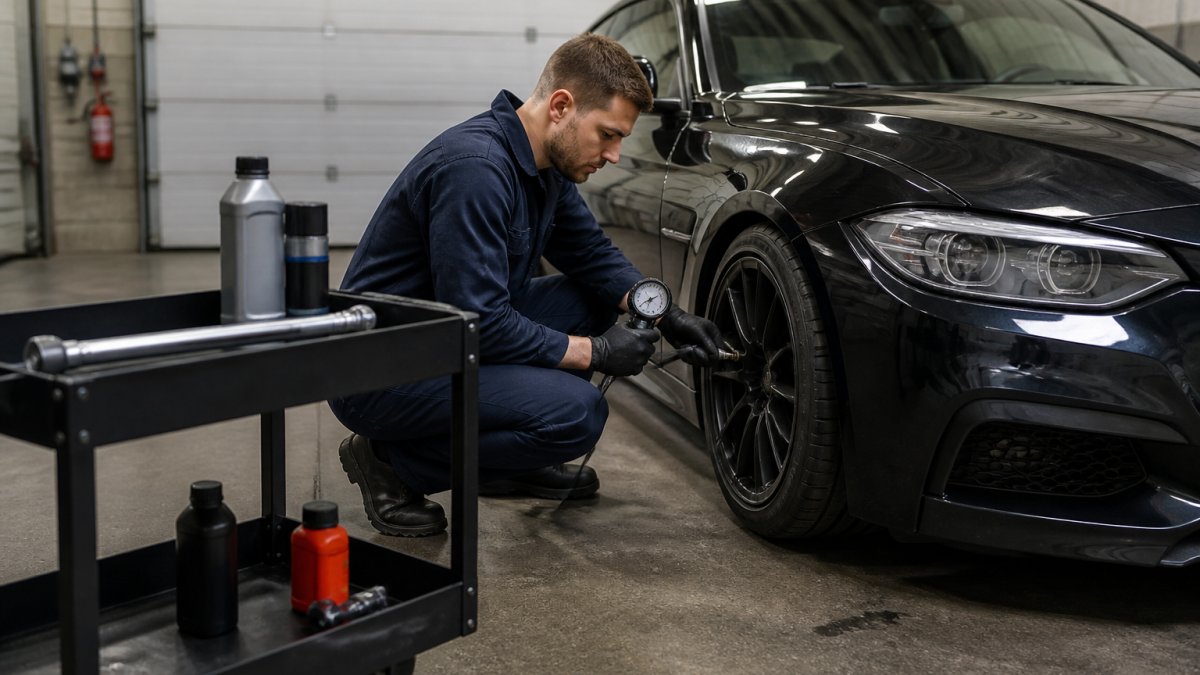
Ensuring every component is up to the rigors of the circuit requires diligence in selecting race-proven parts to maintain reliability throughout the season.
Work through this checklist:
- Engine oil level and condition
- Coolant level and strength
- Brake fluid level and age
- Brake pad thickness on all four corners
- Brake disc condition and scoring
- Tyre tread depth and sidewall condition
- Tyre pressures set cold
- Hoses and clips for cracks or leaks
- Battery terminals clean and tight
- All lights working
- Fluid leaks under the car
Fix anything borderline before you travel. A split hose found at home is a cheap repair. The same hose failing in the pit lane ends your day.
Step 3: Track-Day Car Maintenance Checks That Protect the Engine
Track-day car maintenance starts with fluids, because heat is what kills engines on circuit. Oil thins as it gets hot, and a low sump under sustained cornering can starve the pickup.
Check these before every session:
- Oil level on a level surface, engine cold
- Coolant level in the expansion tank
- Brake fluid reservoir level
- Power steering fluid where fitted
- Screen wash, because you will use it
Use the grade the manufacturer specifies. Do not top up with a different specification just because it is to hand.
Wiring deserves a look too. Loose looms near hot components can chafe, and a chafed wire at the wrong moment causes a fault you will spend the whole day chasing. Secure anything that moves.
Never open a hot cooling system. Pressurised coolant can cause serious burns. Let the car cool fully before you touch the cap.
Step 4: Brakes, Tyres and Cooling System Checks Before You Go Out
Brakes and tyres do the hardest work on circuit, so they deserve the most attention. Brake pads should have plenty of material left, and brake discs should be free of deep scoring and cracks.
Tyre checks matter just as much:
- Cold pressures set to the manufacturer’s figures
- Tread depth well above the legal minimum
- No bulges, cuts or exposed cords
- Wheel nuts torqued to spec
- No play in the wheel bearings
The cooling system needs a proper look. Check the radiator for blocked fins, confirm the fan cuts in, and make sure the coolant is at the right strength. Overheating is one of the most common reasons a track day ends early.
Odometer recording during track use should start here. Note the reading before you leave home and again when you arrive.
Step 5: Understand How a Mileage Blocker Works Before You Fit One
A mileage blocker is a module that interrupts the speed signal reaching the instrument cluster, so the odometer does not count distance while it is active. It does not change the engine’s running behaviour. How a mileage blocker works matters before you buy, because the device sits between the vehicle’s sensors and the dash and any fault there affects what the driver sees.
Our modules are UK-made, plug-and-play, and supplied with full fitting guides. They are backed by a 12-month warranty and 24/7 support. A few practical points:
- Fit it with the ignition off and follow the guide
- Confirm the odometer has stopped before you set off
- Record the reading at the start and end of use
- Refit the original connection before returning to the road
Photograph the dash reading before and after every use. A dated photo pair is the simplest evidence you can keep, and it takes seconds.
Now the part most guides skip. Rules on odometer interference vary, and using a device to misrepresent a vehicle’s true mileage when selling it is an offence. Disabling, altering or tampering with an odometer can also create disclosure and resale problems that follow the car for life. Treat a blocker as a tool for testing, diagnostics and circuit use only, keep records, and never let it affect a sale.
The compliant alternative is simpler than many owners expect: leave the odometer alone and manage mileage through transport and record-keeping. Trailer the car, log every session, and disclose circuit use honestly to buyers, insurers and finance providers. A documented history of track use is not a defect, an undisclosed one is.
Check your paperwork before you fit anything. Track use is commonly excluded from motor insurance, and a modification that affects the odometer or speed signal may need to be declared. Lease agreements often restrict track use and modifications, and manufacturer warranties can be affected by circuit driving.
A practical mileage and maintenance log closes the loop. Record the odometer at the start and end of each use, note operating hours where the car has them, list consumables such as tyres, brake pads and fluids, and file inspections alongside.
Step 6: Track-Day Vehicle Diagnostics and Odometer Recording During Track Use
Track-day vehicle diagnostics should be a routine, not an emergency. Check the dashboard for warning lights after every session, and read fault codes if anything appears.
Keep a simple log with these columns:
| Entry | What to Record | Why It Matters |
|---|---|---|
| Pre-event | Odometer, fluid levels | Baseline for the day |
| Each session | Odometer, tyre pressures, warnings | Spots trends early |
| Post-session | Odometer, fault codes, fluid top-ups | Documents circuit use |
| Post-event | Odometer, work needed | Gives a clear, honest history |
A written log does two jobs. It shows the car’s road and circuit use are separate, and it gives a buyer a clear maintenance history. That is worth more than a low number on its own.
Step 7: Cooling-Down Laps, Post-Session Checks and Your Mileage Log
Never switch off straight after a fast lap. A cooling-off lap lets air flow through the brakes and brings temperatures down gently. Park up, leave the bonnet closed, and let heat soak away naturally.
After each session:
- Check tyre pressures and look for damage
- Look for fluid leaks under the car
- Let brakes cool before touching them
- Note the odometer reading
- Top up fluids only when the engine is cold
Your mileage log closes the loop. Add the day’s figures, note any work needed, and file it with your service records.
The real difference between a well-kept track car and a tired one comes down to records. Mileage is one number. A documented history is what an insurer, a warranty provider or a buyer actually reads.
Frequently Asked Questions
Does track-day driving add mileage to your car?
Yes. Every lap you complete is logged by the odometer, and a typical open pit lane day can add 150 to 250 track miles depending on the circuit length and how many sessions you run. Those miles count towards service intervals, warranty terms and resale value just like road miles. The wear per mile is also far higher, because the engine, brakes and tyres work harder than in normal driving. Planning transport and logging your track day mileage separately keeps the picture clear.
Can you stop an odometer recording mileage during a track day?
You can prevent the odometer from recording track miles by fitting a mileage blocker module that interrupts the signal between the vehicle’s sensors and the instrument cluster. The engine, gearbox and diagnostics continue to run normally, so the car behaves exactly as it should on circuit. The module is plug-and-play and reversible, which matters if the car is leased or still under warranty. Always record the intervention yourself in a maintenance log so the vehicle’s history stays honest.
Is it legal to use a mileage blocker on a track day?
Using a mileage blocker on private land, such as a closed circuit during a track day, is not the same as altering an odometer on a road-registered vehicle. The offence under UK law relates to changing the recorded mileage with intent to mislead a buyer. Keep the device for off-road and track use only, restore the original reading afterwards, and disclose the intervention if you ever sell the car. If you are unsure about your specific circumstances, take advice before fitting one.
Will a mileage blocker affect vehicle diagnostics or stored data?
A well-made module leaves the ECU and diagnostic port untouched, so fault codes, live data and stored parameters read normally during track-day vehicle diagnostics. Cheap devices that splice into wiring can trigger errors or leave traces, which is why build quality matters. Ask for a unit with a plug-and-play harness and a clear fitting guide. After each session, run a diagnostic scan to confirm no fault codes have appeared before you pack up.
Choosing a circuit? See our guide to the UK’s top track day circuits by region, with lap lengths and tips for each track.
Track days ask a lot of a car, and the paperwork is easy to neglect when you are focused on lap times. Mileage Blocker supplies UK-made, plug-and-play modules with full fitting guides, a 12-month warranty and 24/7 support, so you can manage odometer readings during testing and circuit use with confidence. Get started with Mileage Blocker and keep your road mileage and your track mileage cleanly apart.
Leave a Reply