How to Tell If a Dyno Test Adds Miles to Your Car
Last Updated: November 15, 2026
Quick Summary
A dyno test can add miles to your odometer, but whether it does depends on your vehicle and the speed sensor it uses. Most dyno test miles come from driven wheels spinning on the rollers, which some odometers count as distance. Short pulls usually add under a mile.
- Rollers measure wheel speed, not road distance, so the car never actually travels.
- Odometers that read driven-wheel rotation are the most likely to register dyno test miles.
- A single power pull typically adds 0.2 to 0.5 miles of roller travel.
- Photograph the odometer and trip meter before and after each session.
- Ask the operator which wheels will turn and whether the car will be driven on the road.
Table of Contents
- Does a Dyno Test Add Miles to Your Odometer?
- How a Rolling Road Dynamometer Measures Speed
- How Many Miles Does Dyno Tuning Add in Practice?
- How Long a Typical Dyno Run Lasts
- Checking Mileage Before and After a Dyno Session
- Dyno Testing Safety Checks to Ask About
- Warranty, Legal and Vehicle History Considerations
- Booking Your Next Dyno Session with Confidence
- Frequently Asked Questions
Does a Dyno Test Add Miles to Your Odometer?
Most dyno test miles add some mileage to the odometer, but the answer depends on how your specific vehicle records speed. A 2026 guide from Safe Mileage Management for Dyno Tuning guide says that in most cases dyno testing adds mileage to the odometer.
A dyno test does not always add road miles, though. The car sits on rollers rather than driving along a road, so no distance is covered in the usual sense.
Quick answer: Dyno testing can add mileage, but whether it does depends on the vehicle and the speed sensor it uses.
How a Rolling Road Dynamometer Measures Speed
A rolling road dynamometer, often called a dyno, is a set of rollers built into the floor. The driven wheels sit on the rollers while the engine runs.
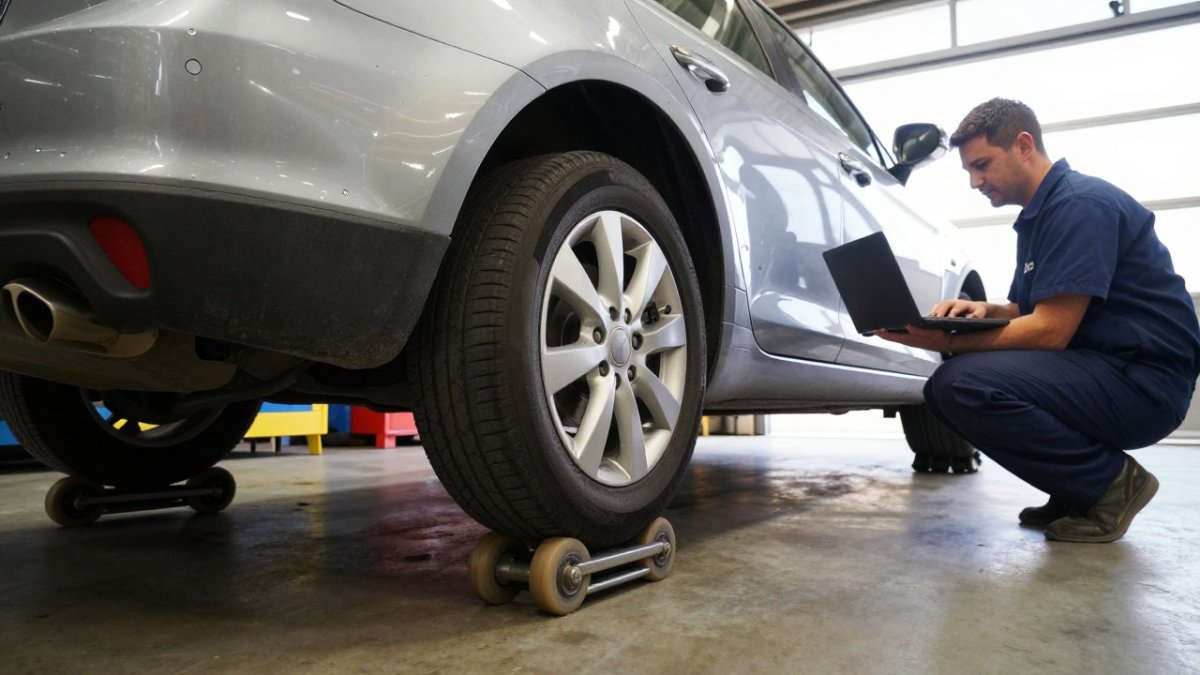
The car never leaves the workshop. Speed comes from the rollers, not from road travel. This setup is why many people ask whether dyno test miles change the odometer during a run.
Wheel speed versus road distance
Wheel speed and road distance are not the same thing. Wheel speed tells the dyno how fast the roller turns. Road distance is how far the car actually travels.
The odometer reads a signal from the vehicle speed sensor, which tracks wheel rotation. If that sensor counts wheel turns while the car is on the rollers, the odometer records distance even though the car has not moved on the road.
Why driven wheels turn during a run
The driven wheels turn because the engine sends power to them. On a front-wheel-drive car, the front wheels spin the rollers. On a rear-wheel-drive car, the rear wheels do the work. All-wheel-drive cars may use the rollers on several wheels at once.
As the wheels turn, the vehicle’s sensors register rotation. That rotation is what can move the odometer, depending on the car.
How Many Miles Does Dyno Tuning Add in Practice?
There is no single figure, because the distance registered depends on how your vehicle derives its odometer signal, how long the rollers spin, and what speed the pulls reach. A short power run may add little or nothing to the odometer, while a longer tuning session on a vehicle that counts driven-wheel rotation can register a small but measurable amount.
Theoretical roller distance versus registered odometer distance
It helps to separate two numbers that are often confused. The first is the distance the rollers travel. If a dyno pull holds 60 mph for 30 seconds, the roller surface has moved roughly half a mile.
A worked example makes this concrete. A rear-wheel-drive car strapped to a two-wheel dyno for three pulls of 20 seconds each at an average of 50 mph sees its rear rollers turn for about 60 seconds in total.
Realistic mileage ranges by vehicle type
Short diagnostic pulls may add under a mile on vehicles that count driven-wheel speed, while longer tuning sessions can add more.
| Session type | Typical duration on rollers | Roller travel at mixed speeds | Likely odometer effect (driven-wheel sensing) |
|---|---|---|---|
| Single power pull | 10-30 seconds | 0.2-0.5 miles | Usually under 0.5 miles |
| Three-pull power run | 1-2 minutes | 0.5-1.5 miles | Around 1 mile or less |
| Part-throttle tuning session | 20-40 minutes | 5-15 miles | A few miles |
| Full custom map with steady-state load | 1-2 hours | 15-40 miles | Up to tens of miles |
Roller travel at mixed speeds
These figures assume the odometer is fed by driven-wheel speed. On a vehicle that reads from a non-driven axle, the right-hand column is effectively zero regardless of session length.
AWD, FWD and RWD differences
Drivetrain layout changes which wheels turn and therefore which sensors see rotation.
- Front-wheel drive on a two-wheel dyno: only the front wheels spin. If the odometer reads front-wheel speed, distance registers. If it reads rear-wheel speed, it does not.
- Rear-wheel drive on a two-wheel dyno: only the rear wheels spin. The reverse logic applies.
- All-wheel drive on a linked or four-wheel dyno: all four wheels turn together, so most sensor designs will see rotation and register distance. AWD cars are the most likely to log mileage during a dyno session because there is no stationary axle to provide a zero reference.
- All-wheel drive on a two-wheel dyno with a roller kit or trailer: behaviour depends on whether the non-driven wheels are stationary or free-rolling. Ask the operator which configuration is used. Learn how to avoid fault codes during dyno testing before booking.
Watch out: some four-wheel-drive dyno setups require the front and rear rollers to be linked or speed-matched. If they are not, the car’s stability system may see a speed difference between axles, log a fault, and in some cases limit power. That does not add mileage, but it can end a session early.
Why the same car can give different results on different days
Two sessions on the same vehicle can produce different odometer changes because tyre pressure, wheel speed sensor behaviour, and the operator’s choice of ramp rate all vary. A soft tyre can change the effective rolling circumference, which slightly alters the distance the car calculates per wheel revolution. This is a small effect, but it is one reason a precise prediction is unrealistic.
How Long a Typical Dyno Run Lasts
A typical dyno run is short. The car is strapped down, the engine warms up, and then the car makes one or more pulls through the rev range. Each pull may last only seconds. The whole session often takes under an hour, though tuning sessions can run longer as adjustments are made between pulls.
Shorter runs add less distance than long tuning sessions. If you want to limit mileage changes, ask how many pulls are planned.
Checking Mileage Before and After a Dyno Session
Recording the odometer is the easy part. For practical guidance on safe mileage management for dyno tuning, follow the routine below. The useful version of this check is a short, repeatable routine that produces evidence you can use if a warranty claim or a resale question arises later. Most owners skip the documentation and then have nothing to point to.
A practical pre-session checklist
Do this before the car goes near the rollers:
- Photograph the dashboard with the ignition on, showing the odometer, the trip meter, and the time. A single photo with all three visible is stronger than three separate shots.
- Note the trip meter reading as well as the odometer. Some vehicles update the trip meter differently from the odometer, and the comparison can reveal which sensor feeds each display.
- Record the date, location, and operator name in a note on your phone or in the service book.
- Ask the operator to confirm the dyno type (two-wheel, four-wheel, linked, or hub-mounted) and which wheels will be driven.
- Ask whether the car will be driven on the road at any point, for example for a road-logging check or a cooling run. Road driving obviously adds real miles and should be agreed in advance.
- Confirm the number of planned pulls and the approximate session length.
Questions to ask the dyno operator
A good operator will answer these without hesitation. If they cannot, consider another workshop.
- Which wheels will turn on your dyno, and how is the setup matched to my drivetrain?
- Does your dyno link front and rear rollers for all-wheel-drive cars?
- How many pulls are planned, and at what speeds?
- Will the car be run in gear on the rollers only, or will it be driven on the road at any stage?
- Can I be present when the odometer is read before and after?
Documenting the session
After the session, repeat the dashboard photo and note the final odometer and trip readings.
If the odometer has moved, compare the change with the roller travel implied by the dyno printout. A small change consistent with the session duration is normal on driven-wheel-sensing vehicles.
Watch out: do not reset the trip meter immediately before the session unless you have photographed the odometer first.
Warranty and resale implications
Mileage recorded during a dyno session becomes part of your vehicle’s history whether or not you mention it. For warranty purposes, the relevant question is usually whether the modification or the testing caused a failure, not whether the odometer moved by a mile.
For resale, a buyer comparing the odometer with the service record may query a small jump. A dated dyno printout and before-and-after photos explain it cleanly.
Dyno Testing Safety Checks to Ask About
Before booking, ask the operator a few questions:
- Which rollers and setup will be used for my drivetrain?
- How many pulls are planned, and how long will the session last?
- Will the session trigger any warning lights or fault codes?
- Is the car secured properly on the rollers?
- Can I see the odometer reading before and after?
Clear answers help you avoid surprises. Good operators will explain their process without hesitation.
Warranty, Legal and Vehicle History Considerations
Mileage on your car affects its value and history.
Warranty terms differ by manufacturer and by the type of work done. Read your warranty carefully and check with the manufacturer or a dealer before making changes.
Keep records of every dyno session, including the date, the operator, and the before-and-after readings. These records protect you if your vehicle history is questioned later.
Booking Your Next Dyno Session with Confidence
Dyno testing is a useful way to measure power, but mileage can change in the process. Knowing how your vehicle’s sensors respond helps you plan. Take baseline readings, ask the right questions, and keep records.
If you want to manage odometer readings during testing, Mileage Blocker supplies UK-made modules with a 12-month warranty and plug-and-play installation. Visit the Mileage Blocker website for current prices and to request a quote, since pricing depends on quantity, dates, and delivery.
Frequently Asked Questions
Does a dyno test add miles to your car?
In most cases a dyno test adds mileage to the odometer, but whether it does depends on how your specific vehicle records speed. Some cars count distance from wheel speed sensors, which turn on a rolling road, so the odometer can move even though the car never travels along a road. Others rely on a separate speed signal that may not register the rollers in the same way. The only reliable way to know is to check your odometer before and after a session, or ask the dyno operator how they handle mileage on your vehicle.
How many miles does a dyno test add to the odometer?
There is no fixed figure, because the amount depends on how long the run lasts, the speeds reached and how your vehicle measures distance. A short set of pulls at moderate speed adds far less than extended high-speed runs. There is no single typical mileage figure, so the sensible approach is to record the reading before and after the session and compare the two. Ask the operator for their estimate before booking so you know what to expect.
Is dyno testing safe for a high-mileage car?
Dyno testing is generally carried out on high-mileage cars, but it puts sustained load on the drivetrain, cooling system and tyres. Before a session, check tyre condition and pressures, fluid levels and any known weaknesses such as worn bearings or leaks. Ask the operator whether they secure the vehicle properly and how they monitor temperatures during the run. A cautious operator will talk through these points before the car is strapped to the rollers.
Does dyno tuning affect the speedometer or odometer?
Dyno tuning can affect the odometer if the vehicle counts distance from wheel speed, because the driven wheels turn on the rollers during the run. The speedometer reads the same signal, so it may show speed even though the car stays in one place. Vehicles differ, and some systems ignore the rollers altogether. Check your odometer before and after the session and keep a note of the figures so you can see the change clearly.

Leave a Reply