

Table of Contents
- Does a Rolling Road Add Mileage? The Short Answer
- How Electronic Odometers Behave During Dyno Testing
- How Mechanical Odometers Behave When Wheels Are Turning
- Does a Dyno Test Add Mileage Across Different Vehicle Types
- Rolling Road Test Duration and Mileage Recording
- Dyno Testing Safety Checks and Odometer Impact
- Can a Dyno Test Trigger Fault Codes in Your Vehicle
- How to Verify Your Odometer Behaviour Before Testing
- Frequently Asked Questions
Last Updated: October 11, 2026
Does a Rolling Road Add Mileage? The Short Answer
A rolling road test (dyno test) does not add mileage when the ignition is off. Whether a rolling road add mileage depends entirely on your vehicle’s ignition status and odometer type. The key distinction lies in how modern electronic odometers function compared to older mechanical systems.
Electronic odometers in modern vehicles only record distance when the engine is running and the vehicle’s computer is actively logging data. Mechanical odometers measure wheel rotation directly through a cable connection and register mileage even when the ignition is off.
How Electronic Odometers Behave During Dyno Testing
Electronic odometers rely on the vehicle’s computer to calculate and record distance. With the ignition off, the engine control unit receives no signal to log mileage, so the odometer remains static.
If the ignition is on during dyno testing, modern vehicles record distance based on wheel speed sensors and engine RPM data. The vehicle’s computer interprets rolling road wheel rotation as actual road travel. This is why many dyno operators turn off the ignition during stationary testing to prevent unwanted mileage accumulation.
A rolling road test with the engine running but the vehicle stationary can trigger diagnostic trouble codes if the vehicle detects inconsistencies between engine speed and vehicle speed. These codes don’t damage the vehicle but may illuminate warning lights.
How Mechanical Odometers Behave When Wheels Are Turning
Mechanical odometers operate through a direct mechanical link between the wheels and the odometer dial. When wheels spin on a rolling road, distance registers regardless of ignition status.
Older vehicles with mechanical odometers record mileage during dyno testing because the physical connection exists whether the engine is running or not.
Classic car owners often use mileage management solutions during testing to preserve accurate odometer readings for resale value and historical accuracy.
Does a Dyno Test Add Mileage Across Different Vehicle Types
Modern vehicles from 2015 onward have electronic odometers that depend on engine operation; a rolling road test with the ignition off produces zero mileage addition. Vehicles from the 1990s through early 2010s use hybrid systems where mileage recording depends on ignition status.
Classic vehicles manufactured before 1990 use mechanical odometers and record mileage whenever wheels turn, regardless of engine status or ignition position.
Vehicle make and model influence the outcome. Japanese manufacturers like Honda and Toyota transitioned to ignition-dependent electronic odometers in the mid-1990s, while some European and American manufacturers continued using mechanical systems into the early 2000s.
Rolling Road Test Duration and Mileage Recording
Duration matters far less than ignition status and dynamometer configuration.
A rolling road uses powered rollers beneath the vehicle’s wheels to measure wheel speed and calculate distance. The vehicle’s speed sensors believe the car is moving at the speed the rollers are turning, even though the vehicle remains stationary.
A two-wheel dyno powers only the driven wheels; a four-wheel dyno powers all four rollers independently. Both types record mileage on modern electronic odometers if the engine is running, because the vehicle’s computer receives wheel-speed signals from the active sensors.
Engine running versus engine off is the primary control. A dyno session with the ignition off adds zero miles. With the engine running, distance recorded = (simulated speed in mph ÷ 60) × duration in minutes.
Many tuning shops conduct power runs with the ignition off to avoid mileage accumulation. For tests requiring the engine to run, operators may accept the mileage increase, use mileage management devices, or conduct tests at lower simulated speeds to minimise recorded distance.
Roller slip and wheel slippage can affect mileage recording. If wheels slip during high-power testing, wheel-speed sensors may report inconsistent data, causing the odometer to record less distance or trigger fault codes. Improper roller calibration can also cause distance calculations to be off by several percent.
Understanding these mechanics helps explain why mileage recording during dyno testing is not random or unpredictable, it follows the vehicle’s own speed-sensor logic and the dyno’s roller configuration. Duration itself is not the limiting factor; ignition status and roller speed are.
Dyno Testing Safety Checks and Odometer Impact
Safety protocols during rolling road testing focus on vehicle stability and operator protection rather than odometer preservation. However, certain safety procedures directly influence whether mileage records. Brake testing, for instance, requires the engine to run so the vehicle’s ABS and brake systems function properly. This means brake diagnostics on a rolling road will register mileage if the vehicle’s electronic systems are active.
Wheel alignment checks and suspension diagnostics typically occur with the vehicle stationary or moving at very low speeds. These tests generally add minimal mileage, and many shops conduct them with the ignition off entirely. Transmission fluid pressure checks and automatic transmission diagnostics may require engine operation, which again means mileage recording on modern vehicles.
Safety harnesses, wheel chocks, and restraint systems protect the vehicle and operator but do not prevent odometer recording. The critical safety consideration is ensuring the vehicle cannot roll off the dyno, not managing mileage. Professional shops balance safety requirements with client preferences regarding mileage management.
Can a Dyno Test Trigger Fault Codes in Your Vehicle
Yes, rolling road testing can trigger fault codes if the vehicle’s computer detects anomalies. The most common scenario involves a mismatch between engine speed and vehicle speed. When wheels spin on a rolling road at high RPM but the vehicle isn’t moving, the engine control unit recognizes this as an impossible condition and may set diagnostic trouble codes.
Modern vehicles have multiple redundant sensors that monitor this relationship. If the vehicle speed sensor shows movement while the mass airflow sensor and oxygen sensors indicate stationary operation, the computer flags this inconsistency. Codes like P0500 (vehicle speed sensor malfunction) or P0505 (idle air control system malfunction) can appear after dyno testing.
These fault codes don’t indicate actual damage. They’re diagnostic alerts that persist until cleared. However, they can complicate vehicle inspections and may trigger warning lights that concern owners. Professional tuning shops typically clear these codes after testing completes, but the codes themselves are a natural byproduct of stationary engine diagnostics.
Older vehicles with simpler engine management systems are less prone to fault code generation during dyno testing. Classic vehicles may not have the redundant sensor networks that trigger these alerts. Modern vehicles with advanced emissions control systems are most vulnerable to code generation during rolling road testing.
How to Verify Your Odometer Behaviour Before Testing
Before committing to dyno testing, verify how your specific vehicle’s odometer responds to wheel rotation. This verification protects your odometer reading and helps you understand whether mileage management is necessary for your vehicle and testing scenario.
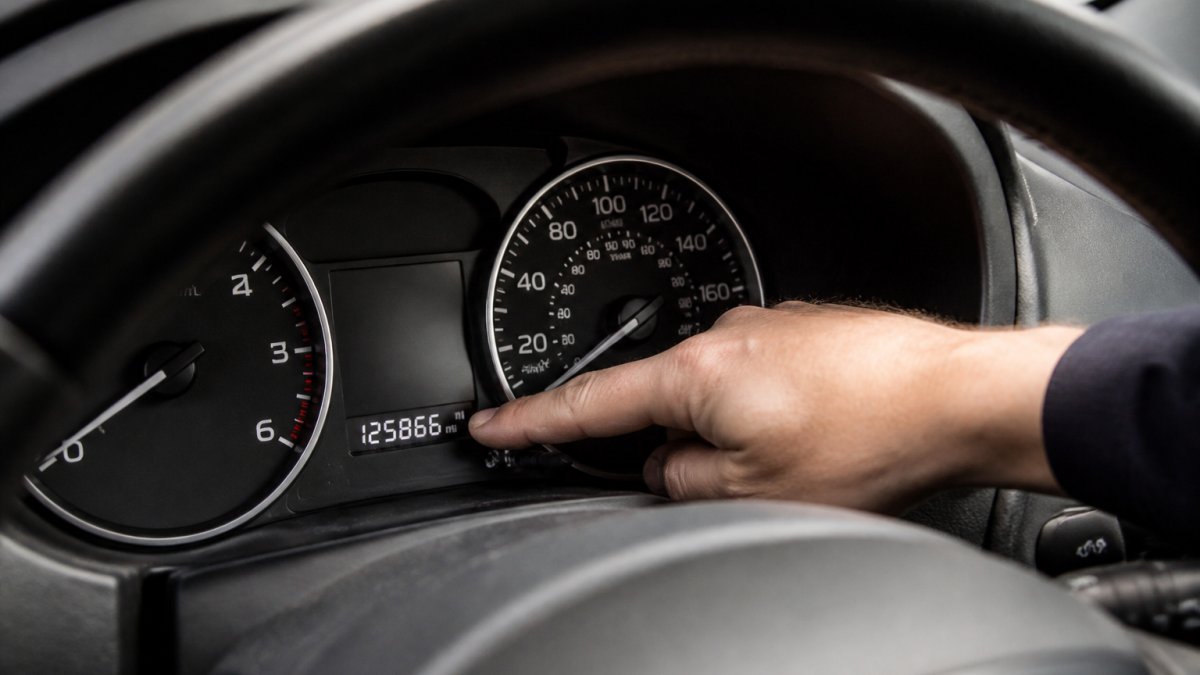
Step 1: Consult your vehicle’s owner’s manual and manufacturer guidance. The owner’s manual often specifies whether the odometer is electronic or mechanical and whether it records distance when the ignition is off. For modern vehicles, contact the manufacturer’s technical support line or check the vehicle’s online service portal. Many manufacturers (including BMW, Mercedes-Benz, Audi, and Jaguar) publish technical bulletins clarifying odometer behaviour during stationary testing.
Step 2: Perform a controlled rolling-road test with the ignition off. Place the vehicle on a rolling road (or ask a dyno operator to conduct this test). Record the odometer reading before the test. Spin the wheels at moderate speed (approximately 30 mph simulation) for 5 minutes with the ignition completely off and the transmission in neutral. Record the odometer reading immediately after.
Step 3: Test with ignition on but engine off. Repeat the test with the ignition in the “on” position (accessories powered, but engine not running). Many modern vehicles will not record mileage in this state because the engine control unit is not active and cannot process wheel-speed sensor data. If the odometer remains static, you’ve identified a safe testing window where you can run diagnostics without mileage accumulation.
Step 4: Conduct a brief test with the engine running at idle. Run the vehicle on the rolling road at a fixed simulated speed (e.g., 30 mph) for exactly 5 minutes with the engine idling. Record the mileage increase. This data tells you the relationship between rolling-road speed and actual mileage recording.
Step 5: Check for fault codes after each test. After each test phase, use an OBD-II diagnostic scanner (available at most automotive shops for £20-£50 or via professional diagnostic tools) to check whether any fault codes have been set. Modern vehicles with advanced emissions control systems often trigger codes like P0500 (vehicle speed sensor malfunction) or P0505 (idle control system malfunction) when the computer detects a mismatch between engine speed and vehicle speed.
For mechanical odometers, verification is simpler but the results are less favourable. Spin the wheels on a rolling road for 1 minute with the transmission in neutral and the ignition off. Any mileage increase confirms that your mechanical system records distance during wheel rotation. In this case, mileage management becomes essential if you want to preserve your odometer reading for resale value or historical accuracy.
Interpreting ambiguous results: If your vehicle’s odometer behaviour is inconsistent across tests (e.g., it records mileage in some test modes but not others), document the pattern and discuss it with the dyno operator before scheduling full testing. Some vehicles have hybrid systems where mileage recording depends on specific combinations of ignition status, engine state, and transmission position. Professional automotive diagnosticians are familiar with these edge cases and can advise on safe testing parameters for your specific make and model year.
Legal and inspection considerations: In most jurisdictions, mileage recorded during legitimate dyno testing is legally valid and does not constitute odometer fraud. However, if your vehicle is subject to MOT testing or other regulatory inspections, the recorded mileage will appear in inspection records. If you are concerned about inspection outcomes or resale value, conduct this verification before scheduling testing so you can make an informed decision about whether mileage management aligns with your needs.
| Vehicle Type | Ignition Off | Ignition On (Engine Off) | Engine Running |
|---|---|---|---|
| Modern Electronic (2015+) | No mileage | No mileage | Mileage records |
| Hybrid System (1995-2014) | Varies by model | Varies by model | Mileage records |
| Mechanical (pre-1995) | Mileage records | Mileage records | Mileage records |
Professional automotive diagnosticians and tuning shops conduct these verification tests routinely. Understanding your vehicle’s specific behaviour prevents surprises during testing and helps you make informed decisions about whether mileage management solutions align with your needs. For those running multiple dyno sessions or conducting extensive performance diagnostics, controlling mileage recording becomes a practical consideration, particularly for high-value vehicles where odometer accuracy affects resale value and inspection outcomes.
Frequently Asked Questions
Does a rolling road add mileage to your car’s odometer?
Whether a rolling road adds mileage depends on your vehicle’s odometer type and ignition status. Modern vehicles with electronic odometers typically do not record mileage when the ignition is off during dyno testing. However, some systems may register distance if the engine runs and vehicle systems remain active. Mechanical odometers in older vehicles may record mileage if wheels rotate, regardless of ignition state. The key factor is whether your vehicle’s computer is actively monitoring wheel speed.
Does a dyno test add mileage if the engine is running?
In most modern vehicles, dyno testing with the engine running but the vehicle stationary does not add mileage because the wheels are not moving relative to the road. The odometer measures distance travelled, not engine hours. Electronic systems detect this stationary state and do not increment the odometer. However, if your vehicle’s transmission is in gear and wheels are allowed to rotate on the rollers, mileage may be recorded depending on how your vehicle’s computer interprets wheel speed data.
What happens to the odometer during a rolling road test?
During a rolling road test, your vehicle sits on motorised rollers that simulate road conditions. If the wheels rotate on these rollers, your odometer may register distance travelled, especially in older vehicles or those with mechanical odometer systems. Modern vehicles often do not record mileage because the vehicle computer recognises the wheels are not moving relative to the ground. The ignition position and whether engine management systems are active also influence whether distance is recorded. This is why many tuning shops use mileage management solutions to isolate test mileage from road usage.
Can a dyno test trigger fault codes in my vehicle?
Yes, dyno testing can trigger fault codes if your vehicle’s engine management system detects unusual conditions. Common triggers include misfires under load, oxygen sensor faults, or wheel speed sensor inconsistencies if rollers are used. Proper dyno testing safety checks, such as ensuring all sensors are functioning correctly before testing and using appropriate load profiles, help minimise fault code generation. If codes do appear, they are typically temporary and clear after normal driving. Working with experienced technicians who follow established safety protocols significantly reduces this risk.