

Table of Contents
- How Much Does ECU Remapping Cost in the UK?
- Stage 1 Remap Cost Compared With Stage 2 and Stage 3
- What Affects ECU Remapping Cost: Vehicle, Fuel and Tuner
- Custom Remap vs Generic Remap: What the Price Difference Buys
- What a Remapping Quote Should Include
- ECU Remap Insurance and Total Ownership Costs
- Mobile Remapping vs Workshop Tuning: Regional Price Differences
- How to Judge Whether a Remap Is Good Value
- Frequently Asked Questions
Last Updated: October 10, 2026
How Much Does ECU Remapping Cost in the UK?
At Mileage Blocker, we supply UK-made mileage blocker modules to tuners and dyno operators who need to isolate odometer readings during testing.
ECU remapping rewrites the software in a vehicle’s engine control unit to change how the engine manages fuel, boost and ignition timing.
Below, we break down real price bands by stage, what drives the quote up or down, and how to tell good value from a false economy.
The cheapest quote is rarely the best value. A map that ignores your vehicle’s condition or skips a diagnostic check can cost far more in repairs than it saves upfront.
Stage 1 Remap Cost Compared With Stage 2 and Stage 3
Stage 1 remap cost sits at the entry point of the market and is the stage most drivers actually need. The table below sets out realistic UK price bands by stage for common petrol and diesel cars, guide prices, not quotes.
| Stage | Hardware Needed | Typical UK Price Band (remap only) | Typical UK Price Band (with hardware) | Best For |
|---|---|---|---|---|
| Stage 1 | None | £250-£450 | £250-£450 | Daily drivers wanting better response |
| Stage 2 | Intercooler, intake, exhaust | £350-£600 | £1,200-£2,500+ | Enthusiasts with supporting mods |
| Stage 3 | Turbo and fuelling upgrades | £500-£900+ | £3,000-£8,000+ | Track and performance builds |
Stage 1: Standard Hardware, Biggest Single Jump in Torque
A Stage 1 remap works with your car’s existing hardware, no parts changes required. The tuner adjusts the software to release power the manufacturer left on the table for emissions, fuel quality or marketing reasons.
For most petrol and diesel cars, Stage 1 delivers the largest single gain per pound spent, with more power, torque and better mid-range response. Prices cluster at £250-£450 because the work is quicker and the file is often a proven base map adjusted for your vehicle: mobile maps sit at the lower end, a workshop Stage 1 with a before-and-after dyno run at the upper end.
Stage 2 and Stage 3: Hardware Changes Drive the Quote
Stage 2 requires supporting hardware, usually an upgraded intercooler, intake or exhaust, before the software can be pushed further. The remap itself typically costs £350-£600, but a full Stage 2 build commonly lands between £1,200 and £2,500 depending on the car and parts quality.
Stage 3 means bigger changes: a turbo upgrade, fuelling upgrades, and a custom dyno session. Quotes vary enormously because the work is bespoke.
A Like-for-Like Price Comparison by Vehicle and Stage
Most guides give broad ranges or isolated examples. The table below standardises the comparison so you can estimate a price for your own car. Figures are guide prices for a remap only, excluding hardware.
| Vehicle type | Stage 1 | Stage 2 (remap only) | Stage 3 (remap only) |
|---|---|---|---|
| Common 4-cylinder diesel hatchback (e.g. 2.0 TDI class) | £250-£350 | £350-£500 | £500-£800 |
| Common 4-cylinder petrol hatchback (e.g. 2.0 TFSI class) | £300-£450 | £400-£600 | £600-£900 |
| 6-cylinder diesel saloon | £350-£500 | £450-£650 | £700-£1,000 |
| 6-cylinder petrol performance car | £400-£600 | £500-£750 | £800-£1,200 |
| Specialist or locked-ECU model | £450-£700+ | £600-£900+ | £1,000-£1,500+ |
These bands are a starting point for comparing quotes, not a price list. A tuner quoting well below the band is either cutting corners or using a generic file not built for your engine. A tuner quoting well above it should explain what the extra buys: dyno time, custom calibration, data logging, aftercare or a warranty.
What Affects ECU Remapping Cost: Vehicle, Fuel and Tuner
Several factors push a quote up or down. The biggest levers are fuel type, the vehicle itself, and the tuner’s approach.
Petrol and Diesel Engines Price Differently
Diesel engines often respond well to remapping because turbochargers are common and there is usually headroom in the standard tune. Petrol engines can be more sensitive to fuel quality and knock limits, so a careful tuner spends longer on the calibration. That extra care shows up in the price.
Make, Model and Engine Specification
A common mistake is assuming all cars of the same size cost the same to remap. A vehicle with a widely supported engine management system is quick to tune, while an unusual model or one with a locked ECU needs more time, specialist tools and sometimes a bench read. That is why the same tuner quotes differently for two cars side by side.
Custom Remap vs Generic Remap: What the Price Difference Buys
A generic map is a pre-written file sold for a broad range of vehicles, while a custom remap is built and adjusted for your specific car on a dyno. The price gap reflects time, equipment and risk.
Generic maps are cheaper because the tuner does not need your car on site for long, but the file cannot account for your engine’s condition, fuel, or any modifications already fitted.
Custom tuning sessions cost more because they include diagnostics, data logging, and usually several runs on a rolling road.
DVSA guidance on vehicle modifications
A generic map fitted to a car with existing faults, worn components or an unknown service history can cause damage. Always insist on a diagnostic check before any map is written.
What a Remapping Quote Should Include
A proper quote is itemised, not a single number. If a tuner will not tell you what is included, treat that as a warning sign.
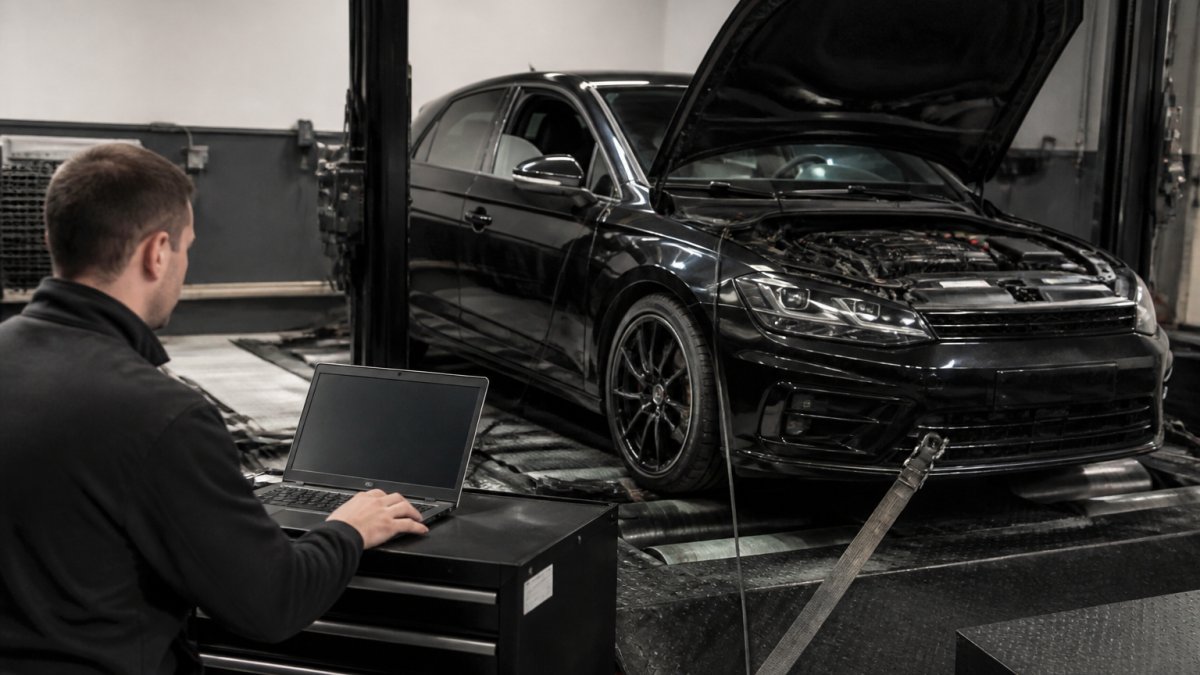
Before you book, ask what the price covers. A transparent quote usually includes a pre-map diagnostic scan, the software calibration, a post-map road test or dyno run, and a written summary of the before-and-after figures. Some tuners include a warranty; others charge separately for follow-ups.
Watch for a quote that skips diagnostics to keep the price low. That is where problems hide.
Ask for the before-and-after dyno figures in writing. A tuner confident in their work will have no problem providing them, and it gives you a baseline if anything feels wrong afterwards.
ECU Remap Insurance and Total Ownership Costs
ECU remap insurance is the cost most drivers forget to factor in. A remap counts as a modification, and most insurers require you to declare it.
Declaring a remap usually increases your premium, sometimes modestly, sometimes sharply, depending on the insurer and your vehicle. Failing to declare it can void your cover, meaning an accident claim could be refused.
Beyond insurance, factor in running costs. A remap can improve fuel economy on a steady motorway run, but driven hard it will use more fuel, not less. Higher-performance tyres and more frequent servicing add to the total.
Mobile Remapping vs Workshop Tuning: Regional Price Differences
Mobile remapping brings the tuner to you, while workshop tuning happens on the tuner’s premises. Each has a price profile, and the difference is bigger than most guides admit.
What Mobile Remapping Actually Costs
A mobile Stage 1 map typically sits at the lower end of the Stage 1 band, often £250-£350, because the tuner avoids workshop overheads and can complete several jobs in a day. The trade-off is no full dyno run, so custom calibration is limited.
Mobile convenience does not usually carry a premium; it is often slightly cheaper than an equivalent workshop Stage 1 because you pay for a file and a laptop session rather than dyno time.
What Workshop Tuning Adds to the Price
Workshop tuning costs a little more in travel and time but gives access to a rolling road and a controlled environment.
The extra cost buys measurable evidence: before-and-after figures in writing, a calibration built for your actual engine, and a tuner who can spot a problem on the dyno before it becomes a repair bill. For a modified car, a track car or anything with an unknown service history, that is usually money well spent.
Regional Price Differences Across the UK
Prices vary by region, and the pattern is fairly consistent. Denser urban areas carry higher labour rates than rural ones, and the same Stage 1 map can differ by £50-£100 between a rural workshop and a city-centre tuner. The table below gives a rough guide to regional Stage 1 pricing.
| Region type | Typical Stage 1 price | Typical custom Stage 2 price |
|---|---|---|
| Rural or small-town workshop | £250-£320 | £400-£550 |
| Suburban or mid-sized town | £280-£380 | £450-£600 |
| Major city or dense urban area | £320-£450 | £500-£700 |
| Specialist or performance-focused tuner | £400-£600+ | £600-£900+ |
These are guide figures, not quotes. A £250 Stage 1 in a rural area and a £450 Stage 1 in a city are not necessarily a bad deal and a good deal; they may simply reflect different overheads, equipment and aftercare.
How to Compare Mobile and Workshop Quotes Fairly
If you are comparing quotes, make sure you are comparing like for like. A mobile Stage 1 and a workshop custom Stage 1 are not the same product. Ask each tuner:
- Is this a generic file or a custom calibration?
- Will you run a diagnostic scan before writing the map?
- Do I get before-and-after dyno figures?
- Is there any warranty or follow-up support?
- Does the price include VAT?
A mobile Stage 1 with no diagnostics and no dyno figures should be cheaper than a workshop custom Stage 1 with both. If it is not, you are paying a premium for convenience alone. If it is, the choice comes down to whether you value the dyno evidence and controlled environment.
How to Judge Whether a Remap Is Good Value
Good value is not the lowest price. It is the right calibration, done safely, with support if something goes wrong. Judge a quote on what it includes, the tuner’s willingness to answer questions, and whether the work is tailored to your car.
Questions to Ask Before You Book
- Will you run a full diagnostic scan before writing the map?
- Is this a generic file or a custom calibration?
- Can I see before-and-after dyno figures?
- What happens if I am not happy with the result?
- Do you provide any warranty on the map?
- How will this affect my insurance?
If a tuner cannot answer these clearly, keep looking. A professional service welcomes scrutiny.
For tuners and dyno operators, keeping test mileage separate from road mileage matters for accurate records and clean diagnostics. Our modules are made in the UK, plug in without specialist tools, and come with fitting guides, a 12-month warranty and 24/7 support.
Judging ECU remapping cost comes down to reading the quote, not just the number at the bottom. Get started with Mileage Blocker and our UK-made, plug-and-play modules to manage odometer readings during dyno testing, diagnostics and track days, backed by a 12-month warranty and 24/7 expert support.
Frequently Asked Questions
How much does ECU remapping cost for a car?
There is no single figure because ECU remapping cost depends on the vehicle, the tuning stage and the tuner. A Stage 1 remap on a standard turbo petrol or diesel is usually the cheapest option, while Stage 2 and Stage 3 work costs more because it involves hardware changes such as a turbo upgrade or modified exhaust. Always ask for a written quote that lists the software calibration, dyno time and any parts included before you book.
What is a reasonable price for a Stage 1 remap?
A fair Stage 1 remap cost reflects a custom file written for your engine, a before-and-after dyno run, and diagnostics to confirm the car is healthy first. Quotes that sit far below the market usually skip the dyno session or reuse a generic map, which limits power gains and can trigger fault codes. Compare what each quote includes rather than the headline number, and check the tuner offers a warranty on the work.
Will an ECU remap affect my insurance?
Yes. In the UK, a remap counts as a modification, and you must declare it to your insurer. Many providers treat an undeclared remap as grounds to void a policy, which leaves you liable for damage or injury costs. Declaring it usually raises the premium, so factor ECU remap insurance into your total ownership costs. Some specialists cover modified vehicles, so shop around before committing to the map.
Can an ECU remap damage my engine or gearbox?
A well-written map on a healthy engine rarely causes damage, but pushing power beyond what the clutch, gearbox or cooling system can handle accelerates wear. That is why a good tuner runs diagnostics and checks the vehicle condition before starting. Vans and light commercial vehicles used for heavy loads need extra care. If your car has existing faults or high mileage, a remap may not be suitable until those are fixed.