

Quick Summary
Mileage Blocker is one Smelecom alternative for dyno testing, offering UK-made plug-and-play modules with fitting guides, a 12-month warranty and 24/7 support. The right choice depends on vehicle compatibility, installation effort and whether the supplier confirms specifications in writing before purchase.
- Mileage Blocker offers UK-made modules with plug-and-play fitting and supplied fitting guides.
- Mileage Blocker provides a 12-month warranty and 24/7 support.
- Confirm vehicle coverage, including CAN-based systems, with the supplier before purchase.
- Run a single-vehicle trial and check warning lights and stored codes before rolling out.
- Request written warranty details, including whether incorrect fitting faults are covered.
Table of Contents
- What a Mileage Blocker Does During Dyno Testing
- Criteria for Comparing Smelecom Alternatives
- Comparing the Main Options Side by Side
- Dyno Testing Mileage Blocker Compatibility Checklist
- Mileage Blocker Installation Guide and Common Failure Points
- Mileage Blocker Warranty and Support: What to Check
- Choosing the Right Mileage Blocker for Your Dyno Work
- Frequently Asked Questions
Is There a Good Smelecom Alternative for Dyno Testing?
Last Updated: November 8, 2026
If you run dyno sessions, you already know how much a stray mileage reading can muddy a test. This guide compares the main options so you can judge the Smelecom alternative for dyno testing that suits your setup. The right choice often depends on how the module handles recording, compatibility and support. UK Department for Transport vehicle inspection and testing guidance
What a Mileage Blocker Does During Dyno Testing
A mileage blocker stops the odometer from recording distance while a vehicle is stationary on a rolling road or hub dyno. The aim is to keep recorded mileage consistent across test runs, so that service history and diagnostic logs reflect the work done rather than incidental driving.
Most dyno operators look for three things: clean signal handling, predictable behaviour across vehicle systems, and a documented way to reverse or verify the setting.
Criteria for Comparing Smelecom Alternatives
Before comparing products, set your own criteria. A small tuning shop running five or ten sessions a month has different needs from a large dyno operation.
- Compatibility: Does the module suit the makes and models you test, including newer CAN-based systems?
- Installation effort: Is it plug-and-play, or does it need custom wiring?
- Documentation: Are fitting guides and wiring details clear enough for your technicians?
- Warranty and support: What is covered, for how long, and how quickly can you reach someone?
- Total cost: Pricing depends on quantity, delivery and vehicle type, so request a current quote from the supplier.
Comparing the Main Options Side by Side
A useful comparison starts by separating two different jobs.
For the odometer-control job, compare candidates against the same criteria rather than against marketing claims. The table below sets out what to ask and why it matters. Where a detail is not published, the honest entry is ‘confirm with supplier’, do not assume parity.
| Criterion | What to ask | Why it matters on a dyno |
|---|---|---|
| Vehicle coverage | Which makes, models and model years are supported, including CAN-based clusters? | A module that works on older wiring may not suit current vehicles. |
| Network architecture | Does it handle CAN bus, and does it interfere with other modules that read distance? | Multiple readers can produce faults or inconsistent logs. |
| Installation method | Plug-and-play connector, or custom wiring? | Custom wiring adds labour and risk on every vehicle. |
| Reversibility | Can the setting be removed cleanly, and is the original behaviour restored? | Test vehicles may need to return to normal service. |
| Documentation | Are fitting guides and wiring details supplied? | Clear guides reduce technician error. |
| Warranty and support | What is covered, for how long, and how quickly can you reach support? | A failed module on a test day costs more than the part. |
| Total cost | Purchase, delivery, installation time, updates and replacement. | The cheapest unit is not always the lowest total cost. |
Mileage Blocker offers UK-made modules with plug-and-play fitting, a 12-month warranty and 24/7 support, and supplies fitting guides.
Watch out: a comparison table that lists ‘not verified’ for most rows is a prompt to request written specifications, not a reason to assume the products are equivalent.
Dyno Testing Mileage Blocker Compatibility Checklist
Compatibility is not a single yes/no answer. Work through the vehicle, the network and the workshop process in that order, and record what you find so the next session starts from evidence rather than memory.
Vehicle and generation
- Confirm the exact make, model, model year and trim for every vehicle you test.
- Identify whether the instrument cluster is fed by a dedicated speed signal or by CAN bus messages.
- Note any facelift or mid-cycle changes that alter the cluster or wiring.
- List vehicles with additional modules that read distance, telematics, service schedulers, fleet loggers.
Network and electronics
- Confirm the module is specified for the vehicle’s network architecture, not just its make.
- Record all diagnostic codes present before fitting, so post-fit codes can be compared against a baseline.
- Check whether the vehicle uses a gateway module that could isolate or filter the signal.
- Confirm what happens to warning lights and driver displays when the module is active.
Installation and process
- Confirm connector type and whether any adaptor is required.
- Check that the fitting guide matches the vehicle generation, not just the model name.
- Plan a single-vehicle trial before rolling the module out across the fleet.
- Agree a written post-installation check: odometer behaviour, warning lights, stored codes.
Common failure modes to plan for
- Loose or partially seated connectors causing intermittent behaviour.
- Fitting to the wrong connector because the guide covers a different generation.
- Warning lights or stored codes that appear only after a test run, not at ignition.
- Assuming a fitted module works without a verification run on the vehicle.
Compatibility for your specific vehicles should be confirmed with the supplier before purchase. A short written record of each vehicle’s baseline codes and post-fit behaviour is the simplest way to catch a mismatch before it affects a test day.
Mileage Blocker Installation Guide and Common Failure Points
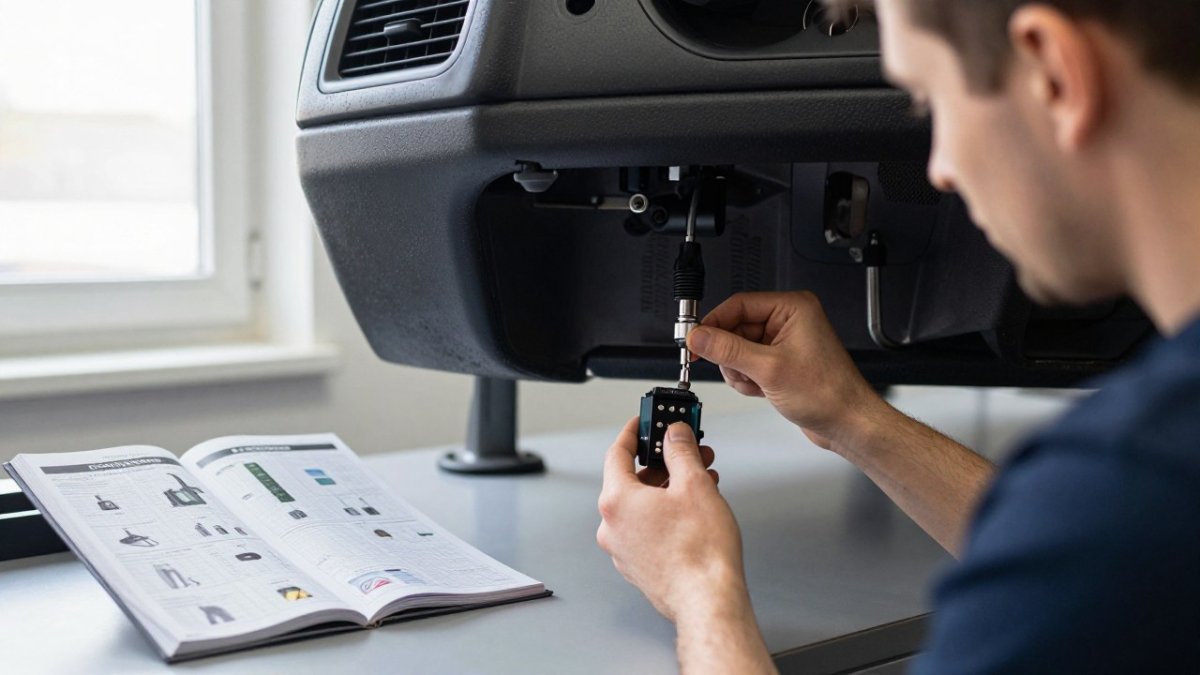
Mileage Blocker supplies fitting guides with its modules.
Mileage Blocker Warranty and Support: What to Check
Mileage Blocker offers a 12-month warranty and 24/7 support. When you assess warranty cover, ask the supplier to confirm in writing:
- What the warranty covers and what it excludes.
- Whether faults caused by incorrect fitting are covered.
- How support is delivered and how quickly technicians respond.
- What happens to the module if it fails after the warranty period.
Get these answers before purchase, not after a failed test day.
Choosing the Right Mileage Blocker for Your Dyno Work
The best option depends on your volume, your vehicles and your tolerance for setup time. For workshops that want a UK-made, plug-and-play module with fitting guides and a 12-month warranty, Mileage Blocker is a starting point worth considering. Run a single-vehicle trial, compare the recorded results against your expectations, and then scale up. To see current options and request a quote, visit the Mileage Blocker website.
Frequently Asked Questions
What is a Smelecom alternative for dyno testing?
A Smelecom alternative for dyno testing is another mileage blocker module or odometer stopper that holds or controls recorded mileage while a vehicle is run on a rolling road or hub dyno. Before choosing one, check which vehicles and ECUs it supports, how it connects to the CAN system, what installation support is provided, and what warranty applies. Pricing depends on product, quantity and delivery, so check each supplier’s website for a current quote.
Which mileage blocker alternatives are suitable for dyno testing?
Suitability depends on your vehicle, your ECU and how the testing is carried out. For a professional tuning workshop running regular sessions, look for a module with clear compatibility information, written fitting guides and accessible technical support. Mileage Blocker offers UK-made plug-and-play modules with a 12-month warranty and 24/7 support. Compare each option against the same criteria rather than relying on price alone, and confirm compatibility with your specific vehicles before purchase.
Can a mileage blocker affect vehicle diagnostics or stored data?
A well-designed mileage blocker should only affect the odometer reading and should not add fault codes or change other stored data. Poorly designed devices can interfere with CAN communication, which is why compatibility checks matter. Ask the supplier how the module interacts with the vehicle’s electronics, and check that it operates without triggering diagnostic faults on the systems you use. Keep records of your vehicle’s state before and after installation.
What is the difference between a mileage blocker and an odometer stopper?
The terms are often used interchangeably. Both describe a device that prevents the vehicle’s recorded mileage from increasing during use. The practical differences lie in how each product is built, how it connects to the vehicle, and what support and warranty are included. When comparing a mileage blocker with an odometer stopper, focus on compatibility, installation method, documentation and after-sales support rather than the label used.

Leave a Reply