
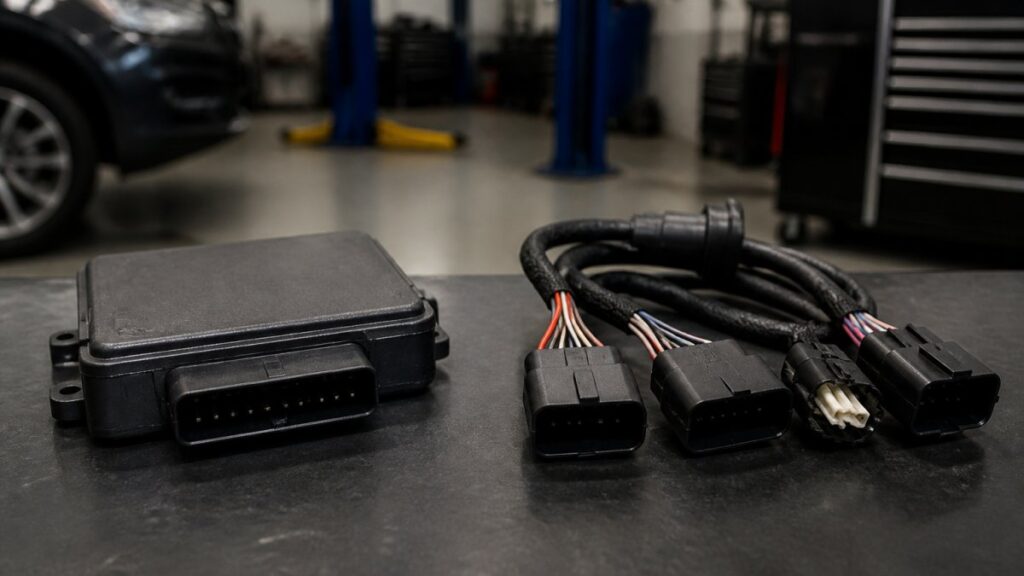
Odometer Calibration vs Mileage Management: What’s the Difference?
Table of Contents
- Odometer Calibration vs Mileage Management: The Core Difference
- Comparison Table: Calibration vs Mileage Management at a Glance
- How to Check a Car’s Mileage and Verify Odometer Accuracy
- Odometer Accuracy: What Causes Reading Discrepancies
- Vehicle Mileage Records: Building an Audit Trail
- Mileage Discrepancy: Legitimate Calibration vs Tampering
- Practical Comparison by Use Case: Dyno Testing, Track Days and Fleet
- Frequently Asked Questions
Last Updated: October 21, 2026
Odometer Calibration vs Mileage Management: The Core Difference
Odometer calibration is the process of checking and adjusting an instrument so its displayed distance matches true distance travelled, while mileage management is the ongoing recording, reconciling and reporting of distance data across a vehicle’s life.
Here is the distinction that matters: calibration corrects the instrument. Mileage management governs the record.
A car showing 1.6 kilometres for every mile driven has a calibration fault. A fleet with three spreadsheets, a telematics feed and a paper service book has a mileage management problem.
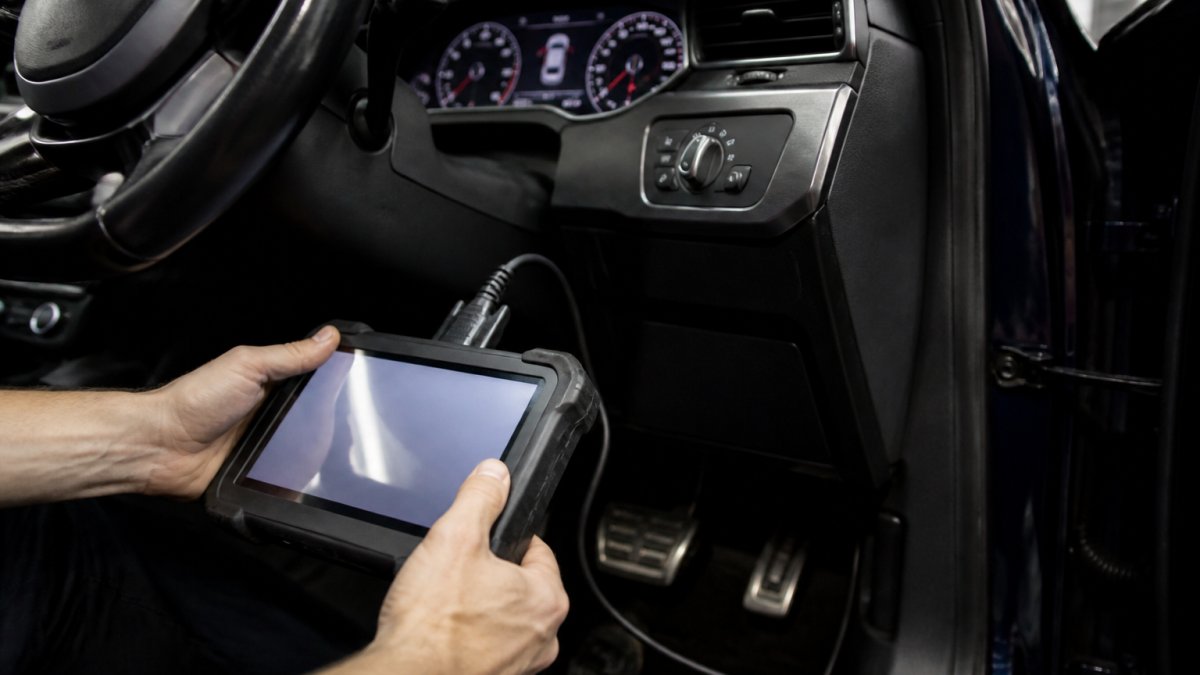
Comparison Table: Calibration vs Mileage Management at a Glance
The table below sets out how the two disciplines differ across the dimensions that matter most in practice.
| Dimension | Odometer Calibration | Mileage Management |
|---|---|---|
| Primary aim | Accurate distance measurement | Accurate distance records |
| What it touches | Speedometer, odometer, tyre/gearing inputs | Logs, telematics, service history |
| Typical owner | Technician, dyno operator | Fleet manager, owner, workshop |
| Frequency | Once, or after modification | Continuous |
| Key risk | Reading discrepancy | Missing or unreliable records |
| Verification method | Measured distance run | Cross-referenced data sources |
| Legal weight | Must not misrepresent true distance | Must support honest disclosure |
Neither discipline is optional. A calibrated odometer feeding a sloppy record system is still a liability at resale.
How to Check a Car’s Mileage and Verify Odometer Accuracy
To check a car’s mileage, compare the displayed odometer reading against independent evidence: MOT history records, service invoices, and a measured distance run.
Start with the DVSA MOT history service, which publishes recorded mileage at each annual test. Gaps, sudden drops or implausible jumps deserve scrutiny.
For the instrument itself, a measured run is the practical test. Drive a known route, note the odometer delta, and compare.
Mechanical vs Digital Odometer Checks
Mechanical odometers use a cable-driven drum. Wear in the gears, a stretched cable or a changed final drive ratio all skew the reading, and the error tends to drift gradually.
Digital odometers count pulses from wheel speed or transmission sensors and store the value in vehicle memory. There is nothing to inspect physically, so verification depends on diagnostic data and cross-referencing records.
Odometer Accuracy: What Causes Reading Discrepancies
Reading discrepancies come from four main sources: tyre size, gearing, sensor faults, and deliberate interference. Most are innocent. Some are not.
Fitting larger or smaller wheels changes the rolling circumference, so the vehicle travels a different real distance per sensor pulse. A remapped or regeared drivetrain does the same. Wheel speed sensor faults produce erratic or absent counts. And a small number of vehicles have had their readings altered deliberately, which is where the legal boundary sits.
Tyre Size, Gearing and Speedometer Calibration
Speedometer calibration and odometer calibration are linked but not identical. Speedometers are permitted to over-read slightly but must never under-read, which is why a car can show a cautious speed while its odometer drifts in either direction.
If you change wheel diameter or final drive ratio, recalibrate. A dyno session on a stationary vehicle is a different scenario entirely: the driven wheels turn while the front wheels do not, and the ECU may log distance it never travelled.
Vehicle Mileage Records: Building an Audit Trail
A credible audit trail needs three things: a consistent source of truth, dated entries, and independent corroboration. Get those right and most disputes never arise.
- Choose one primary mileage source and document why
- Record readings at every service, MOT and fuel stop
- Keep invoices, not just stamps
- Note any calibration or wheel-size change with the date
Autosist’s guidance on reconciling odometer and GPS mileage makes the useful point that neither source is automatically more accurate in every situation. Assign a source to each purpose and reconcile regularly. For fleet operators, Geotab’s explanation of using odometer readings for fuel economy shows how mileage data feeds directly into operating-cost decisions, which raises the stakes on data quality.
Photograph the odometer and the number plate together at every service. It costs seconds and settles most resale arguments before they start.
Mileage Discrepancy: Legitimate Calibration vs Tampering
A mileage discrepancy is legitimate when it corrects a measurement error and is documented. It is tampering when it misrepresents the true distance travelled to deceive a buyer.
Legitimate calibration restores accuracy after a wheel-size change, a cluster replacement or a sensor repair. The work is recorded, the reason is stated, and the true distance remains recoverable. Tampering reduces the displayed figure to inflate value, and the true distance is deliberately obscured.
Legal and ethical boundaries
Altering an odometer to misrepresent a vehicle’s history is a criminal offence under the Fraud Act 2006, and selling a vehicle with a false mileage description can breach consumer protection law.
For professional users, the practical test is whether the true distance remains recoverable from the records. A defensible calibration file contains, at minimum:
- The odometer reading before and after the work
- The reason for the correction (wheel-size change, cluster replacement, sensor repair)
- The method used and the measured error
- The date and the identity of the person who did the work
If a buyer, auditor or insurer can reconstruct the true distance from that file, the work is a correction. If they cannot, it looks like a rollback regardless of intent.
For professional users, this matters commercially as much as legally. A tuning shop that blocks mileage during stationary dyno testing is isolating test mileage from road mileage, not deceiving anyone, provided the practice is understood and the vehicle’s road record stays honest.
Disclosure and recordkeeping in practice
Disclosure is not a single act at the point of sale; it is a habit maintained across the vehicle’s life. A common pattern among reputable workshops is to record any calibration or cluster work on the service invoice itself, so the explanation travels with the vehicle rather than sitting in a separate file that gets lost.
For fleets, the equivalent discipline is an exception log: any reading that does not reconcile with telematics gets a dated entry explaining why. That log is what turns a discrepancy from a red flag into a documented event.
An undocumented cluster replacement looks identical to a rollback in an HPI check. Without a dated invoice explaining the change, expect the buyer to walk or the price to collapse.
Practical Comparison by Use Case: Dyno Testing, Track Days and Fleet
Different users need different things, and the right approach depends on what the vehicle is for. The table below is a decision matrix for the three common scenarios, followed by the workflow each one implies.
| Use case | Primary goal | Method | Documentation required | Main risk if done badly |
|---|---|---|---|---|
| Stationary dyno testing | Keep test mileage out of the road record | Isolate driven-wheel pulses during the test | Dated dyno sheet, test duration, reason for isolation | ECU logs distance never travelled; service intervals skew |
| Track days | Separate circuit distance from road distance | Record circuit sessions separately; reconcile at next service | Session dates, circuit, approximate laps | Service schedule and resale record become meaningless |
| Fleet | Every mile accounted for and reconciled | Telematics plus odometer readings, reconciled on a fixed cycle | Monthly reconciliation report, exception log | Maintenance alerts fire late; operating-cost decisions rest on bad data |
| Storage/collectors | Preserve genuine low mileage | Do not alter; record readings at each movement | Movement log with dates and reasons | A genuine low-mileage car looks suspicious without a paper trail |
Stationary testing workflow
For a dyno session, the practical sequence is: record the odometer reading before the test, isolate the driven-wheel signal for the duration, record the reading after, and file the dyno sheet alongside both readings. The point is not to hide distance, it is to keep test-bench revolutions out of the road record so that service intervals and the resale history reflect real road use.
Track-day workflow
For track use, the priority is separating circuit distance from commuting distance. Record the odometer at the start and end of each session, note the circuit and approximate laps, and reconcile at the next service. The service schedule then needs a manual review: consumables like brake fluid and tyres wear on a different curve from road mileage, so a purely mileage-based interval will under-serve a car that spends weekends on circuit.
Fleet workflow
For fleets, the priority is integration and audit trails. Telematics, service intervals and maintenance alerts should all draw from one reconciled source. A practical cycle is monthly: pull telematics distance, pull odometer readings at service and fuel stops, reconcile the two, and log any exception with a reason. Where the two disagree persistently, that is a calibration question, not a record-keeping one, which is exactly why the two disciplines are separate.
Total cost and operational trade-offs
Cost trade-offs run in opposite directions. Calibration is a periodic, relatively contained cost that recurs after every modification.
The hidden cost sits in getting it wrong. Poor mileage records depress resale values, complicate warranty claims and undermine maintenance scheduling based on mileage-based intervals.
Pricing for our modules depends on the vehicle and configuration, so we quote individually rather than publish figures that would mislead.
Whichever use case applies, keep the before-and-after odometer readings on the same document as the reason for the change. That single habit is what separates a defensible record from a suspicious one.
Frequently Asked Questions
What is the difference between odometer calibration and mileage management?
Odometer calibration corrects or adjusts the distance reading shown on the instrument cluster so it matches actual distance travelled, usually after tyre size changes, gear ratio swaps or cluster repairs. Mileage management is the broader practice of recording, reconciling and controlling mileage data across a vehicle’s life, often using telematics, GPS and service records. Calibration is a one-off technical correction; mileage management is an ongoing data process. Confusing the two leads to poor decisions, especially when a mileage discrepancy appears in vehicle history checks.
How can you check whether an odometer reading is accurate?
Compare the odometer against a known route distance or GPS data over several hundred miles. A consistent 2-5% variance often points to tyre size or gearing rather than tampering. Cross-reference the reading with MOT history, service invoices and previous vehicle mileage records. On digital clusters, a diagnostic scan can reveal stored mileage values in different modules. If the cluster reading and ECU-stored values disagree by a large margin, treat it as a mileage discrepancy and investigate before buying or selling.
Can an odometer be recalibrated after a repair or tyre change?
Yes. Fitting larger or smaller wheels, changing the final drive ratio or replacing an instrument cluster can all shift the reading. A reputable workshop recalibrates the speedometer and odometer to restore odometer accuracy, often using diagnostic equipment or a correction module. Keep the invoice and before/after readings as part of your vehicle mileage records. Recalibration for accuracy is legitimate; altering a reading to misrepresent distance travelled is odometer tampering and is illegal under UK consumer protection law.
What records help verify a car’s mileage history?
MOT certificates show recorded mileage at each test and form the backbone of vehicle mileage records. Pair these with service invoices, repair receipts, finance agreements and previous V5C logbooks. A vehicle history check can flag a mileage discrepancy between recorded points. For fleet or performance vehicles, telematics exports and dyno session logs add further evidence. Keep everything in one file so any future buyer or auditor can trace the odometer reading from new to present day.
Is it legal to use a mileage blocker during dyno testing or track days?
Using a device to isolate mileage during off-road dyno runs, diagnostics or private track use is a different activity from altering a reading to deceive a buyer. The legal risk arises when a vehicle is sold or traded with a false mileage record. UK law treats odometer tampering as a criminal offence and a misleading commercial practice. If you use a mileage blocker, document the session, restore the original reading afterwards and keep the vehicle’s MOT and service history intact so no mileage discrepancy appears.
Mileage disputes rarely come down to the instrument. They come down to whether you can prove what the instrument showed and why. If you run dyno sessions, track days or a mixed-use fleet and need test mileage kept cleanly out of the road record, Mileage Blocker supplies UK-made plug-and-play modules with comprehensive fitting guides, a 12-month warranty and 24/7 expert support. Get started with Mileage Blocker and keep your mileage records defensible from the first test to the final sale.
Leave a Reply