
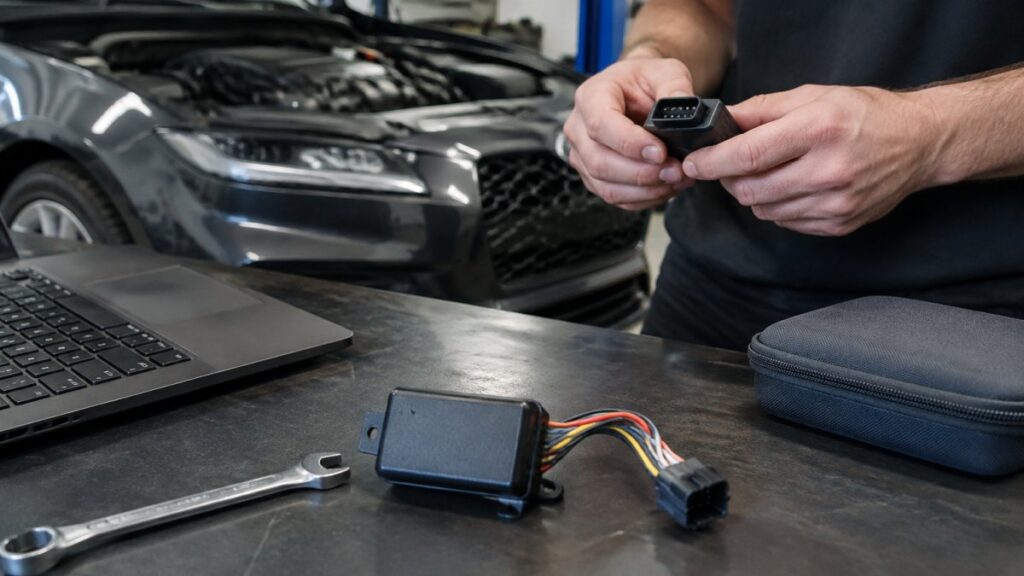
9 Mileage Stopper Mistakes Before You Buy a Blocker
Last Updated: November 4, 2026
Quick Summary
A mileage blocker holds the recorded distance on a vehicle’s odometer while the car runs, and it is used for stationary diagnostics and power testing. Before you buy, compare cable length, Bluetooth setup, compatibility and warranty, and confirm the legal position for your use.
- Check which control modules your vehicle uses before buying, since a blocker on the wrong connection can disrupt other systems.
- Measure the cable route to your mounting point and add slack before ordering.
- Confirm which vehicles the standard and Ghost versions support, as compatibility varies by model.
- Disconnect the battery before touching any wiring, and follow the supplied fitting guide.
- Ask whether the warranty covers faults after the first year and what the repair terms are.
Table of Contents
- What a Mileage Stopper Actually Does and Where It Sits in the Vehicle
- Mileage Stopper vs SuperKilometerFilter: Feature-by-Feature Comparison
- Mileage Blocker Legal Status in the UK
- How to Install a Mileage Blocker Without Disrupting Vehicle Systems
- Which Mileage Blocker Suits Dyno Testing and Diagnostic Work
- Total Cost of Ownership, Warranty and Reversibility
- Choosing Your Module and Booking a Fitting Check With Mileage Blocker
- Frequently Asked Questions
Choosing a mileage blocker is a decision that can affect your car’s service records, its resale value and, in some cases, your legal position. This guide helps you compare the main mileage blocker options before you commit. Most buyers focus on price first, but the wiring, the cable length and the legal context matter far more.
Before buying, read the product details and fitting guide carefully, and check the questions below for yourself.
What a Mileage Stopper Actually Does and Where It Sits in the Vehicle
A mileage stopper sits between the vehicle’s electronics and the module that records distance. It holds the recorded figure while the car runs, which is why it is used during stationary diagnostics and power testing. The device is simple in concept, but the way it connects to the car’s systems decides whether it works cleanly.
Before you buy any unit, check which control modules your vehicle uses and where the distance data travels. A blocker that connects in the wrong place can disrupt other systems rather than just the odometer reading.
Mileage Stopper vs SuperKilometerFilter: Feature-by-Feature Comparison
Set the options side by side on the points below and ask the seller for any figures you cannot verify from the listing. If you are weighing SuperKilometerFilter against other options, read a deeper look at the alternatives in the same group. The table below sets out what to compare and why each point changes the ownership experience, rather than repeating marketing claims.
| Feature | What to check | Why it matters |
|---|---|---|
| Cable length | Enough reach to your fitting point without strain | A short lead puts tension on the connector; a long one leaves loose wiring to tuck away |
| Bluetooth | Whether the app is needed for setup or only for status | App-based setup adds a step each session; status-only Bluetooth is simpler for stationary work |
| Configuration | Plug-and-play, or settings you must change by hand | Manual configuration increases the risk of error and the time to swap between vehicles |
| Version | Standard or Ghost, and which vehicles each suits | Compatibility is not always the same across models, so confirm the version against your vehicle list |
| Removal | How cleanly the module comes out and whether the wiring leaves marks | Reversibility matters if you may need to return a vehicle to its original state |
| Warranty | What is covered after the first year and what the repair or replacement terms are | A warranty that only covers the first year leaves you exposed on a long-term installation |
Mileage Blocker offers UK-made modules with plug-and-play installation, a 12-month warranty and worldwide shipping. Ask the seller for the cable length, the list of supported models, and whether the warranty covers a fault after the first year.
Cable Length, Bluetooth and Device Configuration
Measure the route from your intended mounting point to the connection before you order, and add a little slack for movement.
Standard and Ghost Versions Compared
Some blockers come in a standard form and a more discreet Ghost form. Ask which vehicles each version supports, because compatibility is not always the same across models. The Ghost version is not a reason to skip the legal checks covered below, and a discreet form factor does not change what the device does or how the law treats its use. Confirm the version against your vehicle list before you order, and check whether the fitting point differs between the standard and Ghost forms.
Compatibility, Installation and Removal
Compatibility is the point where most comparisons fail, because a device that works on one model may not work on another with a different control module layout. Before you buy, check which control modules your vehicle uses and where the distance data travels. A blocker that connects in the wrong place can disrupt other systems rather than just the odometer reading. Installation is where most problems start: work in a well-lit space, disconnect the battery before you touch any wiring, and route the harness away from moving parts and heat. Follow the fitting guide supplied with the module rather than improvising a connection. Removal matters too.
Accuracy, Reliability and Long-Term Stability
Accuracy and reliability are hard to judge from a listing, so define what you will test before you buy. A structured test covering compatibility, installation, removal and vehicle data gives you evidence you can check. Ask the seller what testing the module has undergone and under what conditions, and keep your own record of the first few sessions so you can compare behaviour over time. Long-term stability depends on secure mounting and on the quality of the connector, so check both before you rely on the device.
Pricing and Value for Money
The purchase price is only part of what you pay. Factor in the cost of fitting, the time to remove the device, and any work needed if it fails. Ask whether the warranty covers a fault after the first year, and what the repair or replacement terms are. Pricing depends on quantity, delivery and the options you choose, so confirm the current cost directly with Mileage Blocker for an accurate quote in pounds sterling. Compare the total cost of ownership rather than the headline price, because a cheaper module that needs professional fitting and a second unit for a different model can cost more than a versatile one.
Mileage Blocker Legal Status in the UK
Using a device to alter the distance a vehicle shows is a serious matter. Turning back or freezing a mileage reading to mislead a buyer about a vehicle’s history can amount to fraud (Mileage correction services provider: investigation and prosecution). The legitimate uses are narrower: private testing, diagnostics and track work where the recorded distance is not being used to sell or misrepresent a car. This section sets out the framework you should check before you fit anything, and it distinguishes legitimate testing from deceptive use so you can judge where your own use falls.
The Legal Framework You Should Check
The rules that apply are UK rules, and you should check the current position with the official guidance on UK government guidance on odometer tampering and vehicle fraud. Fraud legislation and consumer protection rules are the main areas to consider, and the precise offence depends on what you do with the vehicle and what you tell a buyer. A lawyer or the relevant trade body can confirm how the rules apply to your situation. Do not rely on a seller’s description of legality, because the seller’s commercial interest is in selling the device, not in assessing your use.
Disclosure Duties When You Sell or Part-Exchange
If you sell or part-exchange a vehicle, you have a duty not to misrepresent its history. A mileage reading that has been frozen or altered, and then presented as genuine, is a misrepresentation. Keep a record of any testing work and disclose it if the recorded distance could mislead a buyer. A common pattern is that a buyer relies on the odometer reading and on the service record together, so a discrepancy between the two is a warning sign that a seller may have to explain. Because a service record can help put an odometer reading in context, comparing mileage and vehicle age may reveal whether the history deserves closer scrutiny.
Penalties and Consequences
The consequences of deceptive use can include criminal liability and civil claims from a buyer. The precise penalty depends on the offence and the court, so check the current guidance rather than relying on anecdote.
Legitimate Testing Versus Deceptive Use
The clearest distinction is between use where the recorded distance is not being used to sell or misrepresent a car, and use where it is. Private testing, diagnostics and track work fall on the legitimate side when the vehicle is not being presented to a buyer with a misleading reading. Deceptive use falls on the other side, and the device’s features do not change that.
Watch out: a seller’s claims about a device do not make its use lawful, and a seller’s description is not legal advice.
How to Install a Mileage Blocker Without Disrupting Vehicle Systems
Installation is where most problems start. Work in a well-lit space, disconnect the battery before you touch any wiring, and route the harness away from moving parts and heat. Follow the fitting guide supplied with the module rather than improvising a connection.
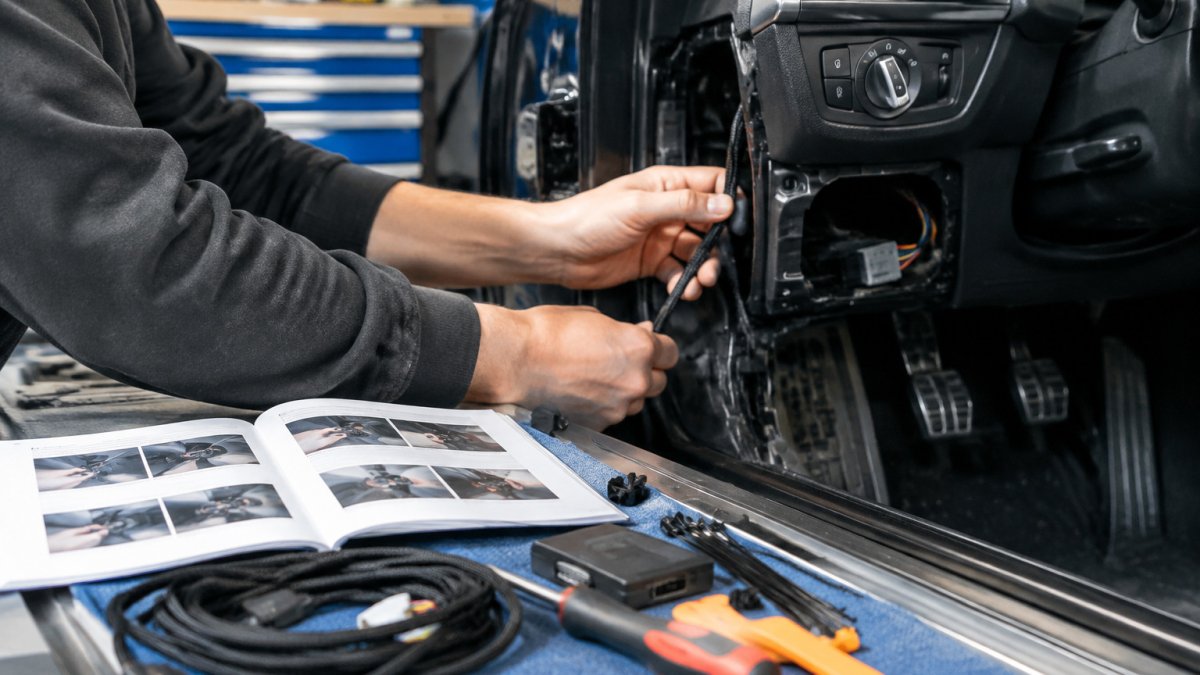
A common mistake is tapping into a wire without confirming what it does. Check the pinout for your specific model first. If you are not confident with automotive wiring, a professional fitter is the safer route, and a fitting check is worth the cost.
Which Mileage Blocker Suits Dyno Testing and Diagnostic Work
Dyno work and diagnostics place different demands on a blocker than track days do. On a dyno you need stable, predictable behaviour across repeated runs, and the device should not interfere with the readings you are trying to take. Track day use puts more weight on secure mounting and reliability under vibration.
For a tuning shop running a handful of sessions a month, the question is usually whether one versatile module covers both jobs. You can also see the physical differences in plugs, pins and wiring between blocker units before you decide.
Total Cost of Ownership, Warranty and Reversibility
The purchase price is only part of what you pay. Factor in the cost of fitting, the time to remove the device, and any work needed if it fails. Ask whether the warranty covers a fault after the first year, and what the repair or replacement terms are.
Removal matters too. If you may need to return a vehicle to its original state, check how cleanly the module comes out and whether the wiring leaves any marks. Pricing depends on quantity, delivery and the options you choose, so confirm the current cost directly with Mileage Blocker for an accurate quote.
Choosing Your Module and Booking a Fitting Check With Mileage Blocker
Start by listing your vehicles, the work you do and the cable length you need. If you are based in Ireland, you can check whether mobile mileage blocker fitting is available near you before you book. Then compare the standard and Ghost versions against those requirements, and confirm the legal position for your use before you order. Keep the warranty terms and the fitting guide with your records.
If you want the device fitted by a professional, book a check before you start with a qualified fitter.
Frequently Asked Questions
Are mileage blockers legal for use on public roads?
The legal position depends on how the device is used. Using a mileage blocker to show a lower distance than a vehicle has actually covered, for example to mislead a buyer or to avoid a service interval, can amount to odometer fraud under UK law. Using a module during controlled dyno testing or a private track day, where the reading is never presented as genuine mileage, is treated differently. Buyers and owners should check their own circumstances and take legal advice if in doubt before fitting any device.
Does a mileage blocker leave a trace in the vehicle’s ECU?
A vehicle’s control modules may still log distance or service information in other places, so keep a record of when any device was installed and removed. Fitting the device correctly, keeping a record of when it was installed and removed, and checking compatibility for your specific model all reduce the risk of unexpected faults.
How easy is it to install a plug-and-play mileage blocker?
Plug-and-play installation is a feature of the module, but compatibility varies by make, model and model year, so confirm your vehicle is supported before ordering. Follow the supplied fitting guide closely, test the vehicle after installation, and seek a qualified technician if the wiring layout in your car differs from the instructions.
Does using a mileage blocker affect vehicle diagnostics or dyno testing?
Record the vehicle’s true mileage separately before and after testing so that your documentation remains accurate for any future service or sale.

Leave a Reply