
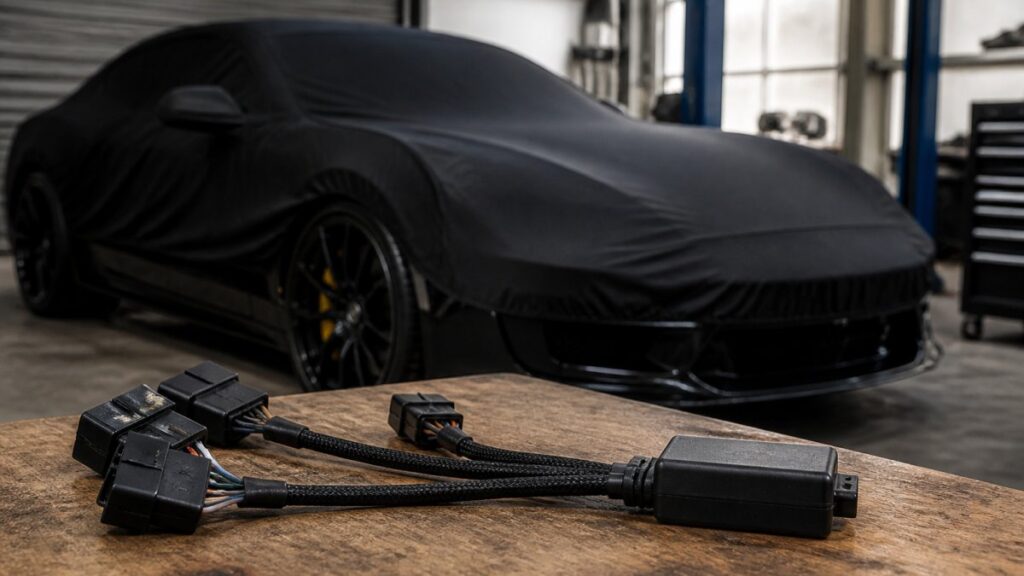
Odometer Protection for Luxury Car Storage
Table of Contents
- Why Odometer Protection Matters During Long-Term Storage
- How Odometer Readings Are Stored and Protected in Modern Vehicles
- Long-Term Car Storage Preparation: Baseline Mileage Documentation
- Preventing Odometer Tampering Specifically During Storage
- Odometer Tampering Law and Your Legal Position
- Vehicle Mileage Documentation and Post-Storage Verification
- Choosing a Specialist Storage Facility and Evaluating Its Controls
- Frequently Asked Questions
Last Updated: October 16, 2026
Why Odometer Protection Matters During Long-Term Storage
When you store a luxury car for weeks or months, the odometer becomes a vulnerability: the vehicle sits stationary, but its mileage record stays digital and accessible.
Once a car enters storage, its odometer reading becomes a fixed point in time.
Modern vehicles store odometer data across multiple systems: the instrument cluster, the engine control unit, and sometimes telematics modules, each recording and validating mileage independently.
Odometer protection for luxury car storage isolates test mileage from the permanent record, keeping your vehicle’s history clean and unambiguous.
How Odometer Readings Are Stored and Protected in Modern Vehicles
The instrument cluster displays the odometer, but the engine control unit (ECU) holds the authoritative record. Some vehicles also store data in the gateway module, body control module, and infotainment systems.
The problem emerges during storage.
Odometer protection for luxury car storage prevents these systems from recording test kilometres in the first place, isolating the permanent mileage record from temporary diagnostic or testing activity.
Long-Term Car Storage Preparation: Baseline Mileage Documentation
Before storing a luxury car, document its odometer reading to create a legal baseline proving the mileage before storage began.
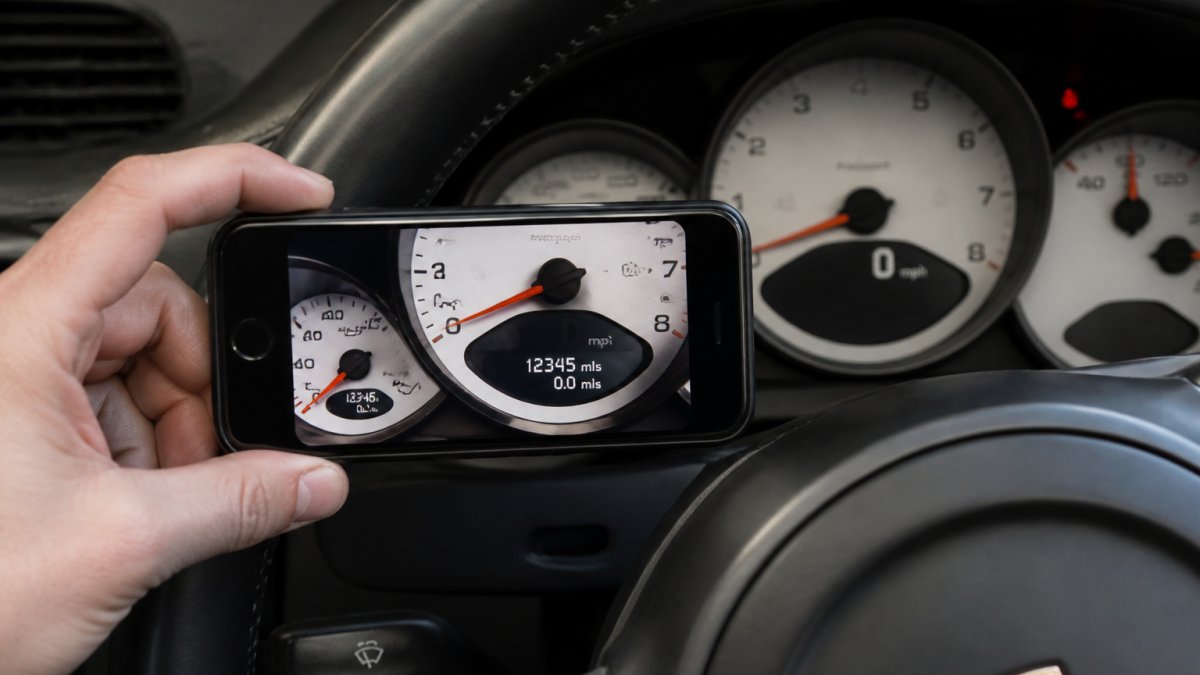
Take multiple dated photos of the odometer display from different angles, capturing the instrument cluster clearly.
Document the reading in writing as well. Note:
- The exact odometer figure (to the nearest kilometre)
- The date and time of the reading
- The vehicle’s VIN and registration number
Store these records safely, with copies to your insurance provider and storage facility, creating an independent record of the mileage at the start of storage.
When the vehicle leaves storage, repeat the process and compare the new reading to the baseline.
Preventing Odometer Tampering Specifically During Storage
Odometer tampering during storage falls into two categories: deliberate manipulation (rare but high-impact) and accidental recording of test kilometres (common, often unnoticed until a diagnostic scan flags a mismatch).
Deliberate tampering: how it actually happens
A stored luxury car is an attractive target: it sits unattended for long periods, and a roll-back of 20,000 miles on a high-value model can add thousands of pounds to a sale price, which is why the practice persists despite being illegal.
Methods used against stored vehicles include:
- Cluster replacement. A thief swaps the instrument cluster for a used unit showing lower mileage. On older vehicles this can be enough to fool a casual buyer, though the ECU and gateway module usually retain the true figure.
- EEPROM or microcontroller reprogramming. Specialist tools rewrite the mileage value stored in the cluster’s memory chip. This is the most common method on modern vehicles and is why cross-checking against the ECU matters.
- Mileage blocker devices. Ironically, the same class of hardware sold for legitimate dyno and diagnostic use can be misused to freeze the odometer while a vehicle is driven on the road. The distinction is intent and disclosure, not the device itself.
Warning signs that a stored vehicle has been tampered with
After a storage period, look for these indicators before you accept the vehicle back:
- Mismatch between cluster and ECU. A diagnostic scan that reads stored mileage from the engine control unit and compares it to the instrument cluster display will reveal a discrepancy. Most franchised dealers and independent specialists can perform this in under an hour.
- Fault codes relating to mileage or CAN communication. Codes such as a mileage plausibility fault or a communication error between the cluster and gateway module often appear after a roll-back attempt.
- MOT history anomalies. The Driver and Vehicle Standards Agency (DVSA) publishes MOT mileage records online (Check the MOT history of a vehicle). A stored vehicle with a gap or a drop in its MOT mileage history is worth investigating.
If you suspect tampering, do not confront the facility or individual directly. Preserve the vehicle as-is, photograph everything, and take advice from a solicitor or a specialist automotive forensic examiner before any repair or cleaning takes place.
Accidental recording: the more common problem
A technician performs a diagnostic session; the engine runs for 15 kilometres on a rolling road, and the odometer advances by 15 kilometres, now recorded permanently across the cluster, ECU, and any telematics module.
Preventing this requires isolation where mileage signals are generated.
This is legitimate for diagnostics, dyno testing, and track use, provided the activity is documented and disclosed; the mileage record then reflects only real-world road usage.
Practical safeguards during storage
- Restrict physical access. Only named staff should be able to move or start the vehicle. A key custody log with sign-in and sign-out times is the single most effective deterrent.
- Use a facility with CCTV covering the bay, not just the gate. Footage retention of at least 30 days is a reasonable benchmark.
- Photograph the odometer at intake and release. Dated images create a baseline that is difficult to dispute.
Check a vehicle’s MOT mileage history
The goal is not to hide mileage but to keep test and diagnostic activity separate from road usage, and to be able to prove it. Documentation, restricted access, and a release-time diagnostic scan do more to protect a stored luxury car’s odometer than any single device.
Odometer Tampering Law and Your Legal Position
In the UK, odometer tampering is illegal under the Consumer Protection from Unfair Trading Regulations 2008. Rolling back an odometer to deceive a buyer is fraud.
However, using odometer protection for legitimate purposes, diagnostics, dyno testing, and track use, is not the same as tampering. The law distinguishes between:
- Illegal tampering: Altering the odometer to deceive someone about a vehicle’s true mileage
- Legitimate protection: Preventing test kilometres from being recorded during authorised diagnostic or performance testing
Your legal position depends on documentation. Keep records of:
- The baseline odometer reading before storage
- The odometer reading after storage
- Any test kilometres logged separately
If the vehicle is later sold, disclose the storage period and any testing.
Insurance is another consideration. Some policies exclude coverage for vehicles undergoing performance testing or track use. Check your policy before storing a vehicle for these purposes.
Vehicle Mileage Documentation and Post-Storage Verification
Compare the post-storage reading to your baseline: the difference should equal only kilometres driven during storage, with any dyno or track testing mileage documented separately.
Create a post-storage verification document that includes:
- The odometer reading when the vehicle left storage
- The date and time of this reading
- Photos of the odometer display
This verification document becomes part of the vehicle’s service history, proving the odometer record is accurate and complete.
Some storage facilities offer independent verification services. They photograph the odometer at intake and release, creating a third-party record. This adds credibility to your documentation.
Choosing a Specialist Storage Facility and Evaluating Its Controls
Most storage guides list the same features: gates, cameras, alarms, climate control. That’s the baseline, not the differentiator. For a luxury car, procedures around access, key custody, and mileage documentation matter more than hardware, because those procedures protect the odometer record while the vehicle sits unattended. Rigorous oversight of these internal protocols remains equally vital during luxury vehicle transport to ensure that the integrity of the vehicle’s history remains uncompromised from the moment it leaves your garage.
A decision framework, not a checklist
- Who can physically access the vehicle, and how is that recorded?
- What happens to the odometer record between intake and release?
- What evidence will I receive at release that nothing has changed?
- What is the facility’s incident response if tampering or damage is suspected?
Access control and key custody
- Named-access only. The facility should be able to tell you, in writing, which individuals can enter the bay where your vehicle is stored.
- Key custody log. Every movement of the key should be signed in and out with a timestamp and a name. Ask to see a sample log.
- Two-person rule for vehicle movement. For high-value cars, no single member of staff should be able to move the vehicle alone.
Surveillance and monitoring
- Bay-level coverage. Cameras at the gate are not enough. Ask for coverage of the individual bay or garage unit.
- Retention period. At least 30 days of recorded footage is a reasonable benchmark; longer is better for long-term storage.
- Remote viewing. Some facilities offer owner access to a live camera feed. This is useful but should not replace a documented release inspection.
Odometer-specific controls
- Intake and release odometer photographs. The facility should photograph the instrument cluster at both points and provide copies to you.
- Diagnostic scan at release. Ask whether the facility can arrange, or allow you to arrange, a scan that reads cluster and ECU mileage side by side.
- Test activity log. If dyno, diagnostic, or track work is planned, the facility should maintain a separate log of test start and end readings, the purpose, and the technician involved.
Ask the facility to include an odometer integrity clause in the storage contract. It should state that the odometer reading at release will match the intake reading plus any documented test mileage, and that the facility will provide photographic and diagnostic evidence to support this.
Insurance and liability
- Facility insurance. Confirm the facility carries cover for stored vehicles and ask for the policy schedule.
- Named insured. Ask whether your vehicle can be added as a named item, rather than relying on the facility’s general cover.
- Liability limits. Check that the limit is at least equal to your vehicle’s agreed value.
Environmental controls
- Climate control. Stable temperature and humidity reduce condensation, which is the main cause of corrosion and mould in stored vehicles.
- Moisture management. Desiccant absorbers or a dehumidifier in each bay.
- Ventilation. Adequate airflow prevents stale, musty odours and mould growth.
Staff and procedures
- Background checks for all personnel with bay access.
- Training on handling high-value vehicles, including correct jacking points and battery care.
- Documented intake and release procedure with a signed condition report.
Questions to ask before signing
- Can I see a sample key custody log?
- Will you photograph the odometer at intake and release?
- Can I arrange a diagnostic scan at release?
- What is your procedure if the odometer reading does not match the intake record?
- Who is liable if tampering occurs while the vehicle is in your care?
- Can I add my vehicle as a named insured on your policy?
- What is your CCTV retention period, and does it cover my bay?
- How do you log test mileage if dyno or diagnostic work is carried out?
A specialist facility will answer these without hesitation and put the key points in the contract; if it cannot, it is not set up for high-value, long-term storage.
Association of British Insurers guidance on motor insurance
The hardware is the easy part. The differentiator is whether the facility can prove, with logs, photographs, and a diagnostic scan, that your vehicle’s odometer record is exactly where it should be when you collect it.
Frequently Asked Questions
Can a car’s odometer change while it is in storage?
A parked vehicle’s odometer does not advance during storage because the engine is off and the vehicle is stationary. However, odometer readings can be altered by unauthorised access to the vehicle’s electronic control unit (ECU) or instrument cluster. This is why odometer protection and secure storage are critical for luxury cars left unused for extended periods. Physical security, access control, and baseline mileage documentation help prevent tampering.
Is it legal to alter or suppress an odometer reading in the UK?
No. Altering, suppressing, or tampering with an odometer reading is illegal under the Fraud Act 2006 and the Consumer Protection from Unfair Trading Regulations 2008. Odometer tampering is treated as fraud and can result in criminal prosecution, fines, and imprisonment. Legitimate uses, such as mileage management during diagnostic testing or dyno work, require proper documentation and disclosure. Always ensure any mileage-related device or procedure complies with UK law and your vehicle’s warranty terms.
How should I document my car’s mileage before and after storage?
Take photographs of your odometer reading from multiple angles before placing the vehicle into storage. Record the date, time, and any relevant context (service history, last MOT, fuel level). Store these images securely in cloud storage or printed form. Upon removal from storage, photograph the odometer again under the same conditions. Keep all service records, MOT certificates, and maintenance logs to establish a continuous mileage history. This documentation protects you legally and supports your vehicle’s resale value and warranty claims.
What should I check when taking a luxury car out of storage?
Verify the odometer reading against your pre-storage baseline documentation. Check for any signs of unauthorised access to the vehicle, including scratches around the OBD-II port, damaged door seals, or tampered connectors. Inspect the interior for moisture, mold, or musty odours. Test all electronic systems, including the instrument cluster, immobiliser, and keyless entry. Run a full diagnostic scan to check for fault codes that might indicate ECU tampering. If the mileage has increased unexpectedly or diagnostic codes appear, consult a specialist immediately.
Leave a Reply