
Mileage Management for Off-Road Vehicles: UK Guide
Table of Contents
- Why Off-Road Mileage Management Matters
- Off-Road Vehicle Mileage Tracking Methods That Work
- Mileage Logging for Fleet Vehicles: Best Practices
- Vehicle Tracking for Off-Road Fleets: What to Look For
- Building an Off-Road Vehicle Maintenance Schedule
- Reducing Unnecessary Mileage and Fuel Costs
- Data Accuracy, Calibration, and Audit-Ready Records
- Frequently Asked Questions
Last Updated: October 14, 2026
Why Off-Road Mileage Management Matters
Mileage Blocker provides UK-made odometer control modules for tuners, dyno operators and off-road drivers. Fleets that treat off-road mileage as a rounding error end up guessing at fuel, servicing and vehicle utilisation.
That is the core tension in this guide. On-road mileage is easy to capture and easy to audit. Off-road mileage is neither, and the gap between the two is where budgets quietly leak.
Off-Road Vehicle Mileage Tracking Methods That Work
Off-road vehicle mileage tracking works best as a layered system: GPS and telematics capture movement automatically, a disciplined digital logbook catches the journeys that satellites cannot classify, and a reconciled odometer reading anchors both to a physical measurement.
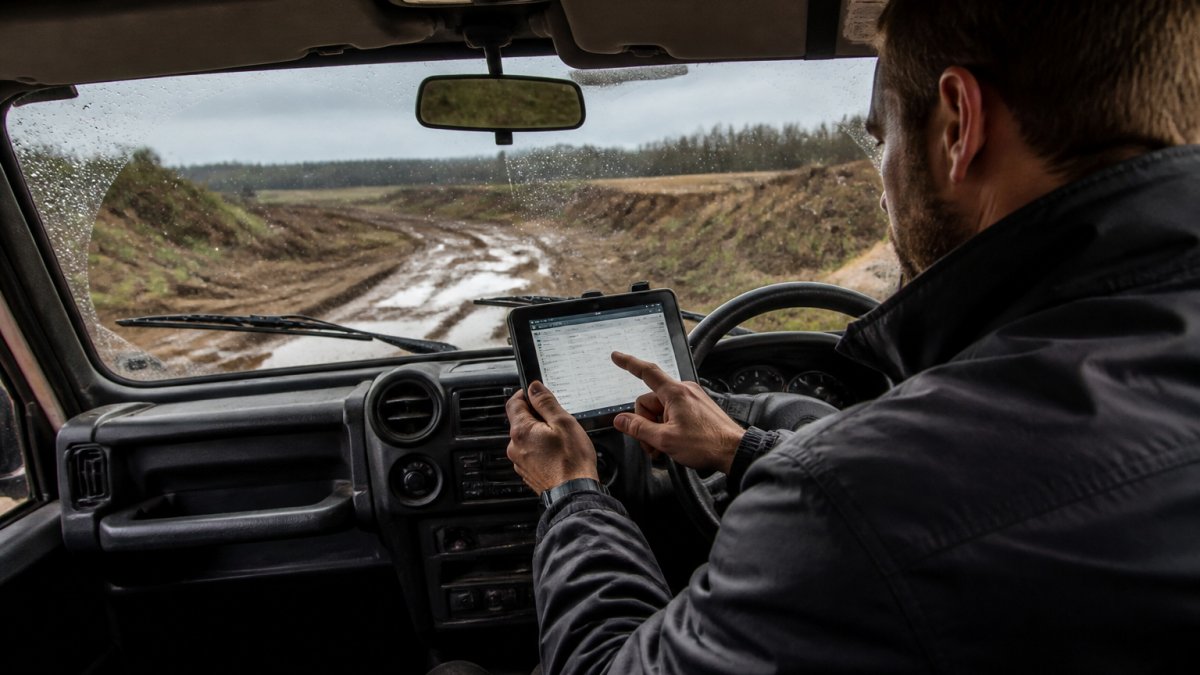
Why Off-Road Distance Is Hard to Measure
On tarmac, three measurement methods agree closely enough that the difference rarely matters. Off-road, they diverge sharply, and understanding why is the difference between a defensible record and a guess.
- Odometer and wheel-based measurement. Distance is inferred from wheel rotations multiplied by an assumed rolling circumference. Change the tyres to a larger off-road pattern, run them at low pressure on soft ground, or spin a wheel on mud, and the assumed circumference no longer matches reality. A vehicle on oversize tyres can under-read by a meaningful margin, while wheel slip on loose surfaces makes the odometer over-read relative to true ground distance.
- GPS and telematics. Distance is calculated from a series of position fixes. In open terrain this is accurate, but tree canopy, deep valleys, tunnels, built-up worksites and mine pits all degrade the signal. When fixes are lost, the device either drops the distance or interpolates a straight line between the last known points, which under-reads a winding forest track badly.
- Engine hours and fuel burn. Neither measures distance directly, but both are useful cross-checks. A machine that has run for six hours in low range has done real work even if its odometer barely moved.
A common pattern in mixed fleets is a 5-15% disagreement between odometer and GPS totals over a month, widening on vehicles that spend most of their time off sealed surfaces.
Reconciling the Methods
The practical answer is not to pick a winner but to reconcile the three sources on a fixed cycle:
- Capture the odometer at the start and end of every shift, at the same point in the journey each time (for example, engine off in the yard).
- Let telematics record distance continuously, with offline buffering so gaps are filled when the vehicle regains signal.
- Compare the two totals weekly. Where they diverge beyond your tolerance, investigate before adjusting, a persistent gap usually points to a tyre change, a calibration drift or a signal blackspot rather than driver error.
- Log every correction with a reason and a date. An unexplained edit is worse than an acknowledged gap.
GPS and Telematics for Off-Road Routes
GPS tracking records position, time and distance travelled without driver input. The limitation is context. A telematics unit sees a vehicle moving across a field; it does not know whether that movement is a billable site visit, a test lap or a personal detour. Pair GPS data with a simple purpose code at the end of each journey and the record becomes usable.
Manual and Digital Logbook Approaches
A digital logbook asks the driver to confirm purpose, start and end points, and odometer readings. It is slower than telematics but far more accurate on classification. For mixed on-road and off-road fleets, the practical answer is automatic distance capture plus a 30-second manual confirmation. Fleets that skip the confirmation step end up with clean distance data and unusable tax records.
Set your reconciliation tolerance before you start, not after a dispute. A written rule such as “investigate any weekly variance above 3%” turns a vague accuracy worry into a repeatable process.
Mileage Logging for Fleet Vehicles: Best Practices
Mileage logging for fleet vehicles should produce a record that a third party could audit without asking you a single question. That means date, start and end location, distance, purpose and a business-or-personal flag on every entry.
Classifying Business vs Personal Use
Business mileage is distance travelled wholly and exclusively for work; personal use is everything else, including the commute in most cases. The distinction matters because HMRC treats them differently for tax and reimbursement purposes, and because a mixed-use vehicle with no clear split is the single most common audit problem we hear about. Set the rule once, document it, and apply it identically to every driver.
The most common mistake is letting drivers self-classify with no written policy. When a record is challenged, an undocumented judgement call is effectively no record at all.
Vehicle Tracking for Off-Road Fleets: What to Look For
Vehicle tracking for off-road fleets needs three capabilities that on-road systems often lack: coverage in low-signal terrain, a purpose-classification field, and out-of-hours alerting. Everything else is a bonus.
| Capability | Why it matters off-road | What to check |
|---|---|---|
| Signal resilience | Coverage gaps in remote terrain | Offline buffering and later sync |
| Purpose classification | Separates work from personal trips | Custom journey tags |
| Out-of-hours alerts | Flags unauthorised vehicle use | Time-window rules |
| Fuel and idle reporting | Tracks fuel consumption patterns | Idle time thresholds |
| Export and audit format | Supports recordkeeping | CSV or PDF mileage reports |
Driver behaviour reporting is worth having, but treat it as a secondary benefit. The primary job is knowing where every vehicle is, what it did, and whether that activity was authorised.
Building an Off-Road Vehicle Maintenance Schedule
An off-road vehicle maintenance schedule should be driven by engine hours, terrain severity and duty cycle, not by road mileage alone. A machine that covers few miles but spends hours in low-range on soft ground is working far harder than its odometer suggests, and a schedule built only on distance will let it run past the point where components need attention.
Why Road Mileage Understates Off-Road Wear
Distance is a poor proxy for work off-road because the same mile costs very different amounts of the vehicle depending on conditions:
- Low-range and crawling. A 4×4 edging along a site track at walking pace accumulates almost no mileage but runs the engine, transmission and cooling system for hours under load.
- Contamination. Dust, mud and grit reach filters, breathers and seals far faster than on tarmac. Air and fuel filters on a machine working in a quarry or on a forestry site can load up in a fraction of the road interval.
- Driveline stress. Repeated articulation, wheelspin and heavy towing load propshafts, differentials, clutches and brakes in ways that steady road cruising does not.
Using Mileage and Hours Data to Plan Servicing
Pull your mileage and engine-hours reports monthly and split distance into on-road and off-road categories. Vehicles with a high off-road share should move to shorter service intervals for air and fuel filters, driveline fluids, brakes and greasing points. This is preventive maintenance based on real duty cycle rather than a fixed calendar, and it is the fastest way to protect vehicle uptime.
A workable method is to weight the two inputs rather than choose between them:
- Set a road-mileage threshold for the vehicle as the manufacturer specifies.
- Set an engine-hours threshold for the same service, typically shorter for machines that spend most of their time in low range or on site.
- Apply a terrain multiplier to the off-road portion, for example, count an hour of heavy site work as more than an hour of light track work when deciding when to inspect.
- Whichever trigger arrives first wins. Fleets that use only mileage routinely overrun servicing on their slowest, hardest-worked machines.
Set two service triggers per vehicle: a mileage threshold and an engine-hours threshold. Whichever arrives first wins. Review the thresholds after the first full service cycle and adjust them to what the vehicle is actually doing, not what the handbook assumed.
What to Inspect More Often Off-Road
Beyond the standard service items, off-road duty cycles justify closer attention to:
- Air filtration and intake sealing, especially after work in dust or on loose surfaces
- Differential, transfer box and gearbox breathers, which can draw in water and grit
- Brake and clutch wear, which accelerates with repeated low-speed manoeuvring and towing
Keeping the Record Clean
Every inspection, repair and adjustment should be logged against the vehicle with the date, the hours and mileage at the time, and the reason. That record does two things: it supports warranty and resale, and it gives you the evidence to justify a non-standard service interval if a component fails early. A maintenance log that only records what was done, without the duty-cycle context, cannot answer the question that matters after a failure, whether the schedule was right for the work.
Reducing Unnecessary Mileage and Fuel Costs
Reducing unnecessary mileage starts with route optimisation and ends with idle time. Off-road fuel consumption is dominated by three variables: terrain, load and idling.
- Consolidate site visits so one vehicle covers one area per day
- Cap idle time with an automatic engine cut-off policy
- Match the vehicle to the terrain instead of defaulting to the largest 4×4
Fuel efficiency on soft ground will never match tarmac, but the difference between a well-routed off-road fleet and a poorly routed one is visible within a month of reporting. Route monitoring also exposes vehicles that are being used for journeys a smaller machine could handle.
Data Accuracy, Calibration, and Audit-Ready Records
Data accuracy is the foundation of every claim you make about mileage, and it depends on calibration and consistency. Odometer readings should be captured at the same point in each journey, telematics devices should be checked against a known distance periodically, and any correction should be logged rather than silently edited.
Where a vehicle is used for testing rather than transport, isolating that distance from road usage keeps both records clean. This is where a plug-and-play odometer control module earns its place: our Mileage Blocker units let tuners and dyno operators run stationary diagnostics and power testing without distorting the road mileage record, with comprehensive fitting guides, a 12-month warranty and 24/7 support behind them.
Audit-ready mileage records share three traits: automatic distance capture, a documented classification rule, and an unedited correction log. Get those right and the rest of the process looks after itself.
For guidance on what counts as business travel and how records should be kept, see HMRC guidance on travel and subsistence expenses. For vehicle and driver compliance requirements, refer to DVLA guidance on vehicle tax and registration, and for emissions and air quality context that increasingly affects fleet policy, see UK government air quality and emissions information.
Frequently Asked Questions
Do mileage blockers actually work?
Mileage blockers work by interrupting the odometer signal during specific activities like dyno testing or off-road use. A quality module prevents mileage accumulation without triggering fault codes when installed correctly. The key is choosing a device designed for your vehicle’s ECU system and following the fitting guide precisely. Cheap units risk leaving digital traces or causing errors, so professional-grade modules with warranty support are the safer choice for tuning shops and enthusiasts.
What is the best way to keep track of mileage on an off-road vehicle?
Combine GPS-based tracking with a digital logbook for the most accurate records. GPS systems capture every journey automatically, including off-road routes where odometer readings may not reflect actual distance covered. A digital logbook lets you classify trips as business or personal use, which matters for tax and fleet reporting. For vehicles used on varied terrain, cross-check GPS data against odometer readings periodically to catch discrepancies early.
How should businesses record mileage for vehicles used off-road?
Businesses should log every journey with date, driver, purpose, start and end locations, and distance covered. For off-road vehicles, note whether the trip was on-road or off-road, as this affects fuel and maintenance calculations. HMRC requires accurate records for mileage claims, so use a system that captures data automatically where possible. Digital logbooks with GPS integration reduce manual errors and provide audit-ready reports.
Can vehicle tracking systems record off-road journeys?
Yes, modern GPS tracking systems record off-road journeys by logging coordinates and calculating distance from location data rather than relying on the vehicle’s odometer. This is useful for fleets operating on construction sites, farms, or private land where odometer readings may not capture actual use. Check that your chosen system supports off-road mapping and can distinguish between on-road and off-road segments for accurate reporting.
What information should an off-road vehicle mileage log include?
A thorough mileage log should include the date, driver name, vehicle registration, journey purpose, start and end locations, total distance, and whether the journey was business or personal. For off-road vehicles, add a field for terrain type or off-road classification. Include odometer readings at the start and end of each trip if using manual entry. This level of detail supports tax claims, maintenance planning, and fleet utilisation analysis.
How can fleet managers reduce unnecessary mileage on off-road vehicles?
Start by analysing mileage reports to identify patterns of excessive or unauthorised use. Route optimisation software can suggest more efficient paths for regular journeys. Set clear policies on personal use and out-of-hours driving, and use telematics to monitor compliance. For off-road fleets, plan site visits to combine multiple tasks into single trips. Regular reviews of fuel consumption and idle time also highlight where mileage can be trimmed.
Off-road mileage is the hardest part of any fleet record to get right, and the part most likely to be challenged later. Mileage Blocker builds UK-made odometer control modules that keep testing and off-road distance separate from your road record, with plug-and-play installation, comprehensive fitting guides, a 12-month warranty and 24/7 expert support. Get started with Mileage Blocker and give your off-road fleet a mileage record you can defend.
Leave a Reply